

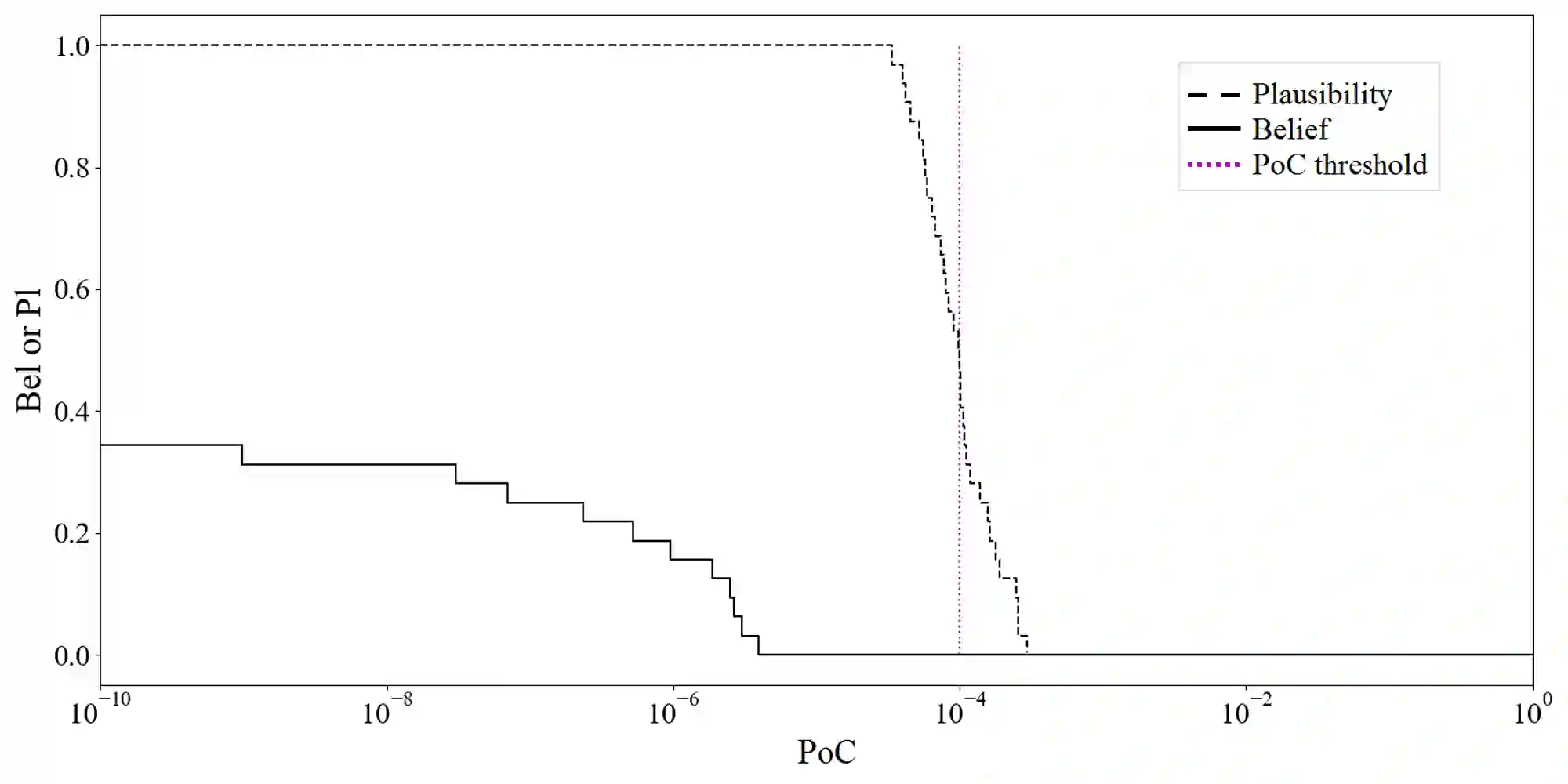
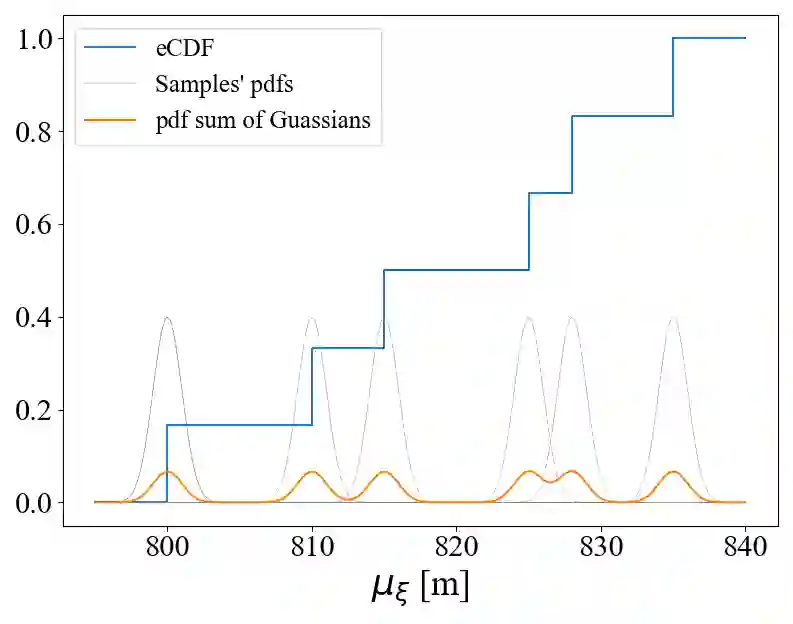
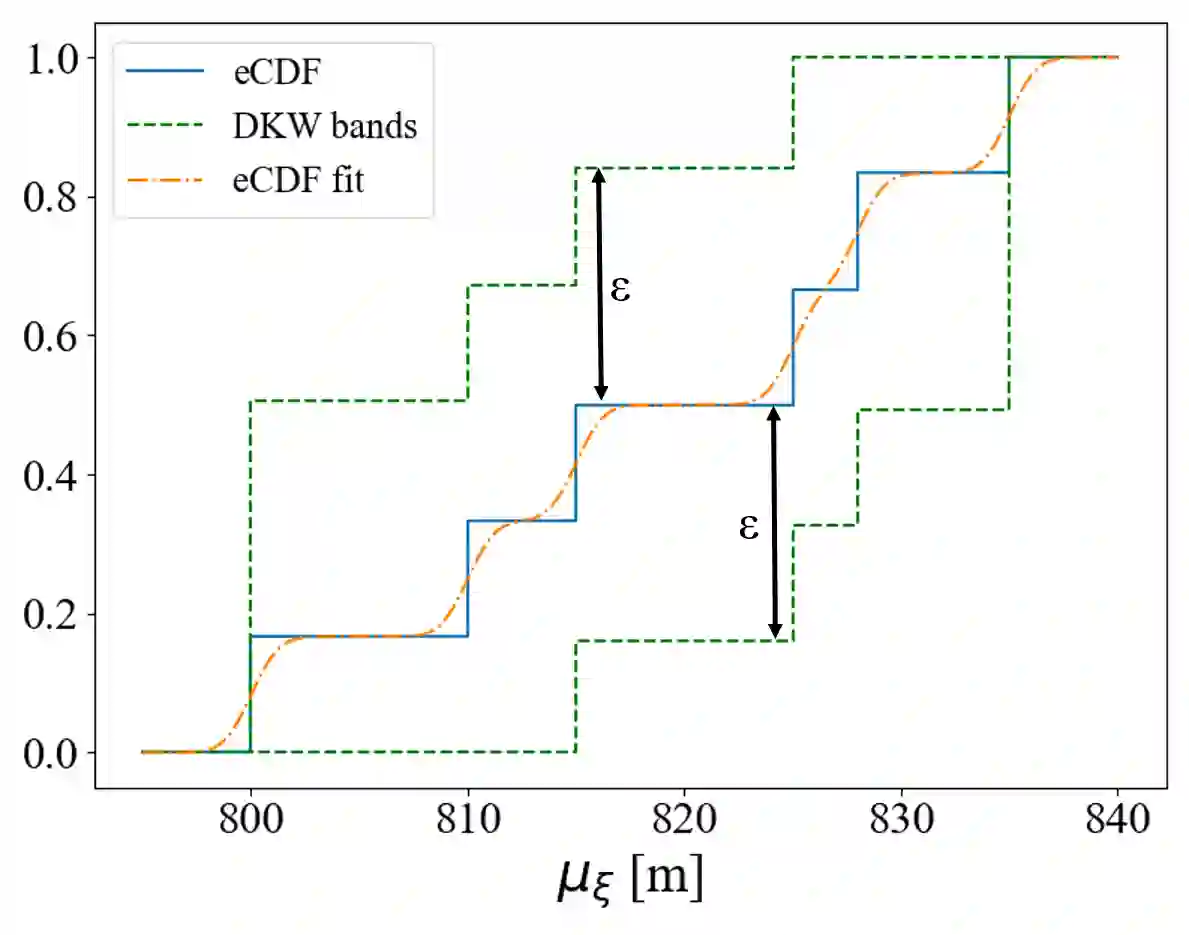
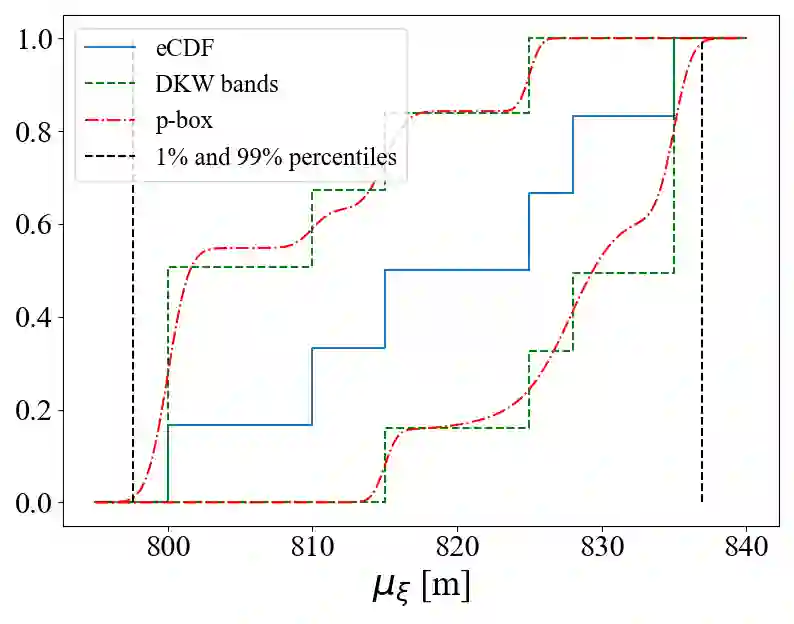
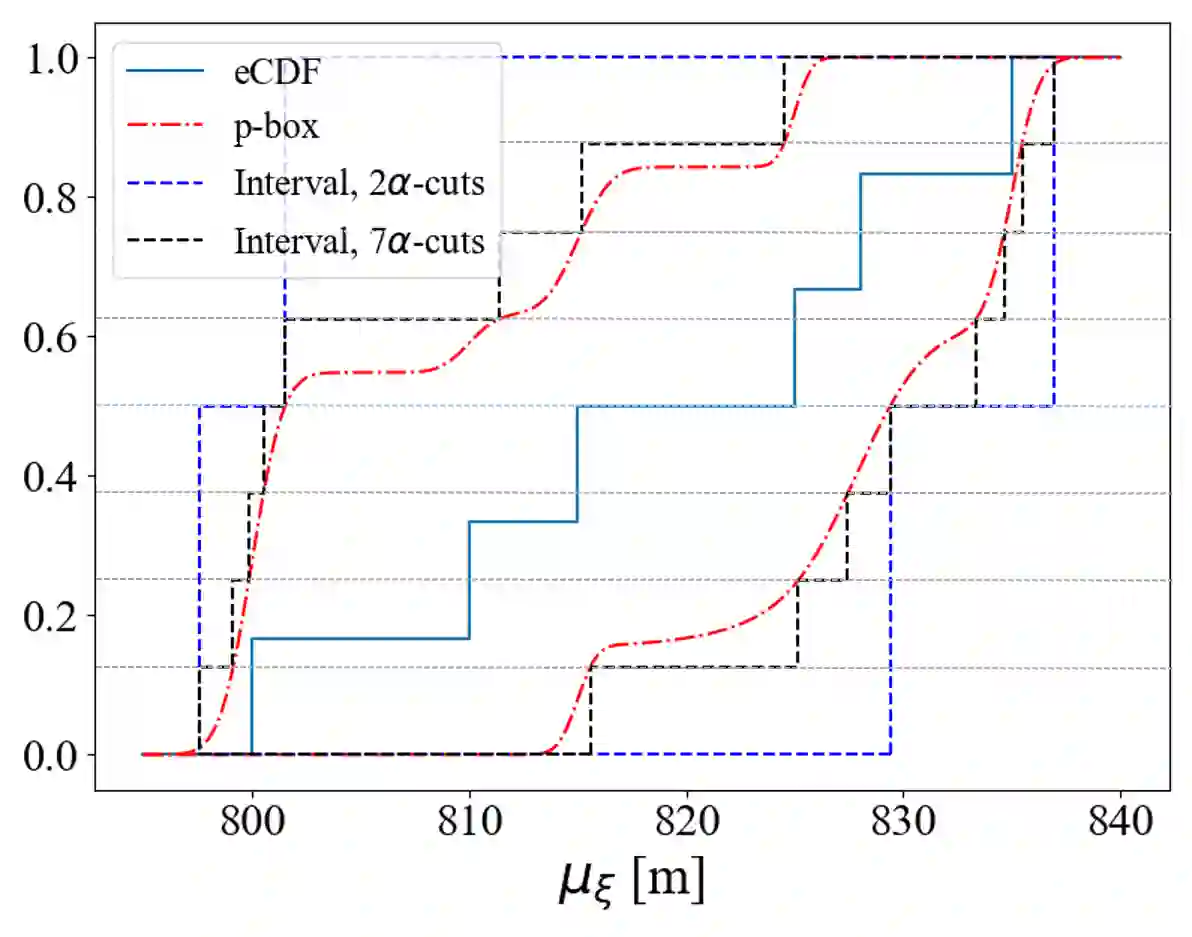
The paper presents an approach to the modelling of epistemic uncertainty in Conjunction Data Messages (CDM) and the classification of conjunction events according to the confidence in the probability of collision. The approach proposed in this paper is based on the Dempster-Shafer Theory (DSt) of evidence and starts from the assumption that the observed CDMs are drawn from a family of unknown distributions. The Dvoretzky-Kiefer-Wolfowitz (DKW) inequality is used to construct robust bounds on such a family of unknown distributions starting from a time series of CDMs. A DSt structure is then derived from the probability boxes constructed with DKW inequality. The DSt structure encapsulates the uncertainty in the CDMs at every point along the time series and allows the computation of the belief and plausibility in the realisation of a given probability of collision. The methodology proposed in this paper is tested on a number of real events and compared against existing practices in the European and French Space Agencies. We will show that the classification system proposed in this paper is more conservative than the approach taken by the European Space Agency but provides an added quantification of uncertainty in the probability of collision.
翻译:本文提出了一种对交会数据消息(CDM)中认知不确定性进行建模的方法,并根据碰撞概率的置信度对交会事件进行分类。该方法基于证据的Dempster-Shafer理论(DSt),假定观测到的CDM来自于一组未知分布族。利用Dvoretzky-Kiefer-Wolfowitz(DKW)不等式,从CDM时间序列构建该未知分布族的稳健边界。随后,从采用DKW不等式构建的概率盒中推导出DSt结构。该DSt结构在每个时间点封装了CDM中的不确定性,并允许计算特定碰撞概率实现时的置信度与似然度。本文提出的方法经过多个真实事件的测试,并与欧洲及法国航天机构的现有实践进行了对比。我们将证明,本文提出的分类系统比欧洲航天局采用的方法更为保守,但额外提供了对碰撞概率不确定性的量化。




相关内容





 微信扫码咨询专知VIP会员