

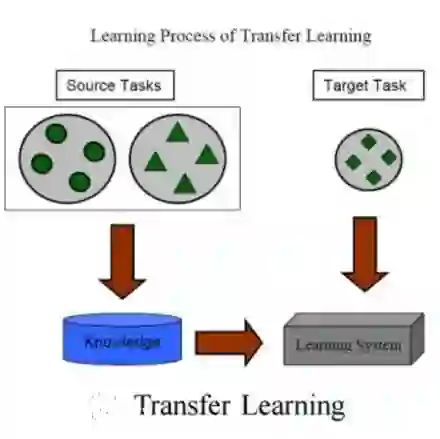
Brain Computer Interface (BCI) technologies have the potential to improve the lives of millions of people around the world, whether through assistive technologies or clinical diagnostic tools. Despite advancements in the field, however, at present consumer and clinical viability remains low. A key reason for this is that many of the existing BCI deployments require substantial data collection per end-user, which can be cumbersome, tedious, and error-prone to collect. We address this challenge via a deep learning model, which, when trained across sufficient data from multiple subjects, offers reasonable performance out-of-the-box, and can be customized to novel subjects via a transfer learning process. We demonstrate the fundamental viability of our approach by repurposing an older but well-curated electroencephalography (EEG) dataset and benchmarking against several common approaches/techniques. We then partition this dataset into a transfer learning benchmark and demonstrate that our approach significantly reduces data collection burden per-subject. This suggests that our model and methodology may yield improvements to BCI technologies and enhance their consumer/clinical viability.
翻译:脑机接口(BCI)技术有潜力改善全球数百万人的生活,无论是通过辅助技术还是临床诊断工具。然而,尽管该领域取得了进展,目前其消费级和临床有效性仍然较低。关键原因在于,许多现有的BCI部署需要为每个终端用户收集大量数据,而这一过程繁琐、耗时且容易出错。我们通过一种深度学习模型来应对这一挑战:该模型在多个被试的充足数据上训练后,能够开箱即用地提供合理性能,并可通过迁移学习过程针对新被试进行定制。我们通过重新利用一个较早期但经过精心整理的电生理(EEG)数据集,并与多种常见方法/技术进行基准测试,验证了该方法的基本可行性。随后,我们将该数据集划分成迁移学习基准,并证明我们的方法显著降低了每个被试的数据收集负担。这表明,我们的模型和方法可能有助于改进BCI技术,并提升其消费级/临床有效性。




相关内容



 微信扫码咨询专知VIP会员