

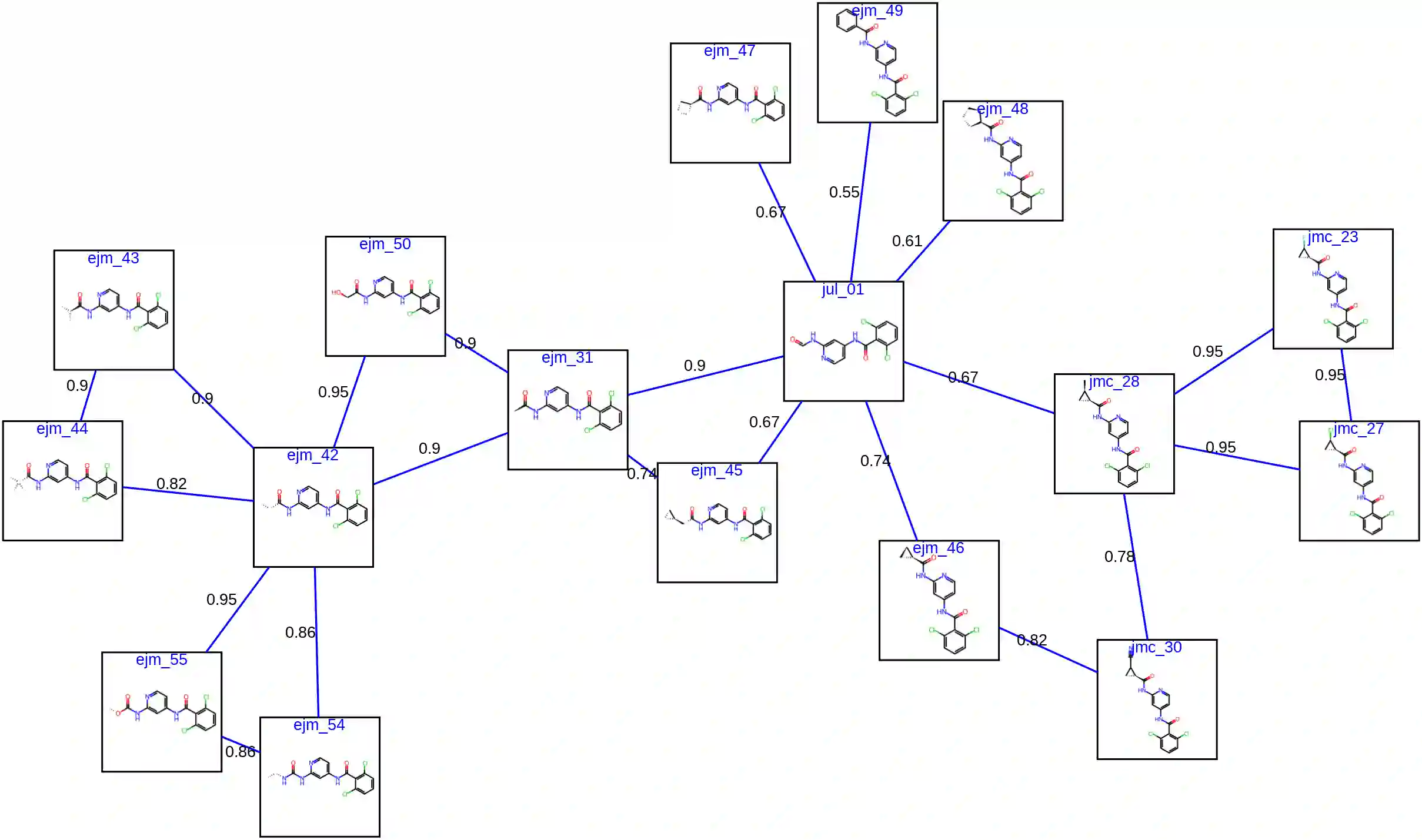
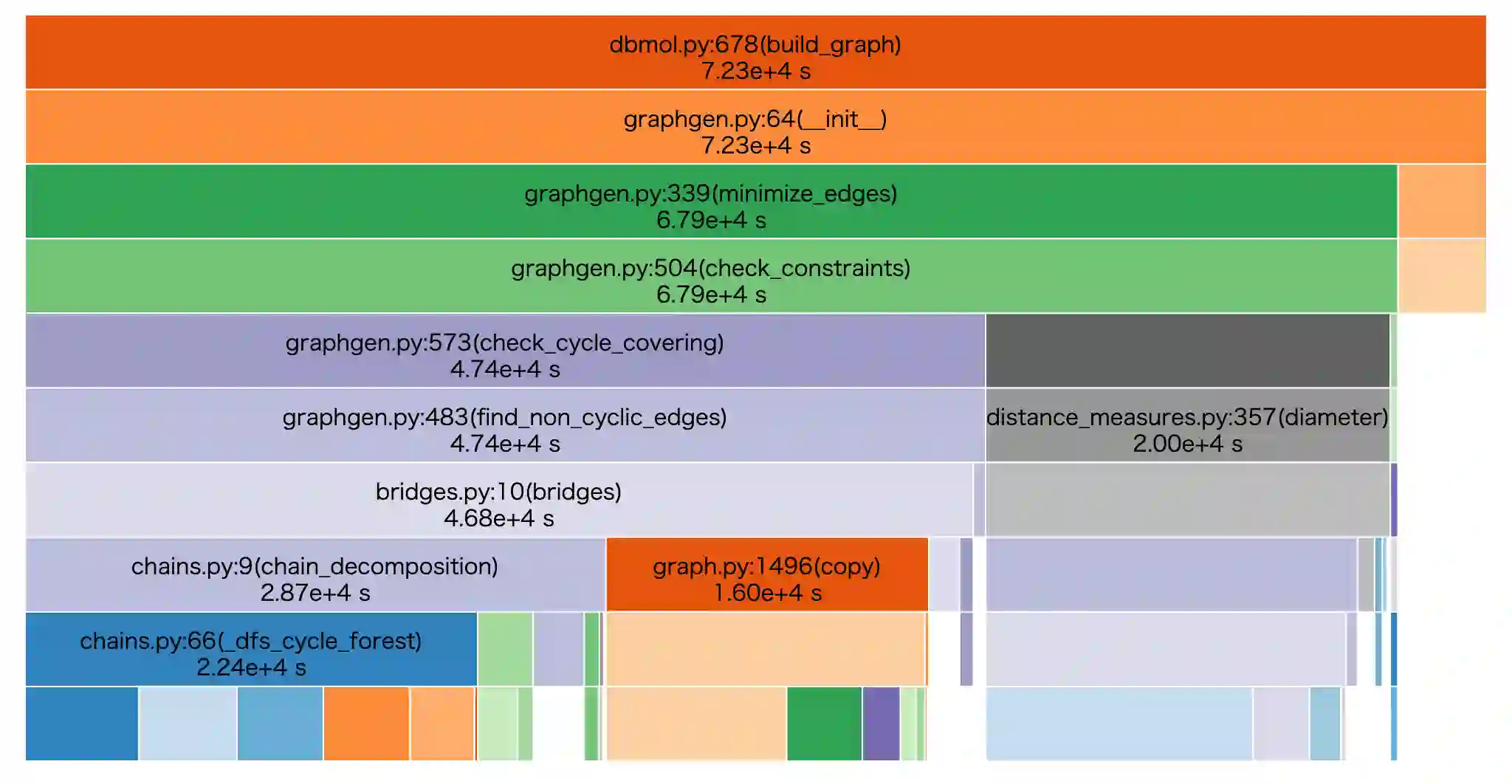
In recent years, free energy perturbation (FEP) calculations have garnered increasing attention as tools to support drug discovery. The lead optimization mapper (Lomap) was proposed as an algorithm to calculate the relative free energy between ligands efficiently. However, Lomap requires checking whether each edge in the FEP graph is removable, which necessitates checking the constraints for all edges. Consequently, conventional Lomap requires significant computation time, at least several hours for cases involving hundreds of compounds, and is impractical for cases with more than tens of thousands of edges. In this study, we aimed to reduce the computational cost of Lomap to enable the construction of FEP graphs for hundreds of compounds. We can reduce the overall number of constraint checks required from an amount dependent on the number of edges to one dependent on the number of nodes by using the chunk check process to check the constraints for as many edges as possible simultaneously. Moreover, the output graph is equivalent to that obtained using conventional Lomap, enabling direct replacement of the original Lomap with our method. With our improvement, the execution was tens to hundreds of times faster than that of the original Lomap. https://github.com/ohuelab/FastLomap
翻译:近年来,自由能扰动计算作为支持药物发现的手段日益受到关注。先导化合物优化映射算法被提出用于高效计算配体间的相对自由能。然而,Lomap需要检查自由能扰动图中每条边是否可移除,这要求对所有边进行约束验证。因此,传统Lomap需要大量计算时间,对于包含数百个化合物的情况至少需要数小时,而对于边数超过数万的情况则不具备实用性。本研究旨在降低Lomap的计算成本,以支持构建包含数百个化合物的自由能扰动图。通过采用分块检查过程同时验证尽可能多的边的约束条件,我们将所需的整体约束检查次数从依赖于边数降低为依赖于节点数。此外,输出图与使用传统Lomap获得的结果等价,因此我们的方法可直接替代原始Lomap。经改进后,执行速度比原始Lomap快数十至数百倍。https://github.com/ohuelab/FastLomap




相关内容


 微信扫码咨询专知VIP会员