

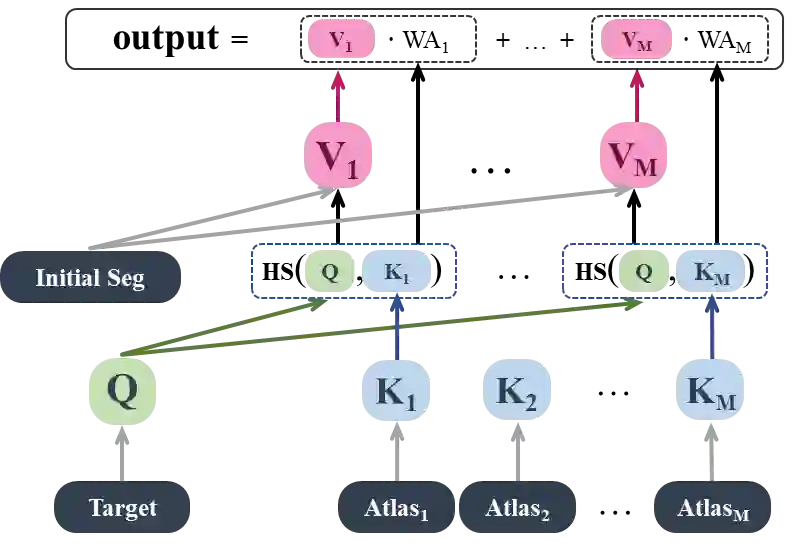
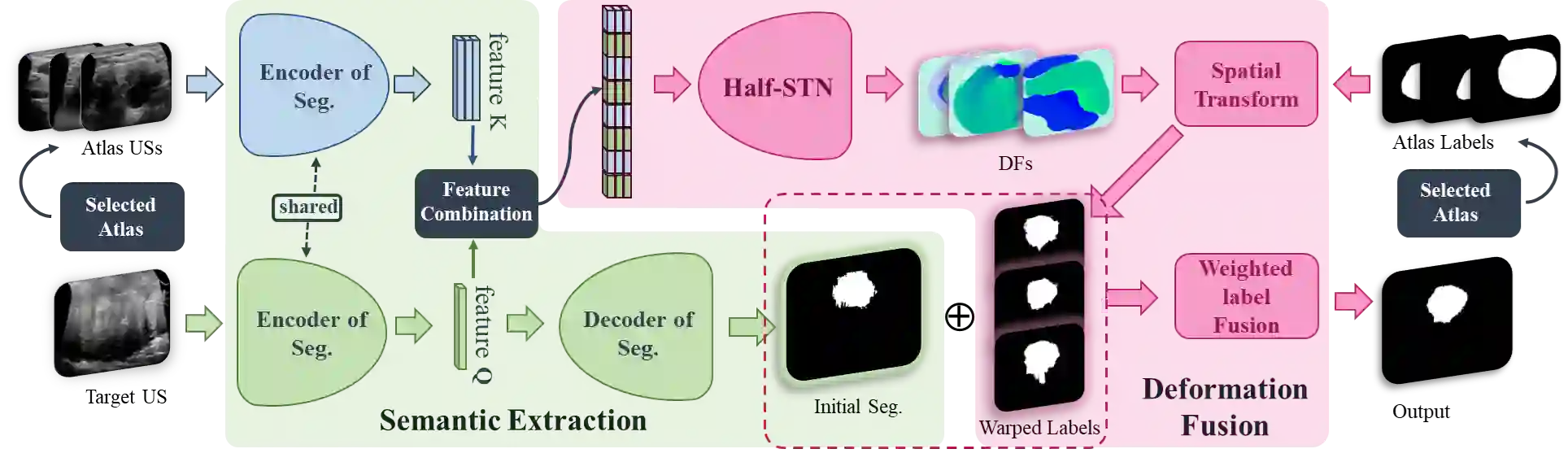
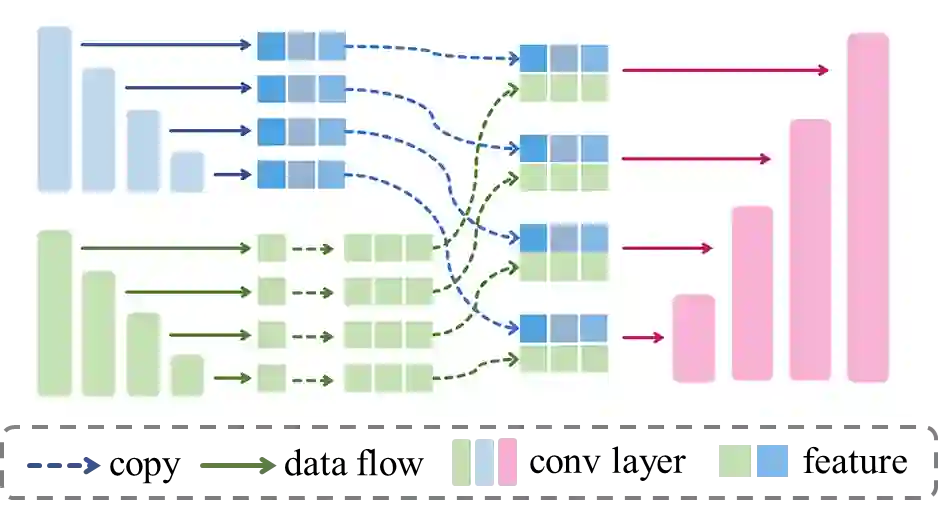
Segmentation of nodules in thyroid ultrasound imaging plays a crucial role in the detection and treatment of thyroid cancer. However, owing to the diversity of scanner vendors and imaging protocols in different hospitals, the automatic segmentation model, which has already demonstrated expert-level accuracy in the field of medical image segmentation, finds its accuracy reduced as the result of its weak generalization performance when being applied in clinically realistic environments. To address this issue, the present paper proposes ASTN, a framework for thyroid nodule segmentation achieved through a new type co-registration network. By extracting latent semantic information from the atlas and target images and utilizing in-depth features to accomplish the co-registration of nodules in thyroid ultrasound images, this framework can ensure the integrity of anatomical structure and reduce the impact on segmentation as the result of overall differences in image caused by different devices. In addition, this paper also provides an atlas selection algorithm to mitigate the difficulty of co-registration. As shown by the evaluation results collected from the datasets of different devices, thanks to the method we proposed, the model generalization has been greatly improved while maintaining a high level of segmentation accuracy.
翻译:甲状腺超声图像中结节的分割在甲状腺癌的检测与治疗中起着关键作用。然而,由于不同医院的扫描设备厂商和成像协议存在差异,已在医学图像分割领域展现出专家级精度的自动分割模型,在临床实际环境中应用时因泛化性能较弱而导致精度下降。为解决这一问题,本文提出ASTN——一种通过新型协同配准网络实现甲状腺结节分割的框架。该框架通过从图谱图像和目标图像中提取潜在语义信息,并利用深层特征完成甲状腺超声图像中结节的协同配准,能够保证解剖结构的完整性,并降低因不同设备导致的图像整体差异对分割结果的影响。此外,本文还提供了一种图谱选择算法以缓解协同配准的难度。来自不同设备数据集的评估结果表明,得益于所提出的方法,模型泛化能力得到大幅提升,同时保持了较高的分割精度。




相关内容




 微信扫码咨询专知VIP会员