

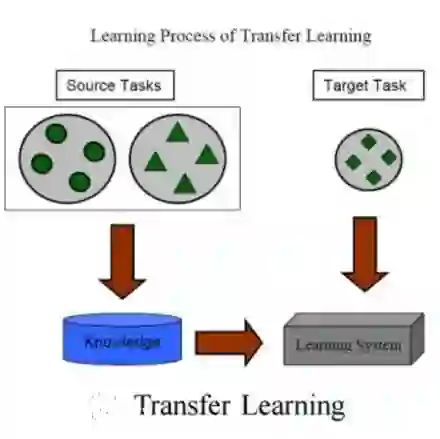
We propose gradient-enhanced PINNs based on transfer learning (TL-gPINNs) for inverse problems of the function coefficient discovery in order to overcome deficiency of the discrete characterization of the PDE loss in neural networks and improve accuracy of function feature description, which offers a new angle of view for gPINNs. The TL-gPINN algorithm is applied to infer the unknown variable coefficients of various forms (the polynomial, trigonometric function, hyperbolic function and fractional polynomial) and multiple variable coefficients simultaneously with abundant soliton solutions for the well-known variable coefficient nonlinear Schr\"{o}odinger equation. Compared with the PINN and gPINN, TL-gPINN yields considerable improvement in accuracy. Moreover, our method leverages the advantage of the transfer learning technique, which can help to mitigate the problem of inefficiency caused by extra loss terms of the gradient. Numerical results fully demonstrate the effectiveness of the TL-gPINN method in significant accuracy enhancement, and it also outperforms gPINN in efficiency even when the training data was corrupted with different levels of noise or hyper-parameters of neural networks are arbitrarily changed.
翻译:我们提出基于迁移学习的梯度增强物理信息神经网络(TL-gPINNs),用于函数系数发现的反问题,以克服神经网络中偏微分方程损失离散表征的缺陷,并提高函数特征描述的精度,为gPINNs提供了新的视角。将TL-gPINN算法应用于推断已知变系数非线性薛定谔方程中多种形式(多项式、三角函数、双曲函数和分数多项式)的未知变系数及多个变系数,并同时获得丰富的孤子解。与PINN和gPINN相比,TL-gPINN在精度上实现了显著提升。此外,我们的方法利用了迁移学习技术的优势,有助于缓解梯度额外损失项导致的效率低下问题。数值结果充分证明了TL-gPINN方法在显著提高精度方面的有效性,即使在训练数据受到不同程度噪声干扰或神经网络超参数任意改变的情况下,其效率也优于gPINN。




相关内容




 微信扫码咨询专知VIP会员