

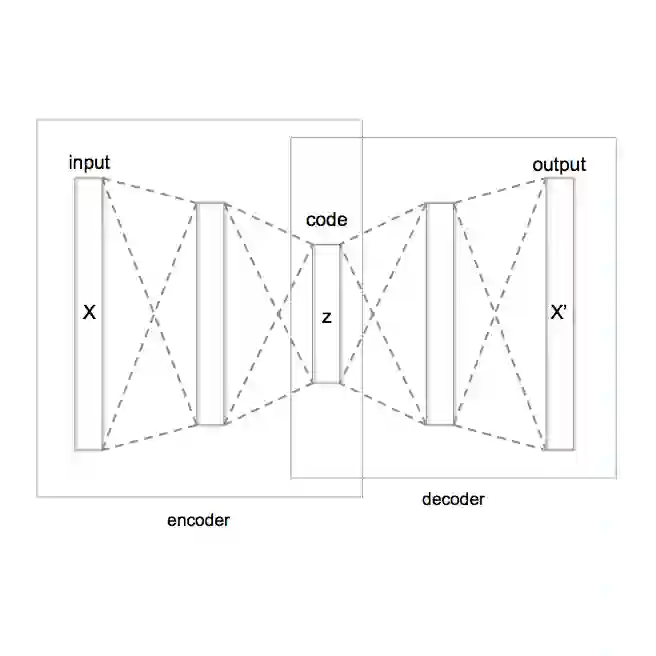
Numerical simulations of turbulent flows present significant challenges in fluid dynamics due to their complexity and high computational cost. High resolution techniques such as Direct Numerical Simulation (DNS) and Large Eddy Simulation (LES) are generally not computationally affordable, particularly for technologically relevant problems. Recent advances in machine learning, specifically in generative probabilistic models, offer promising alternatives for turbulence modeling. This paper investigates the application of three generative models - Variational Autoencoders (VAE), Deep Convolutional Generative Adversarial Networks (DCGAN), and Denoising Diffusion Probabilistic Models (DDPM) - in simulating a 2D K\'arm\'an vortex street around a fixed cylinder. Training data was obtained by means of LES. We evaluate each model's ability to capture the statistical properties and spatial structures of the turbulent flow. Our results demonstrate that DDPM and DCGAN effectively replicate the flow distribution, highlighting their potential as efficient and accurate tools for turbulence modeling. We find a strong argument for DCGAN, as although they are more difficult to train (due to problems such as mode collapse), they gave the fastest inference and training time, require less data to train compared to VAE and DDPM, and provide the results most closely aligned with the input stream. In contrast, VAE train quickly (and can generate samples quickly) but do not produce adequate results, and DDPM, whilst effective, is significantly slower at both inference and training time.
翻译:湍流数值模拟因其复杂性和高昂的计算成本,在流体动力学中面临重大挑战。高分辨率技术如直接数值模拟(DNS)和大涡模拟(LES)通常计算代价过高,特别是在处理技术相关问题时。机器学习的最新进展,尤其是生成式概率模型,为湍流建模提供了有前景的替代方案。本文研究了三种生成模型——变分自编码器(VAE)、深度卷积生成对抗网络(DCGAN)和去噪扩散概率模型(DDPM)——在模拟固定圆柱周围二维卡门涡街中的应用。训练数据通过LES获得。我们评估了每种模型捕捉湍流统计特性和空间结构的能力。结果表明,DDPM和DCGAN能有效复现流动分布,凸显了它们作为高效精确湍流建模工具的潜力。我们发现DCGAN具有显著优势:尽管训练难度较高(存在模式崩溃等问题),但其推理和训练速度最快,与VAE和DDPM相比所需训练数据更少,且生成结果与输入流场最为吻合。相比之下,VAE训练速度快(采样生成也快),但结果质量不足;而DDPM虽然有效,其推理和训练速度均显著缓慢。




相关内容



 微信扫码咨询专知VIP会员