

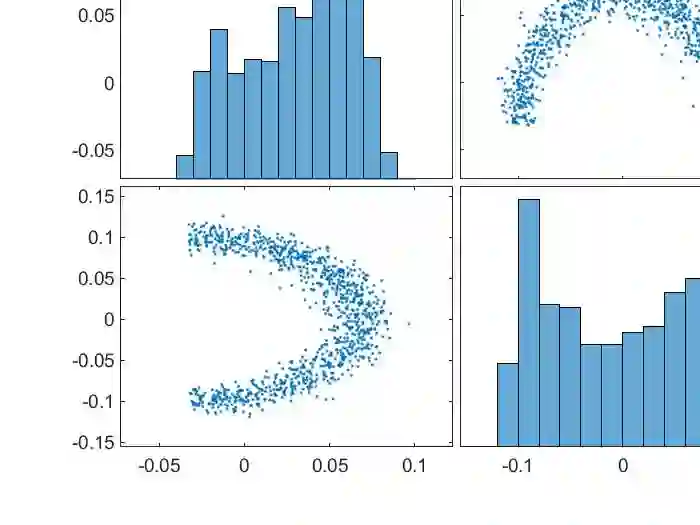
Sequential algorithms such as sequential importance sampling (SIS) and sequential Monte Carlo (SMC) have proven fundamental in Bayesian inference for models not admitting a readily available likelihood function. For approximate Bayesian computation (ABC), SMC-ABC is the state-of-art sampler. However, since the ABC paradigm is intrinsically wasteful, sequential ABC schemes can benefit from well-targeted proposal samplers that efficiently avoid improbable parameter regions. We contribute to the ABC modeller's toolbox with novel proposal samplers that are conditional to summary statistics of the data. In a sense, the proposed parameters are "guided" to rapidly reach regions of the posterior surface that are compatible with the observed data. This speeds up the convergence of these sequential samplers, thus reducing the computational effort, while preserving the accuracy in the inference. We provide a variety of guided Gaussian and copula-based samplers for both SIS-ABC and SMC-ABC easing inference for challenging case-studies, including multimodal posteriors, highly correlated posteriors, hierarchical models with high-dimensional summary statistics (180 summaries used to infer 21 parameters) and a simulation study of cell movements (using more than 400 summaries).
翻译:序列算法如序列重要性采样和序列蒙特卡洛在贝叶斯推断中已被证明是处理无法直接获得似然函数模型的基础工具。对于近似贝叶斯计算而言,SMC-ABC是最先进的采样器。然而,由于ABC范式本质上具有浪费性,序列ABC方案可受益于精准定向的提议采样器,从而有效避免低概率参数区域。我们为ABC建模工具箱贡献了新颖的提议采样器,这些采样器以数据汇总统计量为条件。从某种意义上说,所提出的参数被"引导"以快速到达与观测数据兼容的后验表面区域。这加速了这些序列采样器的收敛,从而在保持推断精度的同时减少计算量。我们为SIS-ABC和SMC-ABC提供了多种基于高斯和copula的引导式采样器,简化了具有挑战性的案例研究,包括多峰后验、高度相关后验、高维汇总统计量的层次模型(使用180个汇总统计量推断21个参数)以及细胞运动的仿真研究(使用超过400个汇总统计量)。







相关内容



 微信扫码咨询专知VIP会员