

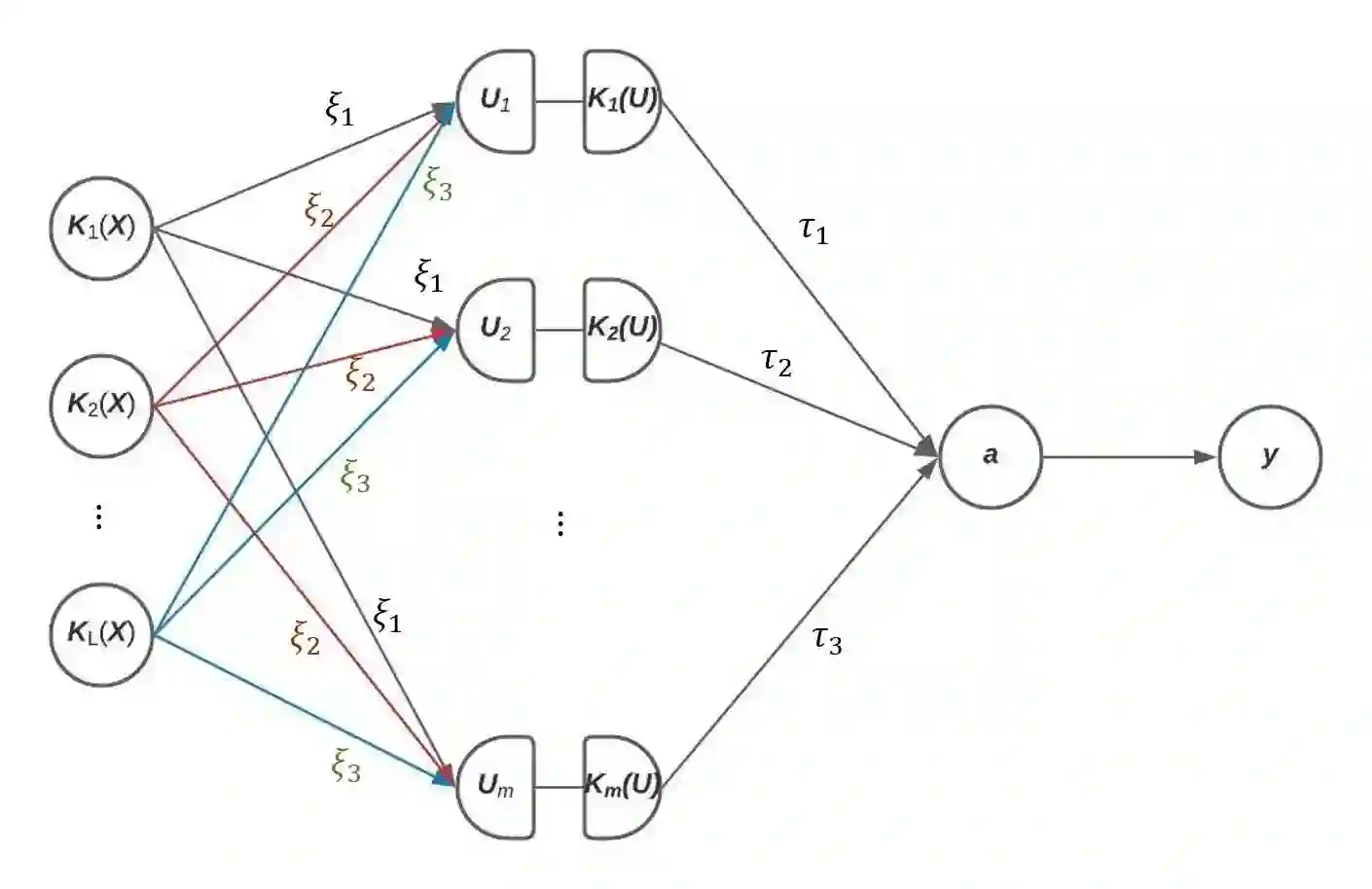
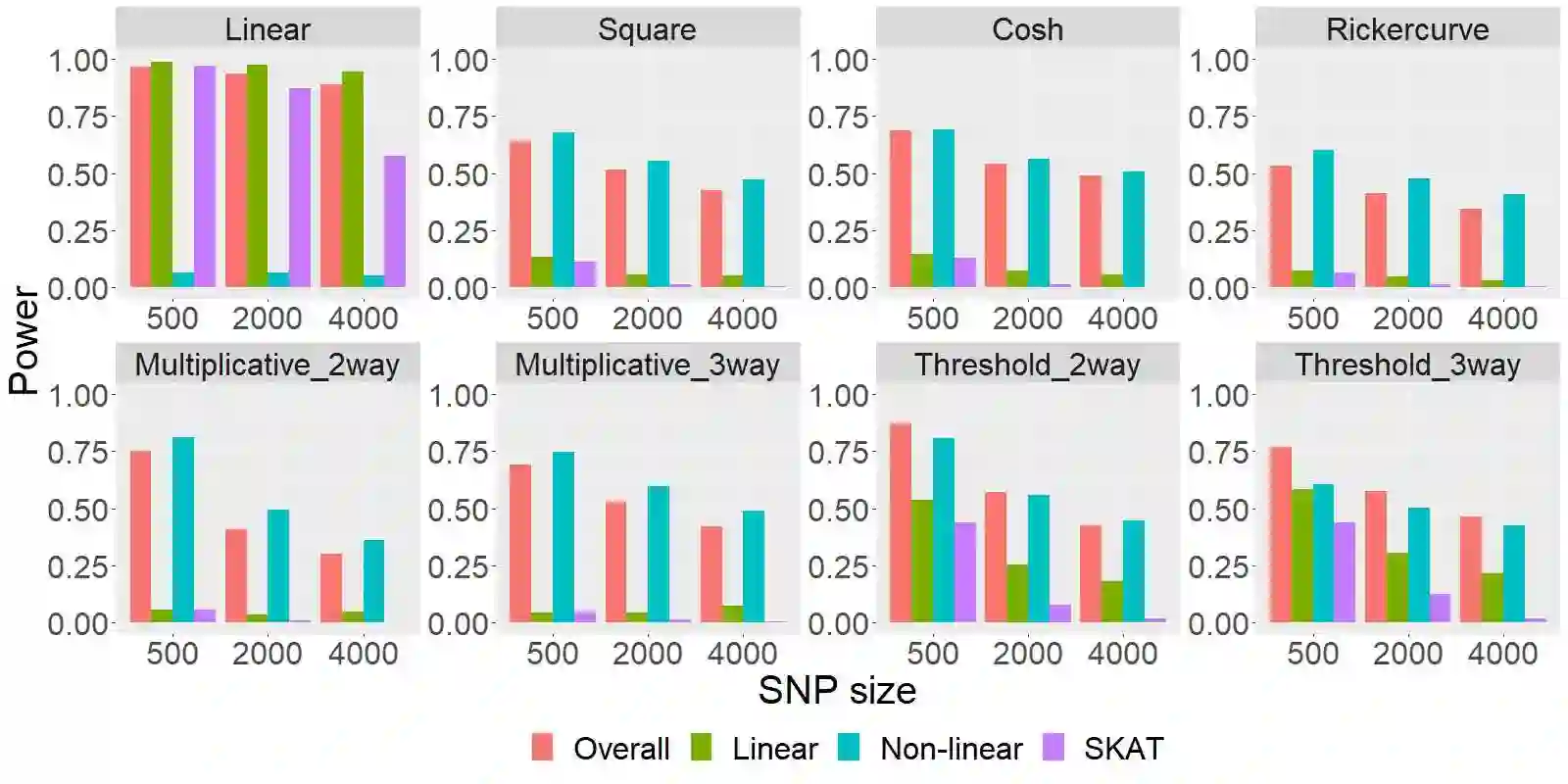
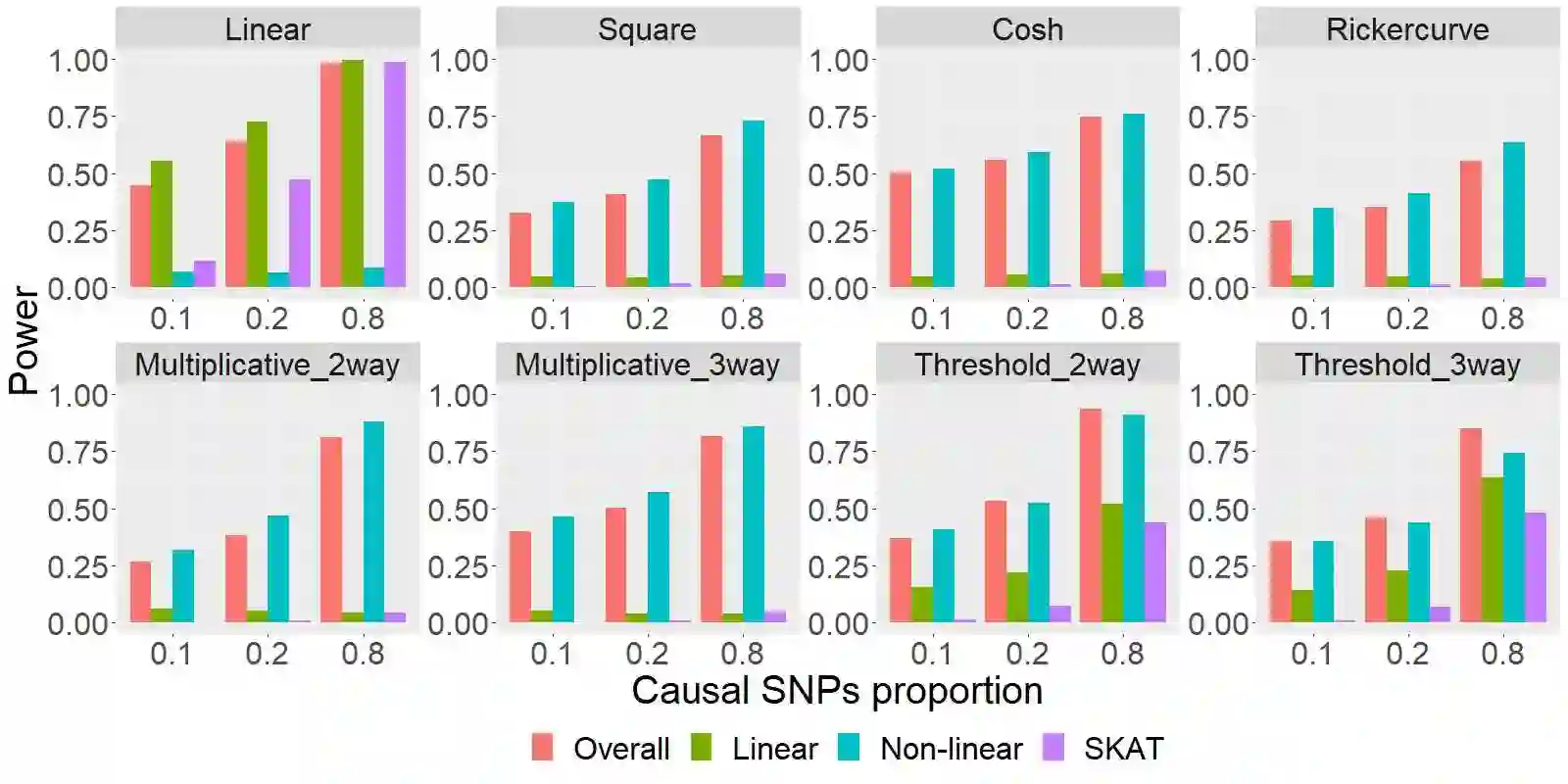
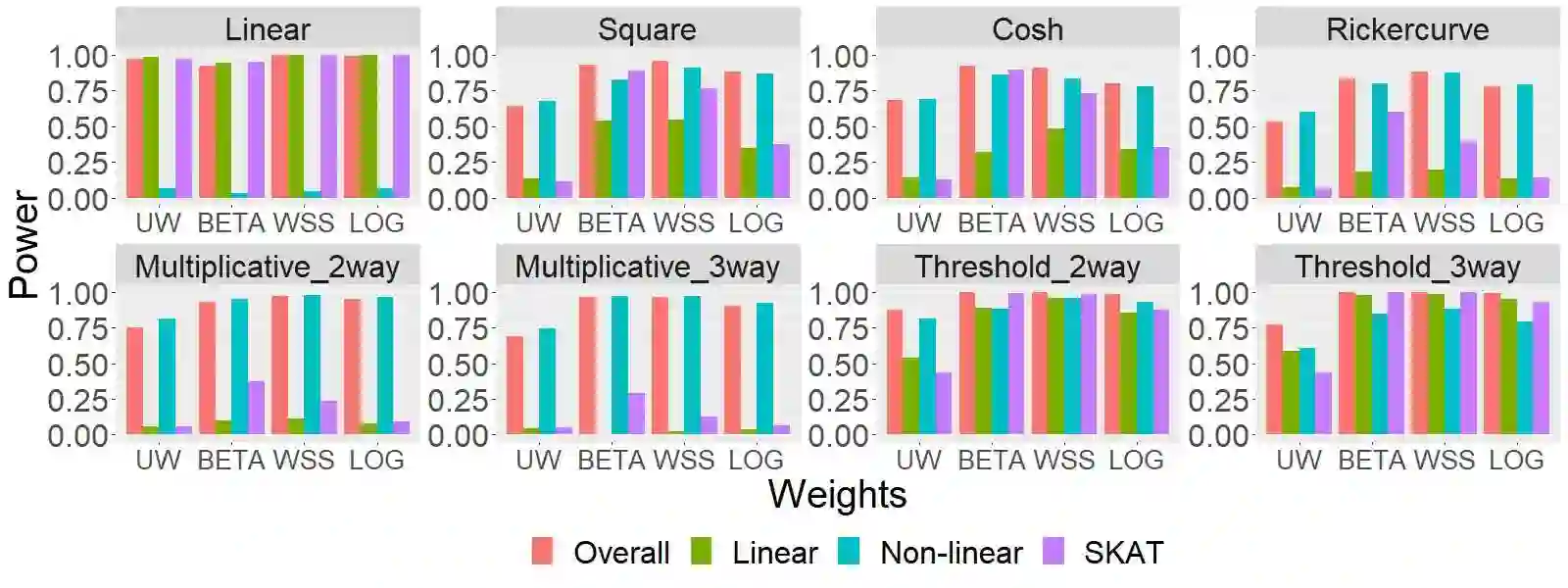
The recent development of artificial intelligence (AI) technology, especially the advance of deep neural network (DNN) technology, has revolutionized many fields. While DNN plays a central role in modern AI technology, it has been rarely used in sequencing data analysis due to challenges brought by high-dimensional sequencing data (e.g., overfitting). Moreover, due to the complexity of neural networks and their unknown limiting distributions, building association tests on neural networks for genetic association analysis remains a great challenge. To address these challenges and fill the important gap of using AI in high-dimensional sequencing data analysis, we introduce a new kernel-based neural network (KNN) test for complex association analysis of sequencing data. The test is built on our previously developed KNN framework, which uses random effects to model the overall effects of high-dimensional genetic data and adopts kernel-based neural network structures to model complex genotype-phenotype relationships. Based on KNN, a Wald-type test is then introduced to evaluate the joint association of high-dimensional genetic data with a disease phenotype of interest, considering non-linear and non-additive effects (e.g., interaction effects). Through simulations, we demonstrated that our proposed method attained higher power compared to the sequence kernel association test (SKAT), especially in the presence of non-linear and interaction effects. Finally, we apply the methods to the whole genome sequencing (WGS) dataset from the Alzheimer's Disease Neuroimaging Initiative (ADNI) study, investigating new genes associated with the hippocampal volume change over time.
翻译:人工智能(AI)技术的近期发展,特别是深度神经网络(DNN)技术的进步,已在多个领域引发革命性变革。尽管DNN在现代AI技术中扮演核心角色,但由于高通量测序数据带来的挑战(例如过拟合),该技术很少被应用于测序数据分析。此外,由于神经网络的复杂性及其未知的极限分布,基于神经网络构建遗传关联分析的关联检验仍面临巨大挑战。为解决这些问题并填补AI在高通量测序数据分析中的重要空白,我们提出了一种新的基于核的神经网络(KNN)检验,用于测序数据的复杂关联分析。该检验基于我们此前开发的KNN框架,该框架利用随机效应建模高通量遗传数据的整体效应,并采用基于核的神经网络结构来建模复杂的基因型-表型关系。在此基础上,引入了一种Wald型检验,用以评估高通量遗传数据与目标疾病表型的联合关联,同时考虑非线性和非加性效应(例如交互效应)。通过模拟实验,我们证明了所提方法比序列核关联检验(SKAT)具有更高统计功效,尤其在存在非线性和交互效应的情况下。最后,我们将该方法应用于阿尔茨海默病神经影像学倡议(ADNI)研究的全基因组测序(WGS)数据集,探究与海马体体积随时间变化相关的新基因。




相关内容




 微信扫码咨询专知VIP会员