

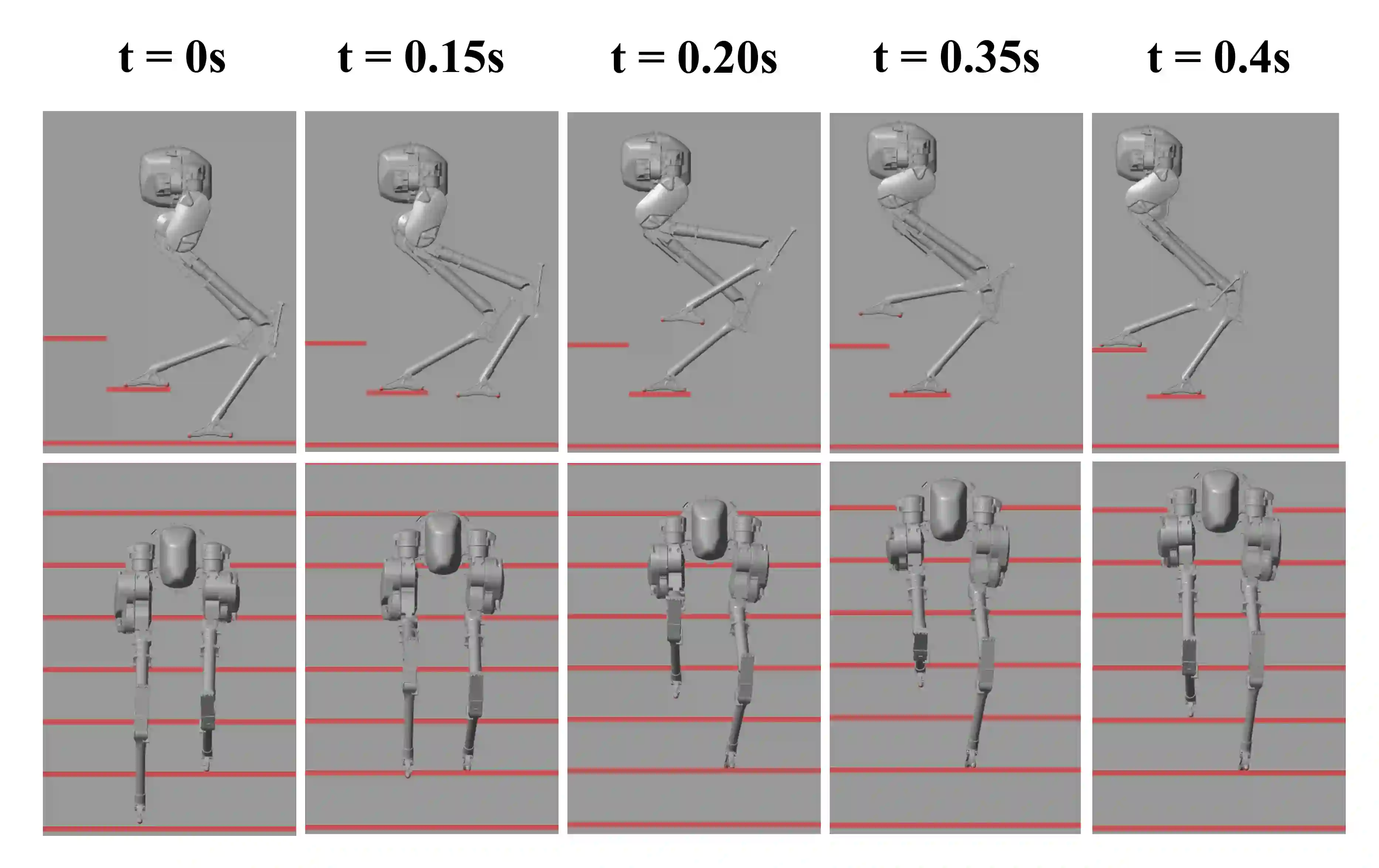
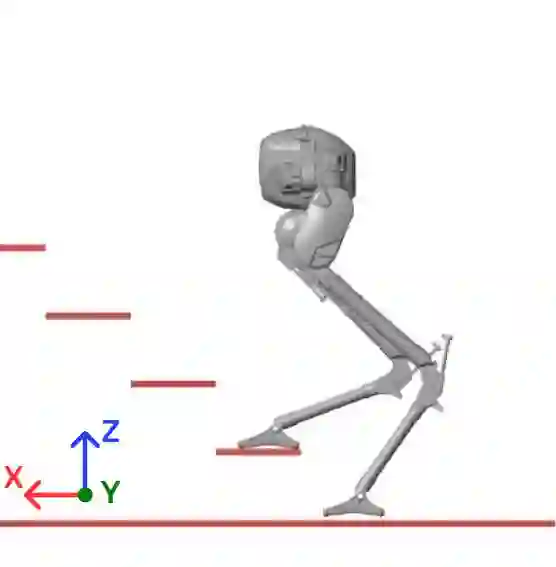
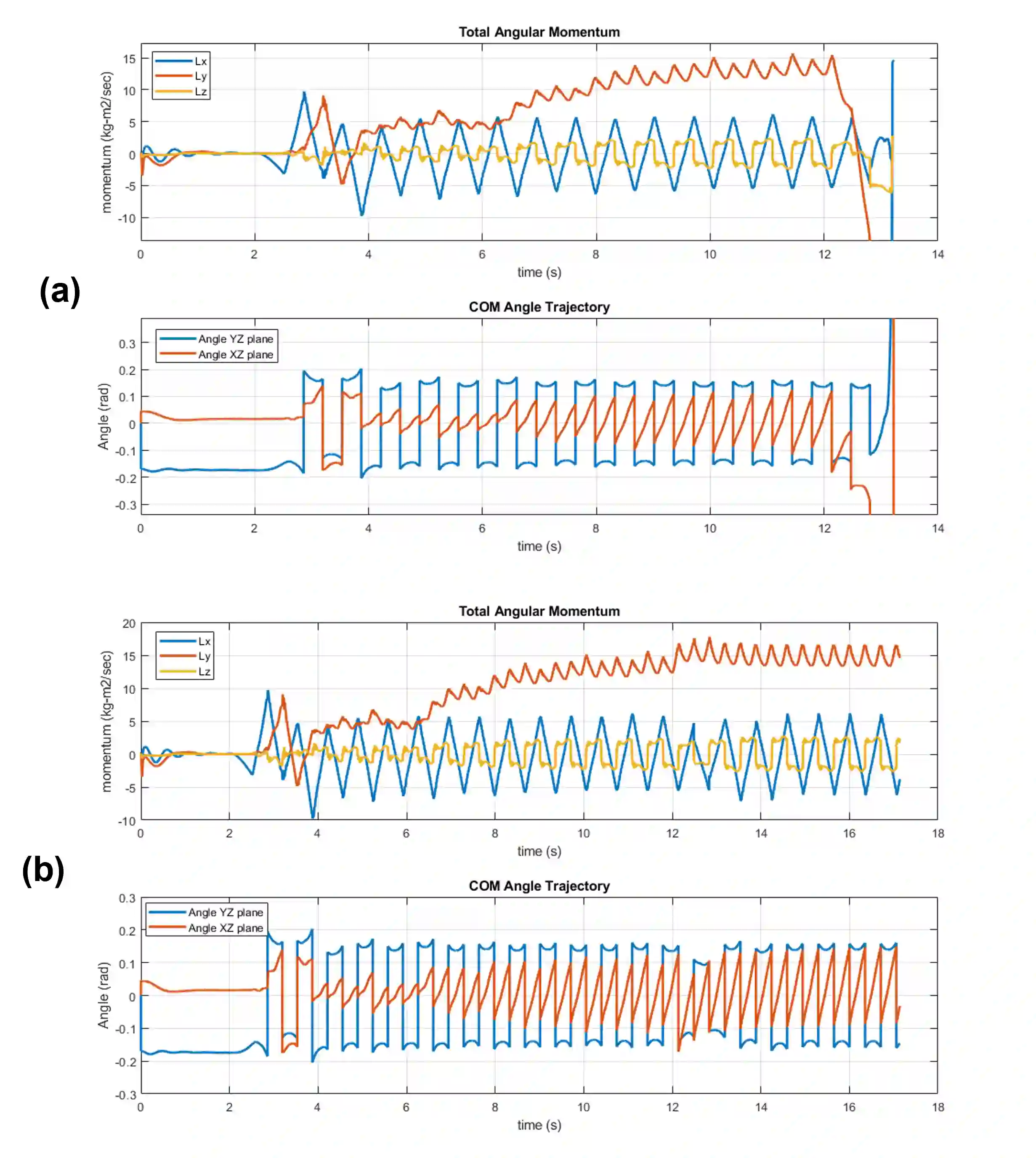
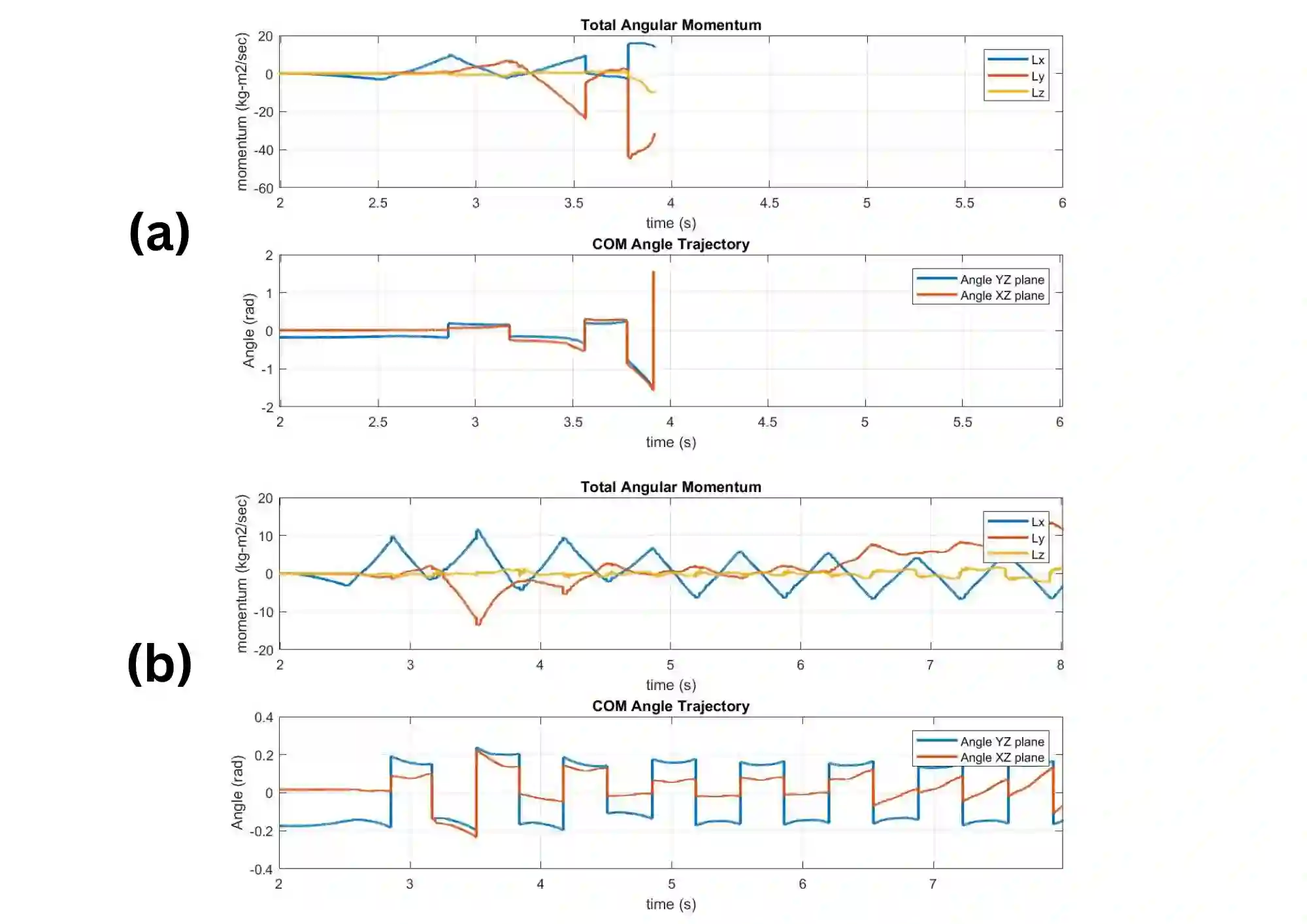
A new control paradigm using angular momentum and foot placement as state variables in the linear inverted pendulum model has expanded the realm of possibilities for the control of bipedal robots. This new paradigm, known as the ALIP model, has shown effectiveness in cases where a robot's center of mass height can be assumed to be constant or near constant as well as in cases where there are no non-kinematic restrictions on foot placement. Walking up and down stairs violates both of these assumptions, where center of mass height varies significantly within a step and the geometry of the stairs restrict the effectiveness of foot placement. In this paper, we explore a variation of the ALIP model that allows the length of the virtual pendulum formed by the robot's stance foot and center of mass to follow smooth trajectories during a step. We couple this model with a control strategy constructed from a novel combination of virtual constraint-based control and a model predictive control algorithm to stabilize a stair climbing gait that does not soley rely on foot placement. Simulations on a 20-degree of freedom model of the Cassie biped in the SimMechanics simulation environment show that the controller is able to achieve periodic gait.
翻译:一种以角动量和落脚位置为状态变量的线性倒立摆新控制范式,拓展了双足机器人控制的可能性空间。该新范式被称为ALIP模型,在机器人质心高度可视为常值或近似常值、且落脚位置不受非运动学约束的场景中已被验证具有有效性。上下楼梯行为同时违背这两项假设:质心高度在单步足内出现显著变化,而楼梯几何结构限制落脚位置的效用性。本文探索了ALIP模型的变体形式,允许机器人支撑足与质心构成的虚拟摆长度在单步足内沿平滑轨迹变化。我们将该模型与基于虚拟约束控制及模型预测控制算法的新型组合控制策略相结合,以稳定不完全依赖落脚位置的楼梯攀爬步态。基于SimMechanics仿真环境中Cassie双足机器人20自由度模型的仿真结果表明,该控制器能够实现周期性步态。





相关内容




 微信扫码咨询专知VIP会员