

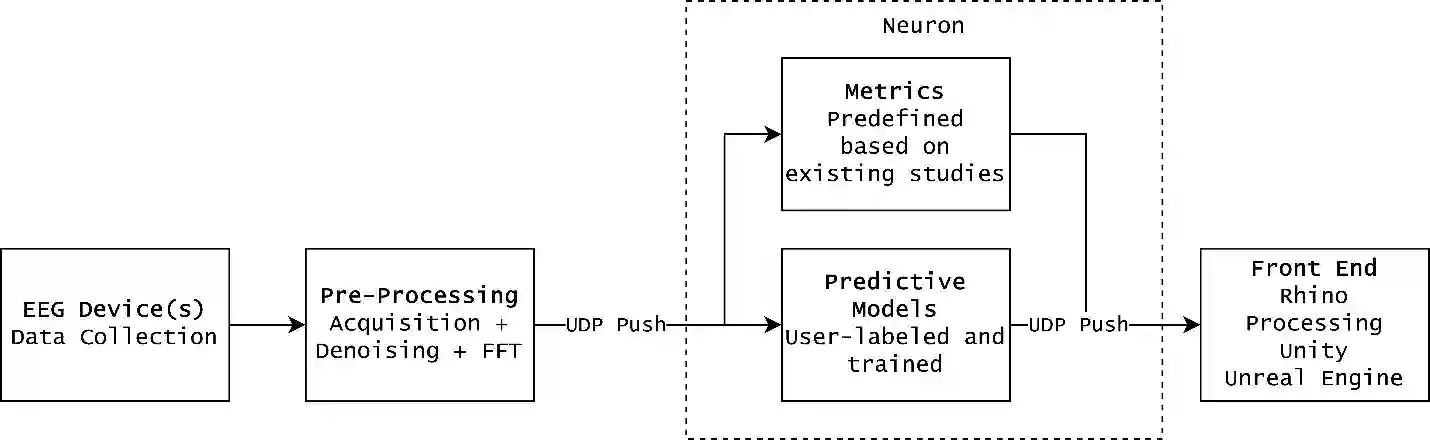
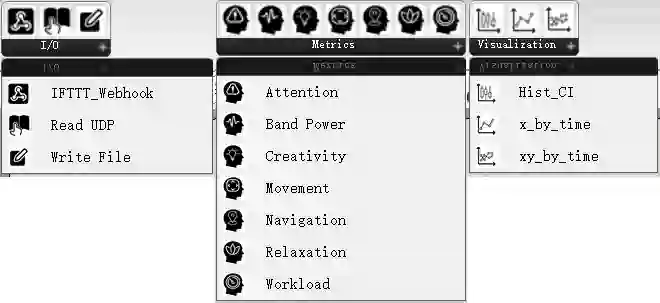
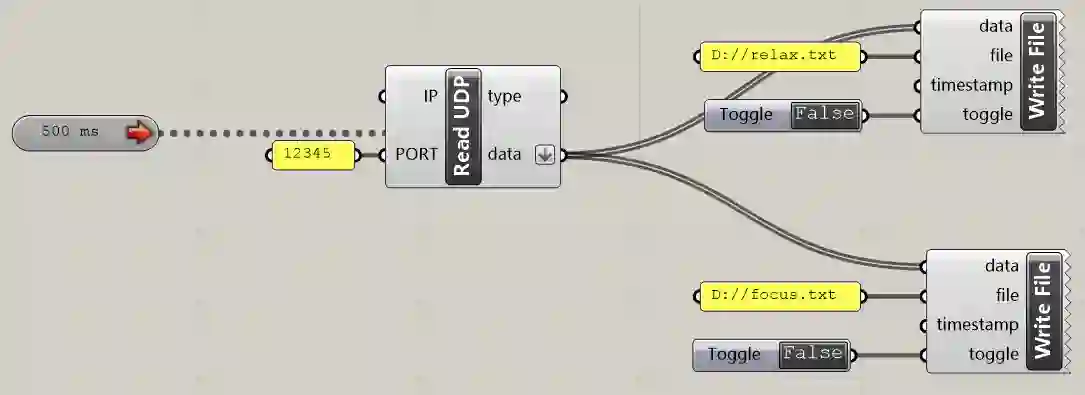
Over the last half century, the main application of Brain Computer Interfaces, BCIs has been controlling wheelchairs and neural prostheses or generating text or commands for people with restricted mobility. There has been very limited attention in the field to applications for computer aided design, despite the potential of BCIs to provide a new form of environmental interaction. In this paper we introduce the development and application of Neuron, a novel BCI tool that enables designers with little experience in neuroscience or computer programming to gain access to neurological data, along with established metrics relevant to design, create BCI interaction prototypes, both with digital onscreen objects and physical devices, and evaluate designs based on neurological information and record measurements for further analysis. After discussing the BCI tool development, the article presents its capabilities through two case studies, along with a brief evaluation of the tool performance and a discussion of implications, limitations, and future improvement.
翻译:过去半个世纪,脑机接口(BCI)的主要应用集中于控制轮椅和神经假体,或为行动受限人群生成文本与指令。尽管脑机接口具有提供新型环境交互方式的潜力,但该领域对计算机辅助设计的应用关注极为有限。本文介绍了新型脑机接口工具Neuron的开发与应用——该工具使缺乏神经科学或计算机编程经验的设计者能够获取神经数据、访问与设计相关的既定指标、创建包含数字屏幕对象与物理设备的脑机接口交互原型,并基于神经信息评估设计方案、记录测量数据以作进一步分析。在讨论该脑机接口工具的开发过程后,本文通过两个案例研究展示其功能,并简要评估工具性能,同时探讨其应用意义、局限性及未来改进方向。




相关内容




 微信扫码咨询专知VIP会员