

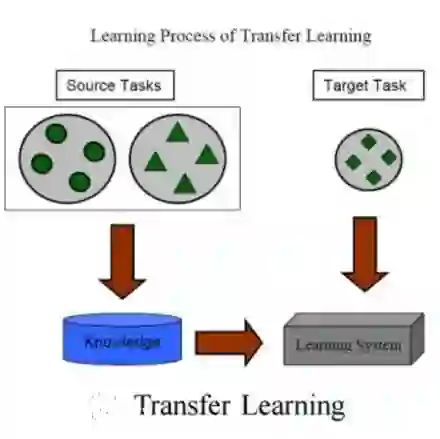
Medical internet of things leads to revolutionary improvements in medical services, also known as smart healthcare. With the big healthcare data, data mining and machine learning can assist wellness management and intelligent diagnosis, and achieve the P4-medicine. However, healthcare data has high sparsity and heterogeneity. In this paper, we propose a Heterogeneous Transferring Prediction System (HTPS). Feature engineering mechanism transforms the dataset into sparse and dense feature matrices, and autoencoders in the embedding networks not only embed features but also transfer knowledge from heterogeneous datasets. Experimental results show that the proposed HTPS outperforms the benchmark systems on various prediction tasks and datasets, and ablation studies present the effectiveness of each designed mechanism. Experimental results demonstrate the negative impact of heterogeneous data on benchmark systems and the high transferability of the proposed HTPS.
翻译:医疗物联网引领了医疗服务的革命性改进,亦称智慧医疗。借助海量医疗数据,数据挖掘与机器学习可辅助健康管理与智能诊断,实现P4医学。然而,医疗数据具有高度稀疏性与异质性。本文提出了一种异构迁移预测系统(HTPS)。特征工程机制将数据集转化为稀疏与稠密特征矩阵,嵌入网络中的自编码器不仅嵌入特征,还从异构数据集中迁移知识。实验结果表明,所提出的HTPS在多种预测任务与数据集上优于基准系统,消融研究验证了各设计机制的有效性。实验结果揭示了异构数据对基准系统的负面影响,以及所提出的HTPS的高迁移性。




相关内容


 微信扫码咨询专知VIP会员