

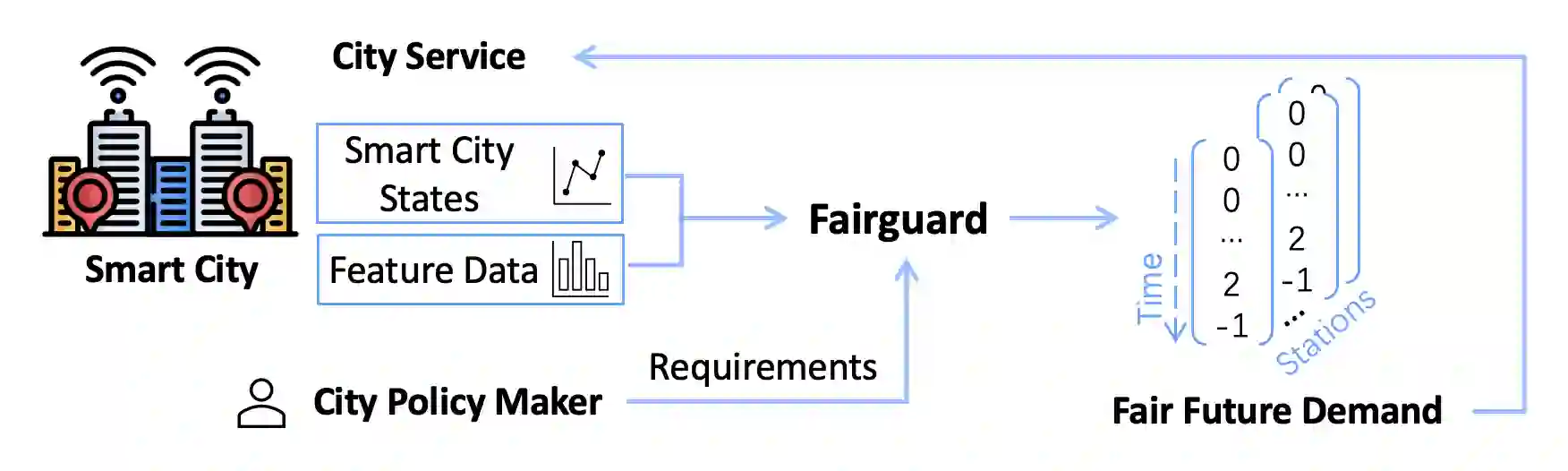
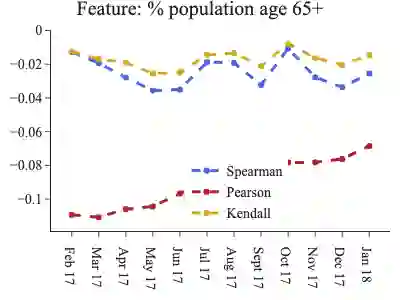
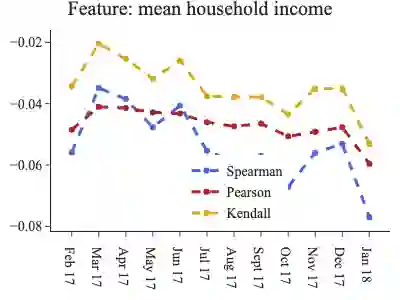
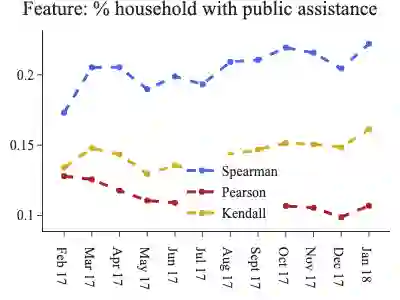
Smart cities operate on computational predictive frameworks that collect, aggregate, and utilize data from large-scale sensor networks. However, these frameworks are prone to multiple sources of data and algorithmic bias, which often lead to unfair prediction results. In this work, we first demonstrate that bias persists at a micro-level both temporally and spatially by studying real city data from Chattanooga, TN. To alleviate the issue of such bias, we introduce Fairguard, a micro-level temporal logic-based approach for fair smart city policy adjustment and generation in complex temporal-spatial domains. The Fairguard framework consists of two phases: first, we develop a static generator that is able to reduce data bias based on temporal logic conditions by minimizing correlations between selected attributes. Then, to ensure fairness in predictive algorithms, we design a dynamic component to regulate prediction results and generate future fair predictions by harnessing logic rules. Evaluations show that logic-enabled static Fairguard can effectively reduce the biased correlations while dynamic Fairguard can guarantee fairness on protected groups at run-time with minimal impact on overall performance.
翻译:智慧城市基于计算预测框架运行,该框架收集、汇总并利用大规模传感器网络中的数据。然而,这些框架易受多种数据与算法偏差来源的影响,往往导致不公平的预测结果。在本研究中,我们首先通过分析田纳西州查塔努加市的真实城市数据,证明偏差在微观层面同时呈现时间与空间上的持续性。为缓解此类偏差问题,我们提出Fairguard——一种基于微观层面时序逻辑的方法,用于在复杂时空域中实现公平的城市政策调整与生成。Fairguard框架包含两个阶段:首先,我们开发了一个静态生成器,通过最小化选定属性间的相关性,基于时序逻辑条件减少数据偏差;其次,为确保预测算法的公平性,我们设计了一个动态组件,通过利用逻辑规则调控预测结果并生成未来公平的预测。评估结果表明,启用逻辑的静态Fairguard能有效减少偏差相关性,而动态Fairguard能在运行时保证受保护群体的公平性,同时对整体性能的影响极小。




相关内容




 微信扫码咨询专知VIP会员