

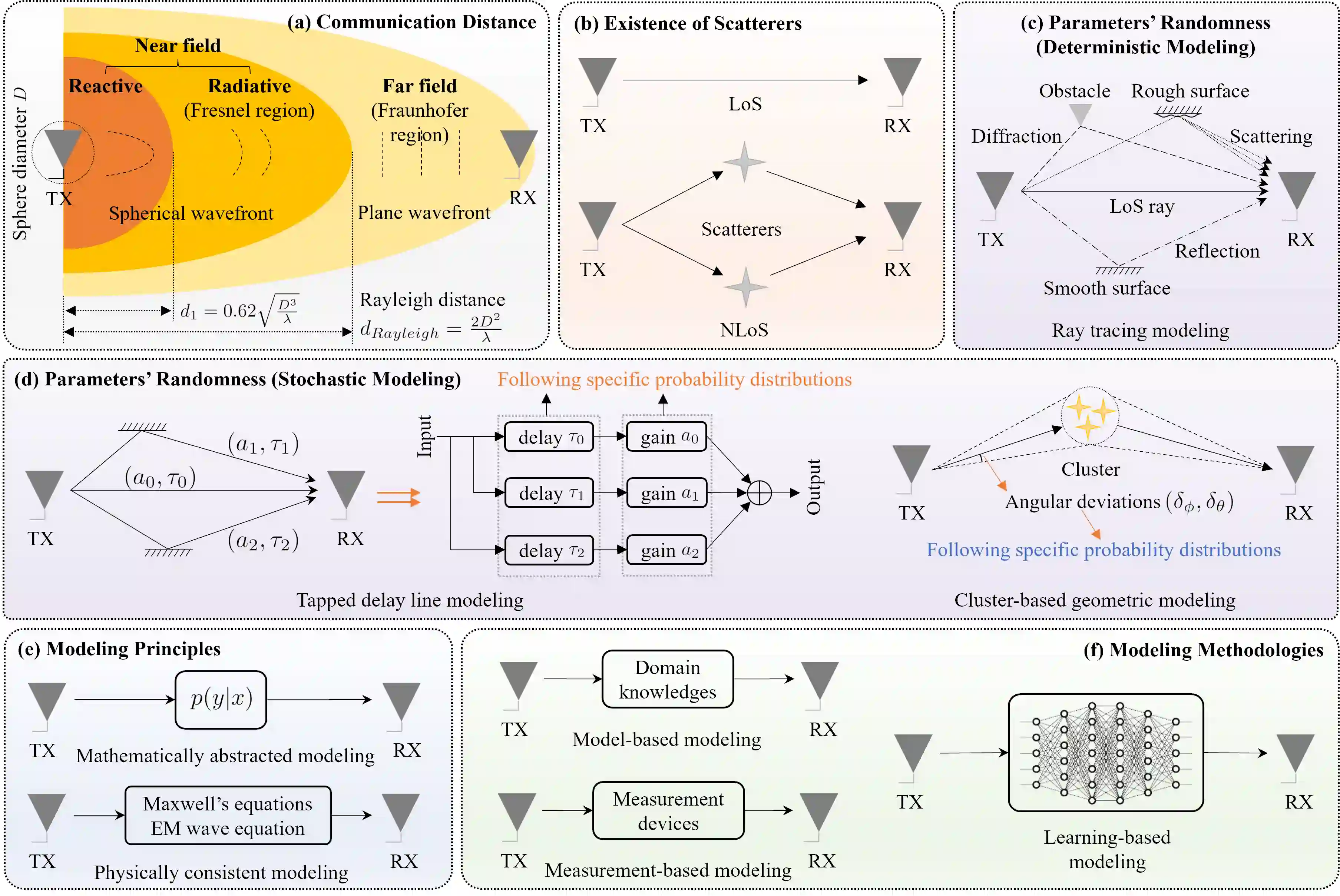
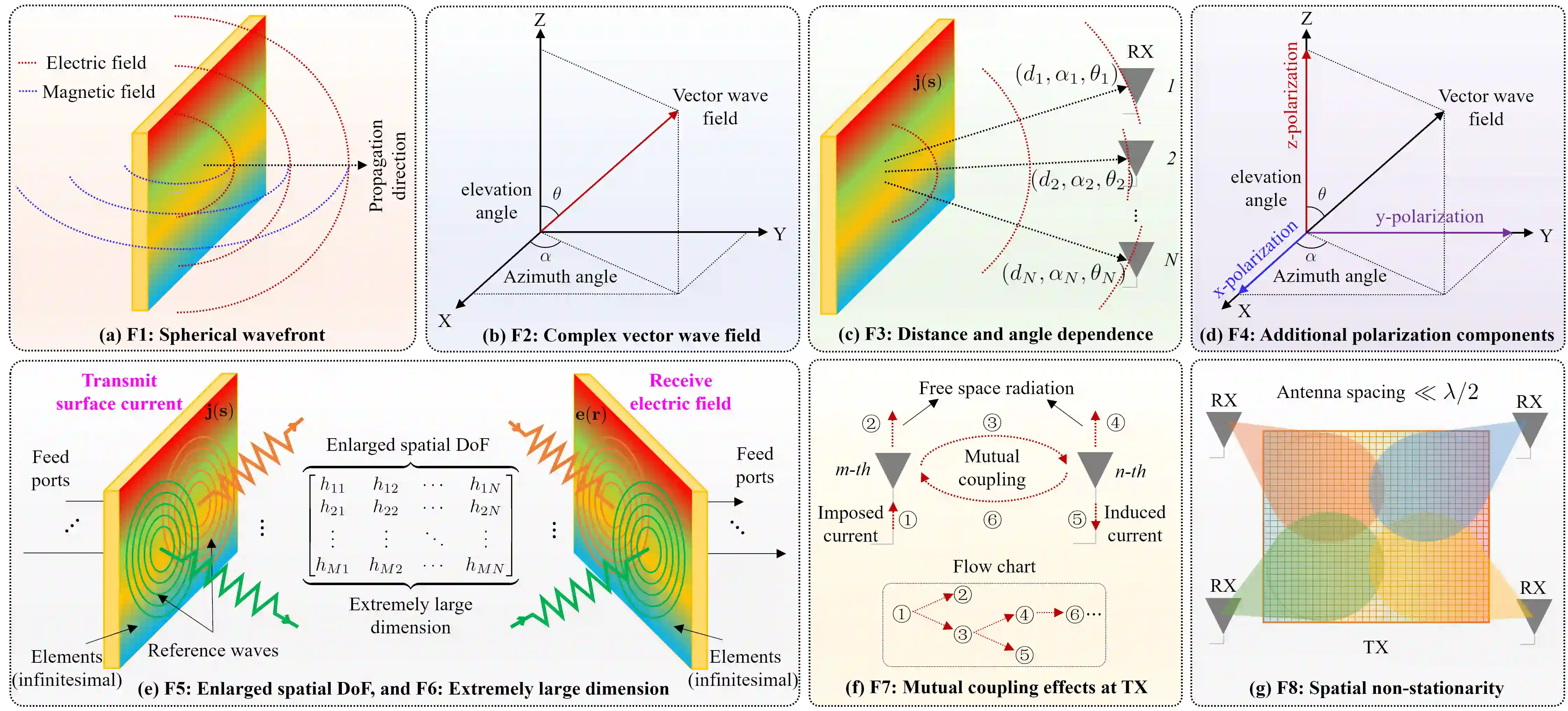
Empowered by the latest progress on innovative metamaterials/metasurfaces and advanced antenna technologies, holographic multiple-input multiple-output (H-MIMO) emerges as a promising technology to fulfill the extreme goals of the sixth-generation (6G) wireless networks. The antenna arrays utilized in H-MIMO comprise massive (possibly to extreme extent) numbers of antenna elements, densely spaced less than half-a-wavelength and integrated into a compact space, realizing an almost continuous aperture. Thanks to the expected low cost, size, weight, and power consumption, such apertures are expected to be largely fabricated for near-field communications. In addition, the physical features of H-MIMO enable manipulations directly on the electromagnetic (EM) wave domain and spatial multiplexing. To fully leverage this potential, near-field H-MIMO channel modeling, especially from the EM perspective, is of paramount significance. In this article, we overview near-field H-MIMO channel models elaborating on the various modeling categories and respective features, as well as their challenges and evaluation criteria. We also present EM-domain channel models that address the inherit computational and measurement complexities. Finally, the article is concluded with a set of future research directions on the topic.
翻译:受创新超材料/超表面技术及先进天线技术最新进展的驱动,全息多输入多输出(H-MIMO)作为实现第六代(6G)无线网络极端目标的前沿技术崭露头角。H-MIMO所采用的天线阵列包含海量(可能达到极致数量)天线单元,其间距小于半波长并集成于紧凑空间内,实现了近乎连续的孔径。得益于预期的低成本、小尺寸、轻重量和低功耗,此类孔径有望大规模应用于近场通信。此外,H-MIMO的物理特性使其能够直接在电磁(EM)波域进行操作并实现空间复用。为充分释放这一潜力,近场H-MIMO信道建模,尤其是从电磁视角出发的建模,具有至关重要的价值。本文综述了近场H-MIMO信道模型,详细阐述了各类建模范式及其特征,并剖析了相关挑战与评估准则。此外,我们提出了应对固有计算与测量复杂性的电磁域信道模型。最后,本文以该领域的若干未来研究方向作为总结。




相关内容





 微信扫码咨询专知VIP会员