

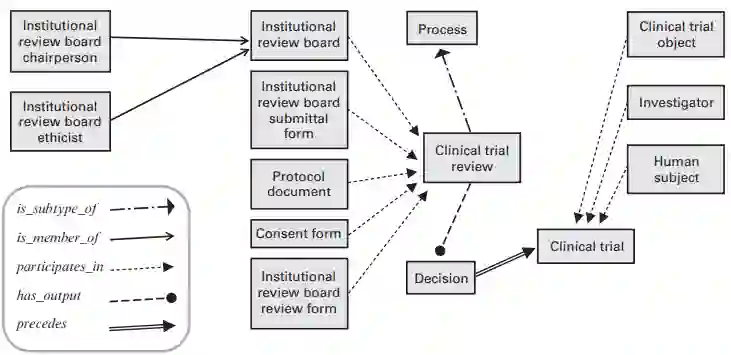
Countless domains rely on Machine Learning (ML) models, including safety-critical domains, such as autonomous driving, which this paper focuses on. While the black box nature of ML is simply a nuisance in some domains, in safety-critical domains, this makes ML models difficult to trust. To fully utilize ML models in safety-critical domains, it would be beneficial to have a method to improve trust in model robustness and accuracy without human experts checking each decision. This research proposes a method to increase trust in ML models used in safety-critical domains by ensuring the robustness and completeness of the model's training dataset. Because ML models embody what they are trained with, ensuring the completeness of training datasets can help to increase the trust in the training of ML models. To this end, this paper proposes the use of a domain ontology and an image quality characteristic ontology to validate the domain completeness and image quality robustness of a training dataset. This research also presents an experiment as a proof of concept for this method, where ontologies are built for the emergency road vehicle domain.
翻译:机器学习模型已在无数领域得到应用,包括本文重点关注的自动驾驶等安全攸关领域。尽管机器学习模型的“黑箱”特性在某些领域仅带来不便,但在安全攸关领域中,这导致模型难以获得信任。为在安全攸关领域充分发挥机器学习模型的潜力,亟需一种无需人工专家逐项核查即可提升模型鲁棒性与准确性可信度的方法。本研究提出通过确保模型训练数据集的鲁棒性与完备性,以增强安全攸关领域机器学习模型的可信度。由于机器学习模型本质上是其训练数据的体现,保障训练数据集的完备性有助于提升对模型训练过程的信任。为此,本文提出利用领域本体与图像质量特征本体,对训练数据集进行领域完备性与图像质量鲁棒性验证。本研究还通过构建应急道路车辆领域的本体并开展实验,为该方法的可行性提供了概念验证。




相关内容




 微信扫码咨询专知VIP会员