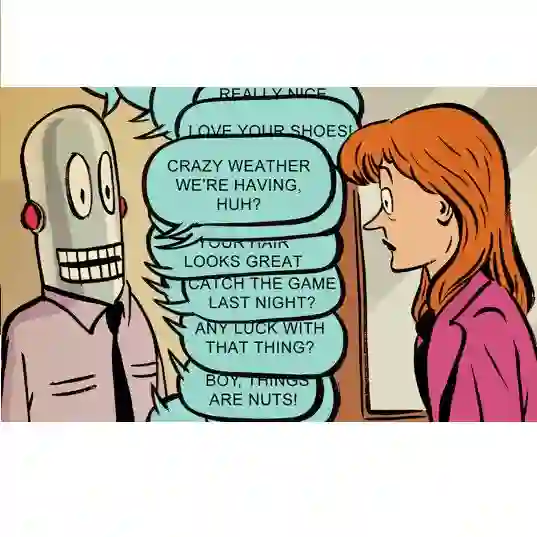
As a general purpose technology without a concrete pre-defined purpose, personal chatbots can be used for a whole range of objectives, depending on the personal needs, contexts, and tasks of an individual, and so potentially impact a variety of values, people, and social contexts. Traditional methods of risk assessment are confronted with several challenges: the lack of a clearly defined technology purpose, the lack of a clearly defined values to orient on, the heterogeneity of uses, and the difficulty of actively engaging citizens themselves in anticipating impacts from the perspective of their individual lived realities. In this article, we leverage scenario writing at scale as a method for anticipating AI impact that is responsive to these challenges. The advantages of the scenario method are its ability to engage individual users and stimulate them to consider how chatbots are likely to affect their reality and so collect different impact scenarios depending on the cultural and societal embedding of a heterogeneous citizenship. Empirically, we tasked 106 US-citizens to write short fictional stories about the future impact (whether desirable or undesirable) of AI-based personal chatbots on individuals and society and, in addition, ask respondents to explain why these impacts are important and how they relate to their values. In the analysis process, we map those impacts and analyze them in relation to socio-demographic as well as AI-related attitudes of the scenario writers. We show that our method is effective in (1) identifying and mapping desirable and undesirable impacts of AI-based personal chatbots, (2) setting these impacts in relation to values that are important for individuals, and (3) detecting socio-demographic and AI-attitude related differences of impact anticipation.


翻译:作为一项没有具体预设目的的通用技术,个人聊天机器人可根据个体的个人需求、情境和任务用于各种目标,因此可能影响多种价值观、人群和社会环境。传统风险评估方法面临若干挑战:缺乏明确的技术目的、缺乏明确的价值观导向、使用方式的异质性,以及难以让公民基于自身现实生活体验积极参与影响预测。在本文中,我们将大规模场景编写作为一种应对这些挑战的AI影响预测方法。场景方法的优势在于:能够吸引个体用户参与,促使他们思考聊天机器人可能如何影响自身现实,从而收集因多元公民群体的文化和社会嵌入而不同的影响场景。在实证研究中,我们让106名美国公民撰写关于AI个人聊天机器人对未来个人和社会的影响(无论期待或不期待)的短篇虚构故事,并额外要求受访者解释这些影响为何重要及其与自身价值观的关系。在分析过程中,我们映射这些影响,并将其与场景作者的社会人口学特征及AI相关态度进行关联分析。我们证明该方法能够有效:(1)识别并映射AI个人聊天机器的期待与非期待影响,(2)将这些影响与个体重视的价值观相关联,(3)检测影响预测中的社会人口学和AI态度相关差异。


0
下载
关闭预览

相关内容

Chatbot,聊天机器人。 chatbot是场交互革命,也是一个多技术融合的平台。上图给出了构建一个chatbot需要具备的组件,简单地说chatbot = NLU(Natural Language Understanding) + NLG(Natural Language Generation)。

知识荟萃

精品入门和进阶教程、论文和代码整理等

更多

查看相关VIP内容、论文、资讯等
Linux导论,Introduction to Linux,96页ppt
专知会员服务
82+阅读 · 2020年7月26日
FlowQA: Grasping Flow in History for Conversational Machine Comprehension
专知会员服务
35+阅读 · 2019年10月18日
Stabilizing Transformers for Reinforcement Learning
专知会员服务
61+阅读 · 2019年10月17日
《DeepGCNs: Making GCNs Go as Deep as CNNs》
专知会员服务
32+阅读 · 2019年10月17日
Keras François Chollet 《Deep Learning with Python 》, 386页pdf
专知会员服务
164+阅读 · 2019年10月12日
【SIGGRAPH2019】TensorFlow 2.0深度学习计算机图形学应用
专知会员服务
41+阅读 · 2019年10月9日
Transferring Knowledge across Learning Processes
CreateAMind
29+阅读 · 2019年5月18日
强化学习的Unsupervised Meta-Learning
CreateAMind
18+阅读 · 2019年1月7日
Unsupervised Learning via Meta-Learning
CreateAMind
44+阅读 · 2019年1月3日
meta learning 17年:MAML SNAIL
CreateAMind
11+阅读 · 2019年1月2日
A Technical Overview of AI & ML in 2018 & Trends for 2019
待字闺中
18+阅读 · 2018年12月24日
disentangled-representation-papers
CreateAMind
26+阅读 · 2018年9月12日
STRCF for Visual Object Tracking
统计学习与视觉计算组
15+阅读 · 2018年5月29日
Focal Loss for Dense Object Detection
统计学习与视觉计算组
12+阅读 · 2018年3月15日
IJCAI | Cascade Dynamics Modeling with Attention-based RNN
KingsGarden
13+阅读 · 2017年7月16日
From Softmax to Sparsemax-ICML16(1)
KingsGarden
74+阅读 · 2016年11月26日
国家自然科学基金
13+阅读 · 2017年12月31日
国家自然科学基金
2+阅读 · 2015年12月31日
国家自然科学基金
0+阅读 · 2015年12月31日
国家自然科学基金
1+阅读 · 2015年12月31日
国家自然科学基金
47+阅读 · 2015年12月31日
国家自然科学基金
2+阅读 · 2015年12月31日
国家自然科学基金
0+阅读 · 2014年12月31日
国家自然科学基金
0+阅读 · 2014年12月31日
Arxiv
34+阅读 · 2022年12月20日
VIP会员
最新内容
面向国防作战的最佳自主与蜂群无人机技术
专知会员服务
6+阅读 · 7月28日
《异构人类团队的协作决策过程混合建模研究》
博士论文 | 面向大模型推理的内存高效算法
专知会员服务
5+阅读 · 7月27日
美空军新型反无人机部队初探
专知会员服务
8+阅读 · 7月27日
《防空交战流程的概率建模研究》
专知会员服务
12+阅读 · 7月27日
ICML 2026 教程 | 数值优化理论还重要吗?
专知会员服务
7+阅读 · 7月26日
ICM 2026 | 陶哲轩:人工智能时代的数学
专知会员服务
10+阅读 · 7月26日
相关VIP内容
相关资讯
Transferring Knowledge across Learning Processes
CreateAMind
29+阅读 · 2019年5月18日
强化学习的Unsupervised Meta-Learning
CreateAMind
18+阅读 · 2019年1月7日
Unsupervised Learning via Meta-Learning
CreateAMind
44+阅读 · 2019年1月3日
meta learning 17年:MAML SNAIL
CreateAMind
11+阅读 · 2019年1月2日
A Technical Overview of AI & ML in 2018 & Trends for 2019
待字闺中
18+阅读 · 2018年12月24日
disentangled-representation-papers
CreateAMind
26+阅读 · 2018年9月12日
STRCF for Visual Object Tracking
统计学习与视觉计算组
15+阅读 · 2018年5月29日
Focal Loss for Dense Object Detection
统计学习与视觉计算组
12+阅读 · 2018年3月15日
IJCAI | Cascade Dynamics Modeling with Attention-based RNN
KingsGarden
13+阅读 · 2017年7月16日
From Softmax to Sparsemax-ICML16(1)
KingsGarden
74+阅读 · 2016年11月26日
相关基金
国家自然科学基金
13+阅读 · 2017年12月31日
国家自然科学基金
2+阅读 · 2015年12月31日
国家自然科学基金
0+阅读 · 2015年12月31日
国家自然科学基金
1+阅读 · 2015年12月31日
国家自然科学基金
47+阅读 · 2015年12月31日
国家自然科学基金
2+阅读 · 2015年12月31日
国家自然科学基金
0+阅读 · 2014年12月31日
国家自然科学基金
0+阅读 · 2014年12月31日
Top
微信扫码咨询专知VIP会员