

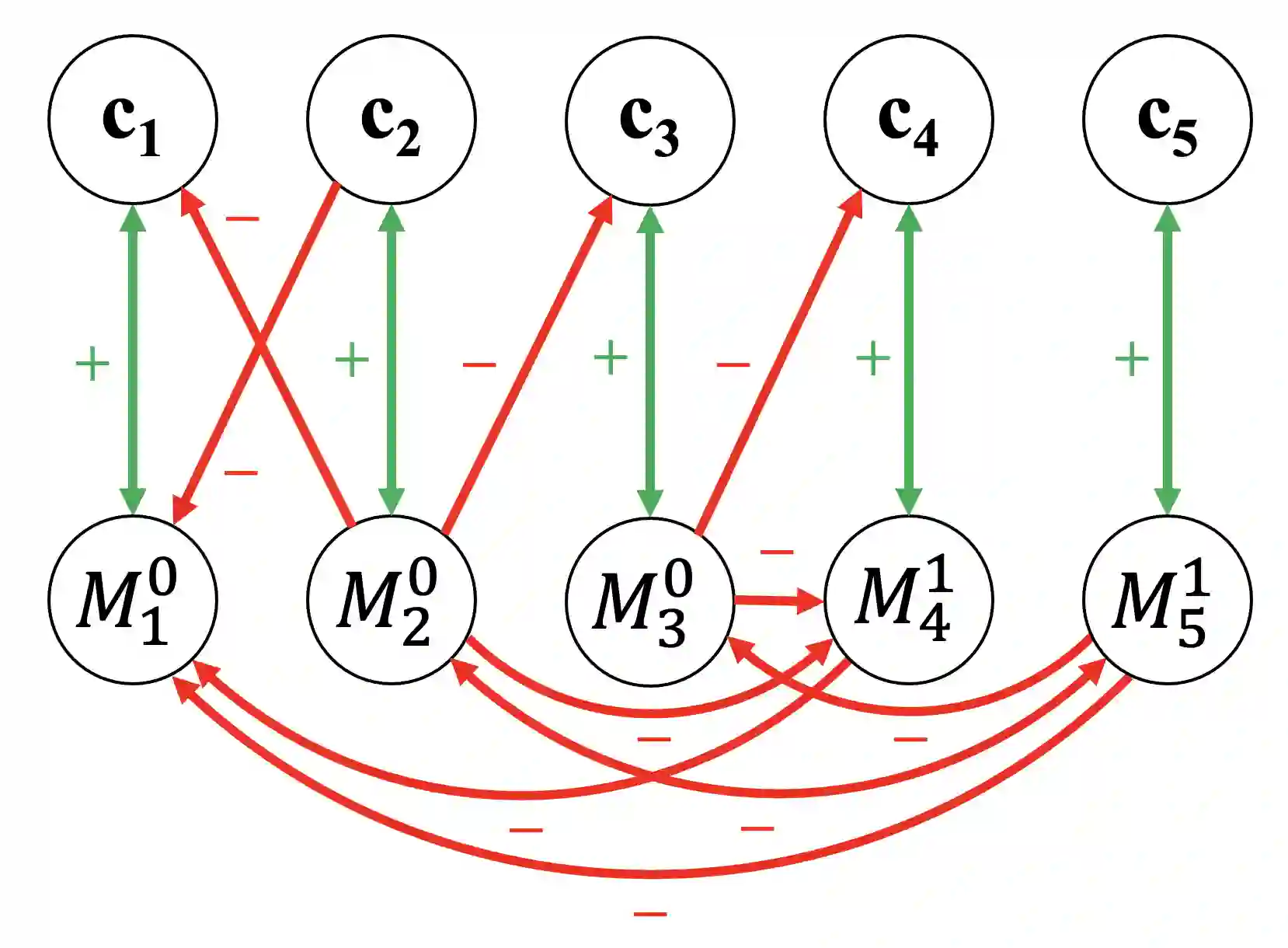
Model Multiplicity (MM) arises when multiple, equally performing machine learning models can be trained to solve the same prediction task. Recent studies show that models obtained under MM may produce inconsistent predictions for the same input. When this occurs, it becomes challenging to provide counterfactual explanations (CEs), a common means for offering recourse recommendations to individuals negatively affected by models' predictions. In this paper, we formalise this problem, which we name recourse-aware ensembling, and identify several desirable properties which methods for solving it should satisfy. We show that existing ensembling methods, naturally extended in different ways to provide CEs, fail to satisfy these properties. We then introduce argumentative ensembling, deploying computational argumentation to guarantee robustness of CEs to MM, while also accommodating customisable user preferences. We show theoretically and experimentally that argumentative ensembling satisfies properties which the existing methods lack, and that the trade-offs are minimal wrt accuracy.
翻译:模型多重性(MM)是指在解决同一预测任务时,存在多个性能相当的机器学习模型。近期研究表明,MM下获得的模型可能对相同输入产生不一致的预测结果。这种现象使得为受模型预测负面影响的个体提供反事实解释(CEs)——一种常见的补救建议机制——变得困难。本文正式定义了这一问题(称为归责感知集成),并提出了求解方法应具备的若干理想性质。我们证明,现有集成方法(通过不同方式自然扩展以提供CEs)无法满足这些性质。随后引入论证集成方法,利用计算论证技术保障CEs对MM的鲁棒性,同时兼容可定制的用户偏好。理论与实验表明,论证集成满足了现有方法缺乏的性质,且在准确率方面的折中极小。




相关内容




 微信扫码咨询专知VIP会员