

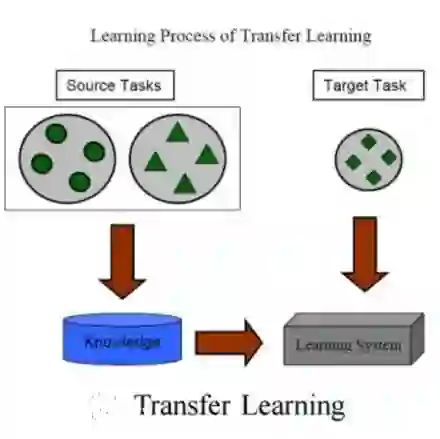
With rapid progress in deep learning, neural networks have been widely used in scientific research and engineering applications as surrogate models. Despite the great success of neural networks in fitting complex systems, two major challenges still remain: i) the lack of generalization on different problems/datasets, and ii) the demand for large amounts of simulation data that are computationally expensive. To resolve these challenges, we propose the differentiable \mf (DMF) model, which leverages neural architecture search (NAS) to automatically search the suitable model architecture for different problems, and transfer learning to transfer the learned knowledge from low-fidelity (fast but inaccurate) data to high-fidelity (slow but accurate) model. Novel and latest machine learning techniques such as hyperparameters search and alternate learning are used to improve the efficiency and robustness of DMF. As a result, DMF can efficiently learn the physics simulations with only a few high-fidelity training samples, and outperform the state-of-the-art methods with a significant margin (with up to 58$\%$ improvement in RMSE) based on a variety of synthetic and practical benchmark problems.
翻译:随着深度学习的快速发展,神经网络作为代理模型已广泛应用于科学研究和工程应用中。尽管神经网络在拟合复杂系统方面取得了巨大成功,但仍面临两大挑战:i) 对不同问题/数据集的泛化能力不足,以及ii) 对计算成本高昂的大量模拟数据的需求。为解决这些挑战,我们提出可微分多保真(DMF)模型,该模型利用神经架构搜索(NAS)自动搜索适合不同问题的模型架构,并通过迁移学习将低保真(快速但不准确)数据中学到的知识迁移到高保真(缓慢但准确)模型中。采用超参数搜索和交替学习等新颖且前沿的机器学习技术,以提高DMF的效率和鲁棒性。结果表明,DMF仅需少量高保真训练样本即可高效学习物理模拟,并在多种合成及实际基准问题上以显著优势(RMSE提升高达58%)超越现有最优方法。




相关内容




 微信扫码咨询专知VIP会员