

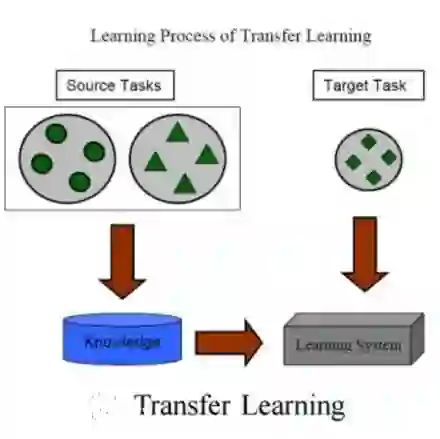
Due to data privacy constraints, data sharing among multiple clinical centers is restricted, which impedes the development of high performance deep learning models from multicenter collaboration. Naive weight transfer methods share intermediate model weights without raw data and hence can bypass data privacy restrictions. However, performance drops are typically observed when the model is transferred from one center to the next because of the forgetting problem. Incremental transfer learning, which combines peer-to-peer federated learning and domain incremental learning, can overcome the data privacy issue and meanwhile preserve model performance by using continual learning techniques. In this work, a conventional domain/task incremental learning framework is adapted for incremental transfer learning. A comprehensive survey on the efficacy of different regularization-based continual learning methods for multicenter collaboration is performed. The influences of data heterogeneity, classifier head setting, network optimizer, model initialization, center order, and weight transfer type have been investigated thoroughly. Our framework is publicly accessible to the research community for further development.
翻译:由于数据隐私限制,多中心间的数据共享受到制约,这阻碍了通过多中心协作开发高性能深度学习模型。朴素权重迁移方法通过共享中间模型权重而非原始数据,可规避数据隐私约束。然而,当模型在中心间迁移时,因遗忘问题常导致性能下降。融合对等联邦学习与领域增量学习的增量迁移学习,既能克服数据隐私问题,又能通过持续学习技术保持模型性能。本研究改进了传统领域/任务增量学习框架以适配增量迁移学习,系统综述了基于正则化的不同持续学习方法在多中心协作中的有效性,并深入探究了数据异质性、分类器头部设置、网络优化器、模型初始化、中心顺序及权重迁移类型的影响。本框架已向研究社区开放,以促进后续发展。




相关内容


 微信扫码咨询专知VIP会员