

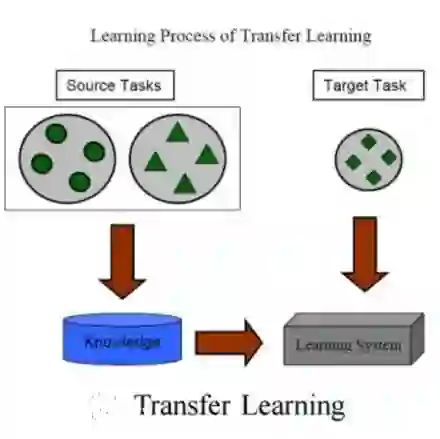
Utilizing large pre-trained models for specific tasks has yielded impressive results. However, fully fine-tuning these increasingly large models is becoming prohibitively resource-intensive. This has led to a focus on more parameter-efficient transfer learning, primarily within the same modality. But this approach has limitations, particularly in video understanding where suitable pre-trained models are less common. Addressing this, our study introduces a novel cross-modality transfer learning approach from images to videos, which we call parameter-efficient image-to-video transfer learning. We present the Facial-Emotion Adapter (FE-Adapter), designed for efficient fine-tuning in video tasks. This adapter allows pre-trained image models, which traditionally lack temporal processing capabilities, to analyze dynamic video content efficiently. Notably, it uses about 15 times fewer parameters than previous methods, while improving accuracy. Our experiments in video emotion recognition demonstrate that the FE-Adapter can match or even surpass existing fine-tuning and video emotion models in both performance and efficiency. This breakthrough highlights the potential for cross-modality approaches in enhancing the capabilities of AI models, particularly in fields like video emotion analysis where the demand for efficiency and accuracy is constantly rising.
翻译:利用大型预训练模型处理特定任务已取得显著成果。然而,对这些日益庞大的模型进行全参数微调正变得资源消耗过高。这促使研究重点转向参数效率更高的迁移学习方法,但现有工作主要局限于单一模态内部。此类方法存在局限性,尤其在视频理解领域,合适的预训练模型较为稀缺。针对这一问题,本研究提出一种新颖的跨模态图像到视频迁移学习方法,称为参数高效的图像-视频迁移学习。我们设计了面部情感适配器(FE-Adapter),专为视频任务的高效微调而构建。该适配器使原本缺乏时序处理能力的预训练图像模型能够高效分析动态视频内容。值得注意的是,其参数量仅为传统方法的约1/15,同时提升了识别精度。在视频情感识别任务上的实验表明,FE-Adapter在性能与效率方面均达到甚至超越了现有微调方法与视频情感模型。这一突破凸显了跨模态方法在增强AI模型能力方面的潜力,特别是在视频情感分析等对效率与精度要求不断提升的领域。




相关内容



 微信扫码咨询专知VIP会员