

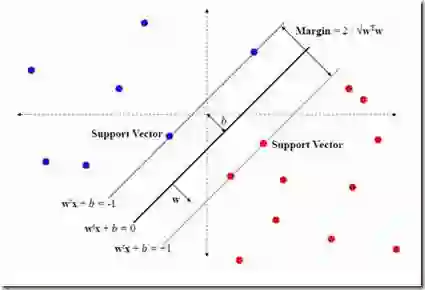
Leukemia (blood cancer) is an unusual spread of White Blood Cells or Leukocytes (WBCs) in the bone marrow and blood. Pathologists can diagnose leukemia by looking at a person's blood sample under a microscope. They identify and categorize leukemia by counting various blood cells and morphological features. This technique is time-consuming for the prediction of leukemia. The pathologist's professional skills and experiences may be affecting this procedure, too. In computer vision, traditional machine learning and deep learning techniques are practical roadmaps that increase the accuracy and speed in diagnosing and classifying medical images such as microscopic blood cells. This paper provides a comprehensive analysis of the detection and classification of acute leukemia and WBCs in the microscopic blood cells. First, we have divided the previous works into six categories based on the output of the models. Then, we describe various steps of detection and classification of acute leukemia and WBCs, including Data Augmentation, Preprocessing, Segmentation, Feature Extraction, Feature Selection (Reduction), Classification, and focus on classification step in the methods. Finally, we divide automated detection and classification of acute leukemia and WBCs into three categories, including traditional, Deep Neural Network (DNN), and mixture (traditional and DNN) methods based on the type of classifier in the classification step and analyze them. The results of this study show that in the diagnosis and classification of acute leukemia and WBCs, the Support Vector Machine (SVM) classifier in traditional machine learning models and Convolutional Neural Network (CNN) classifier in deep learning models have widely employed. The performance metrics of the models that use these classifiers compared to the others model are higher.
翻译:白血病(血癌)是骨髓和血液中白细胞异常增殖的疾病。病理学家通过显微镜观察血液样本诊断白血病,依据不同血细胞计数及形态特征进行识别与分类。这种诊断方法耗时较长,且病理学家的专业技能与经验可能影响判断结果。在计算机视觉领域,传统机器学习与深度学习技术为提升显微镜血细胞等医学图像的诊断分类精度与速度提供了实用路径。本文对显微镜血细胞中急性白血病与白细胞的检测与分类方法进行了全面分析。首先,我们根据模型输出将既往研究划分为六类;继而阐述了急性白血病与白细胞检测与分类的各个步骤,包括数据增强、预处理、分割、特征提取、特征选择(降维)及分类,并重点聚焦分类步骤;最后,依据分类步骤中采用的分类器类型,将自动检测与分类方法分为传统方法、深度神经网络方法及混合方法(传统与深度神经网络结合)三类进行解析。研究结果表明,在急性白血病与白细胞的诊断分类中,传统机器学习模型中的支持向量机分类器与深度学习模型中的卷积神经网络分类器被广泛应用,且采用这些分类器的模型性能指标优于其他模型。




相关内容




 微信扫码咨询专知VIP会员