

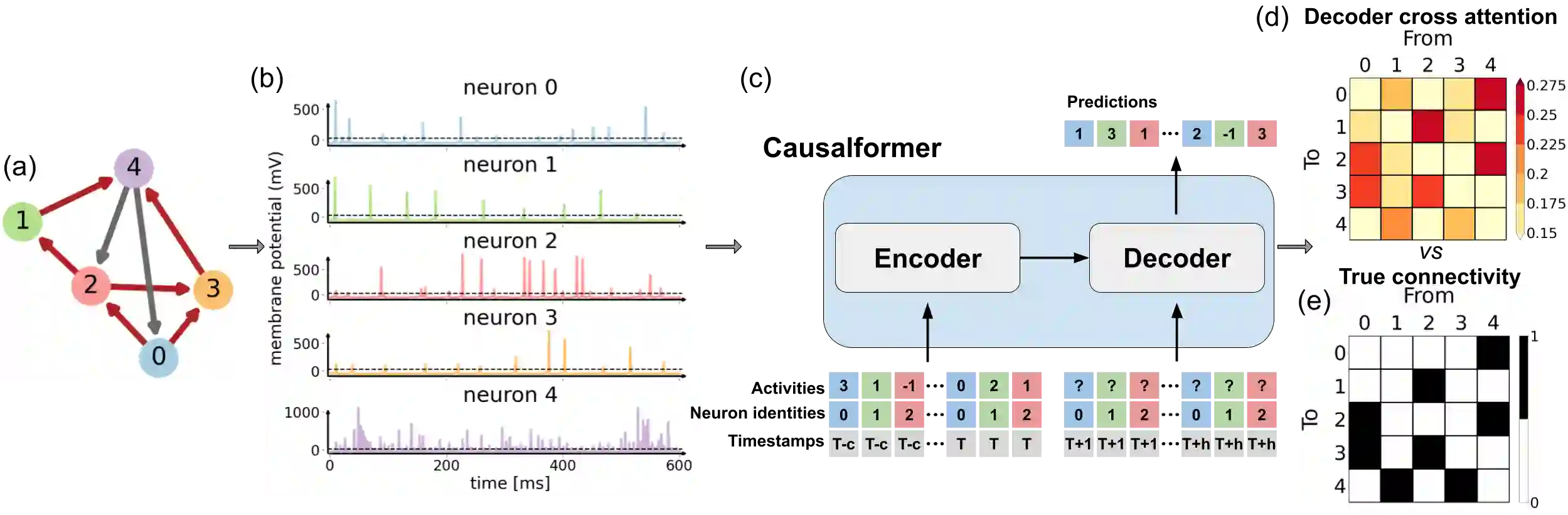
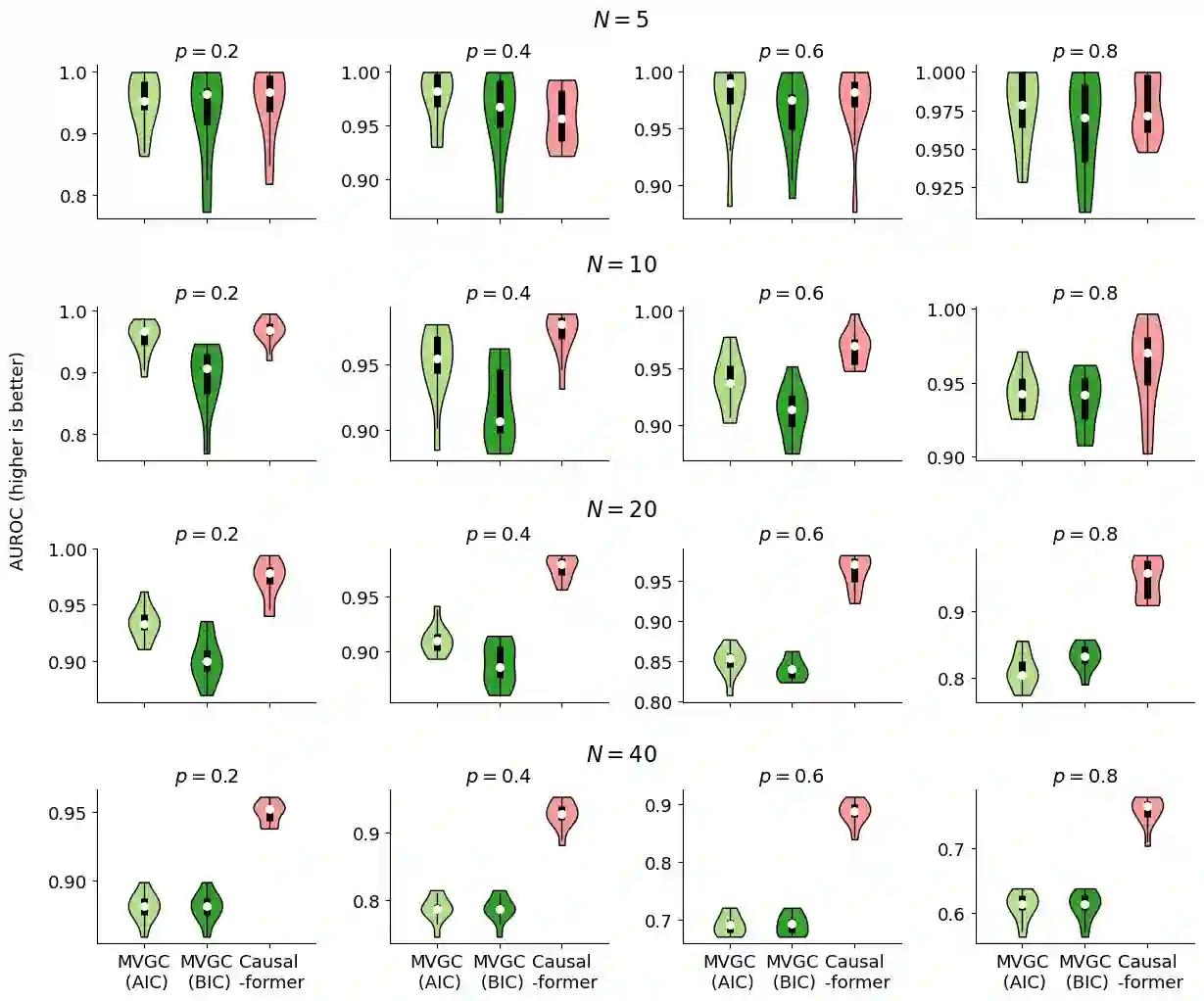
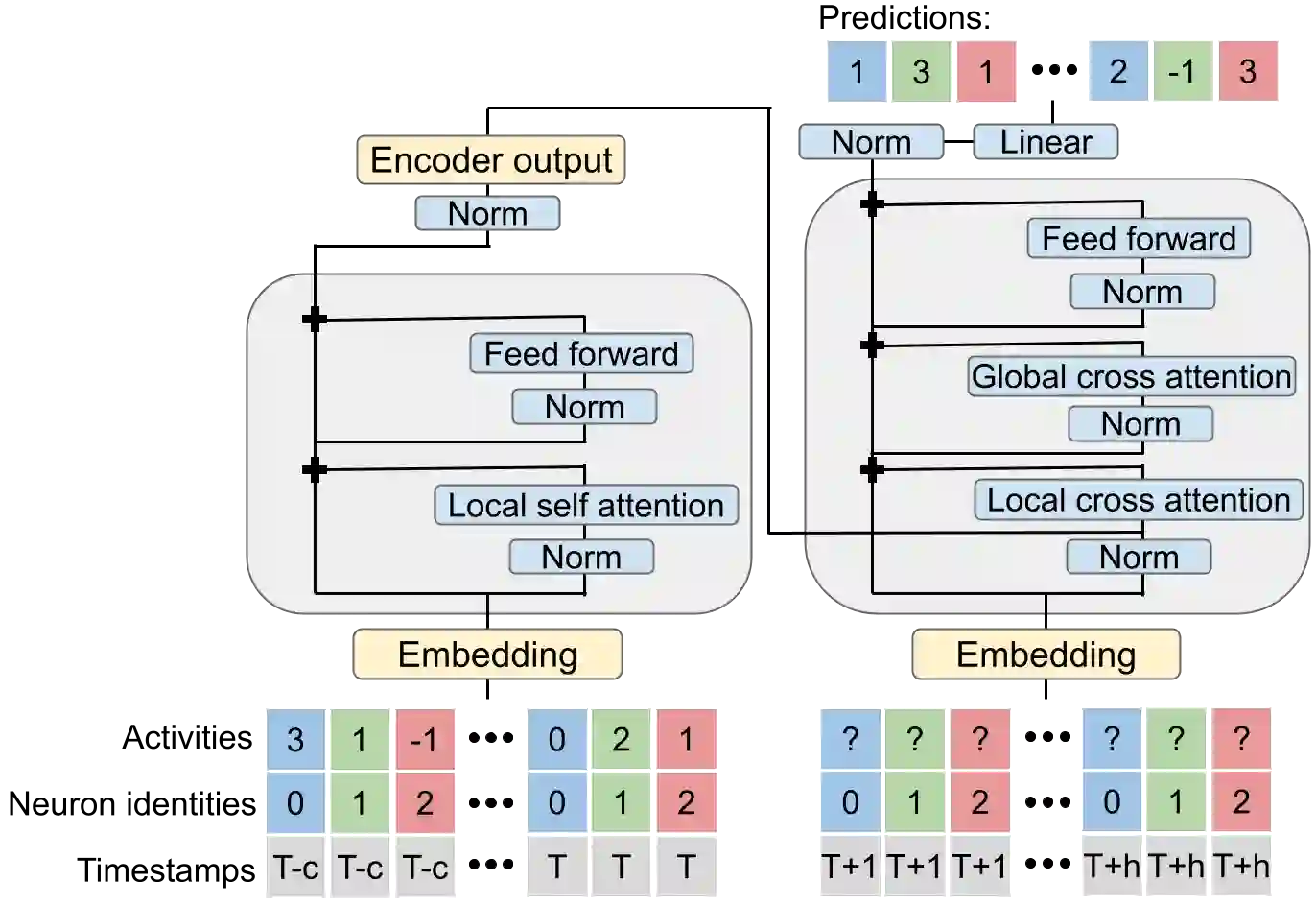
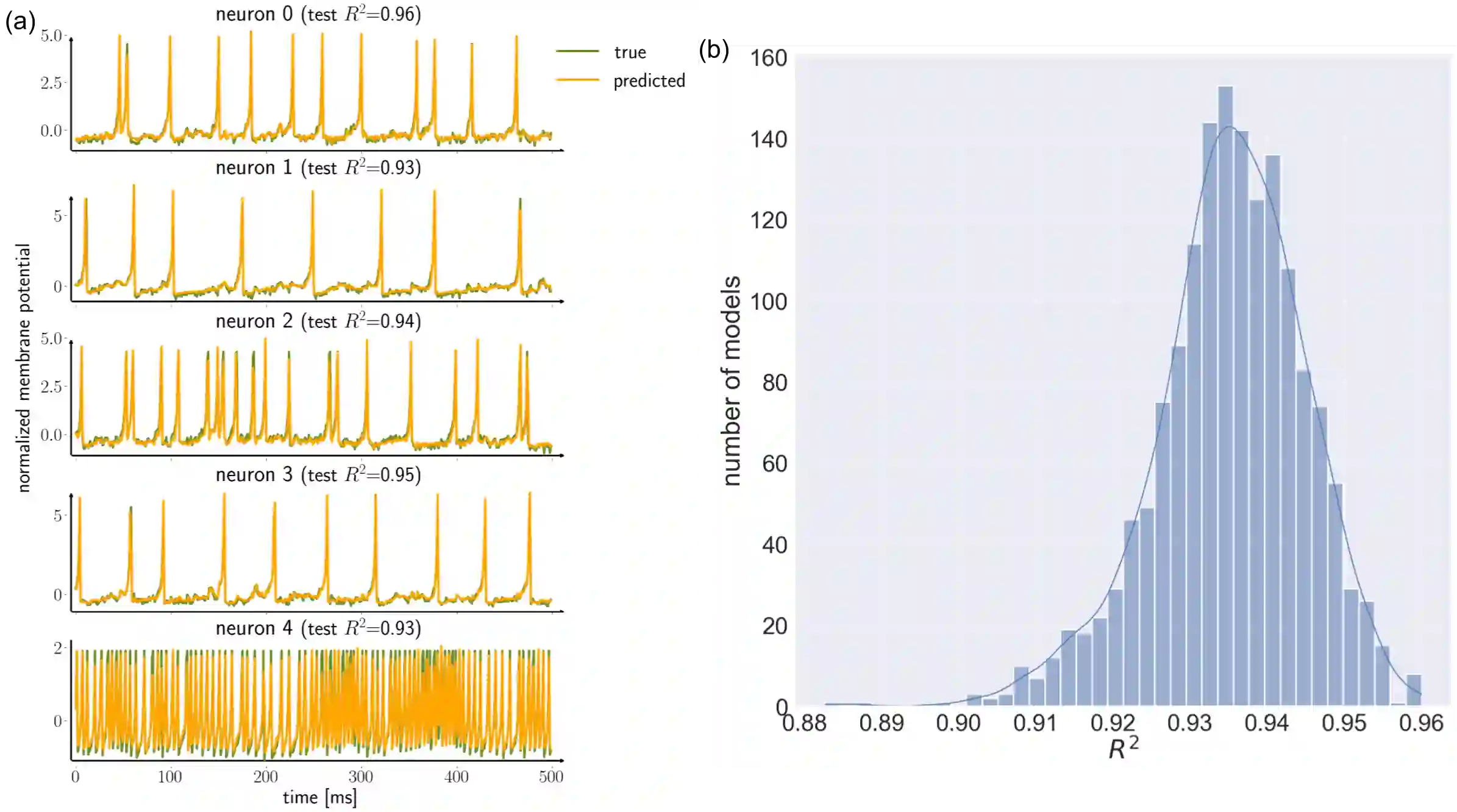
This paper explores the potential of the transformer models for learning Granger causality in networks with complex nonlinear dynamics at every node, as in neurobiological and biophysical networks. Our study primarily focuses on a proof-of-concept investigation based on simulated neural dynamics, for which the ground-truth causality is known through the underlying connectivity matrix. For transformer models trained to forecast neuronal population dynamics, we show that the cross attention module effectively captures the causal relationship among neurons, with an accuracy equal or superior to that for the most popular Granger causality analysis method. While we acknowledge that real-world neurobiology data will bring further challenges, including dynamic connectivity and unobserved variability, this research offers an encouraging preliminary glimpse into the utility of the transformer model for causal representation learning in neuroscience.
翻译:本文探讨了Transformer模型在节点具有复杂非线性动力学的网络(如神经生物学和生物物理网络)中学习格兰杰因果关系的潜力。我们的研究主要基于模拟神经动力学的概念验证性探究,其中真实因果结构可通过底层连接矩阵获知。对于经训练以预测神经元群体动力学的Transformer模型,我们证明交叉注意力模块能有效捕捉神经元间的因果关系,其准确度等于或优于最流行的格兰杰因果关系分析方法。尽管我们承认真实神经生物学数据将带来动态连接和未观测变异性等额外挑战,本项研究为Transformer模型在神经科学因果表征学习中的实用性提供了令人鼓舞的初步探索。




相关内容



 微信扫码咨询专知VIP会员