

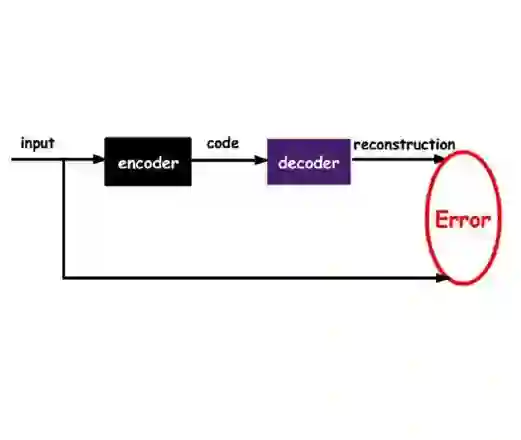
By combining the undecimated wavelet transform within a Word Embedded Semantic Marginal Autoencoder (WESMA), this research study provides a novel strategy for improving security measures and denoising multiple languages. The incorporation of these strategies is intended to address the issues of robustness, privacy, and multilingualism in data processing applications. The undecimated wavelet transform is used as a feature extraction tool to identify prominent language patterns and structural qualities in the input data. The proposed system may successfully capture significant information while preserving the temporal and geographical links within the data by employing this transform. This improves security measures by increasing the system's ability to detect abnormalities, discover hidden patterns, and distinguish between legitimate content and dangerous threats. The Word Embedded Semantic Marginal Autoencoder also functions as an intelligent framework for dimensionality and noise reduction. The autoencoder effectively learns the underlying semantics of the data and reduces noise components by exploiting word embeddings and semantic context. As a result, data quality and accuracy are increased in following processing stages. The suggested methodology is tested using a diversified dataset that includes several languages and security scenarios. The experimental results show that the proposed approach is effective in attaining security enhancement and denoising capabilities across multiple languages. The system is strong in dealing with linguistic variances, producing consistent outcomes regardless of the language used. Furthermore, incorporating the undecimated wavelet transform considerably improves the system's ability to efficiently address complex security concerns
翻译:本研究通过将非降采样小波变换嵌入词嵌入语义边缘自编码器(WESMA),提出了一种新颖的策略,用于增强安全措施并实现多语言去噪。这些策略的结合旨在解决数据处理应用中鲁棒性、隐私性和多语言处理的问题。非降采样小波变换被用作特征提取工具,以识别输入数据中的显著语言模式和结构特征。通过应用该变换,所提出的系统能够成功捕获重要信息,同时保留数据内部的时间与空间关联。这通过提升系统检测异常、发现隐藏模式以及区分合法内容与危险威胁的能力,从而增强了安全措施。词嵌入语义边缘自编码器还充当了一种用于降维和降噪的智能框架。该自编码器通过利用词嵌入和语义上下文,有效学习数据的底层语义并减少噪声成分,从而在后续处理阶段提高数据质量与准确性。所提出的方法使用包含多种语言和安全场景的多样化数据集进行测试。实验结果表明,该方法在多语言环境下实现安全增强与去噪能力方面具有有效性。系统在处理语言差异时表现出鲁棒性,无论使用何种语言均能产生一致的结果。此外,集成非降采样小波变换显著提升了系统高效处理复杂安全问题的能力。




相关内容


 微信扫码咨询专知VIP会员