

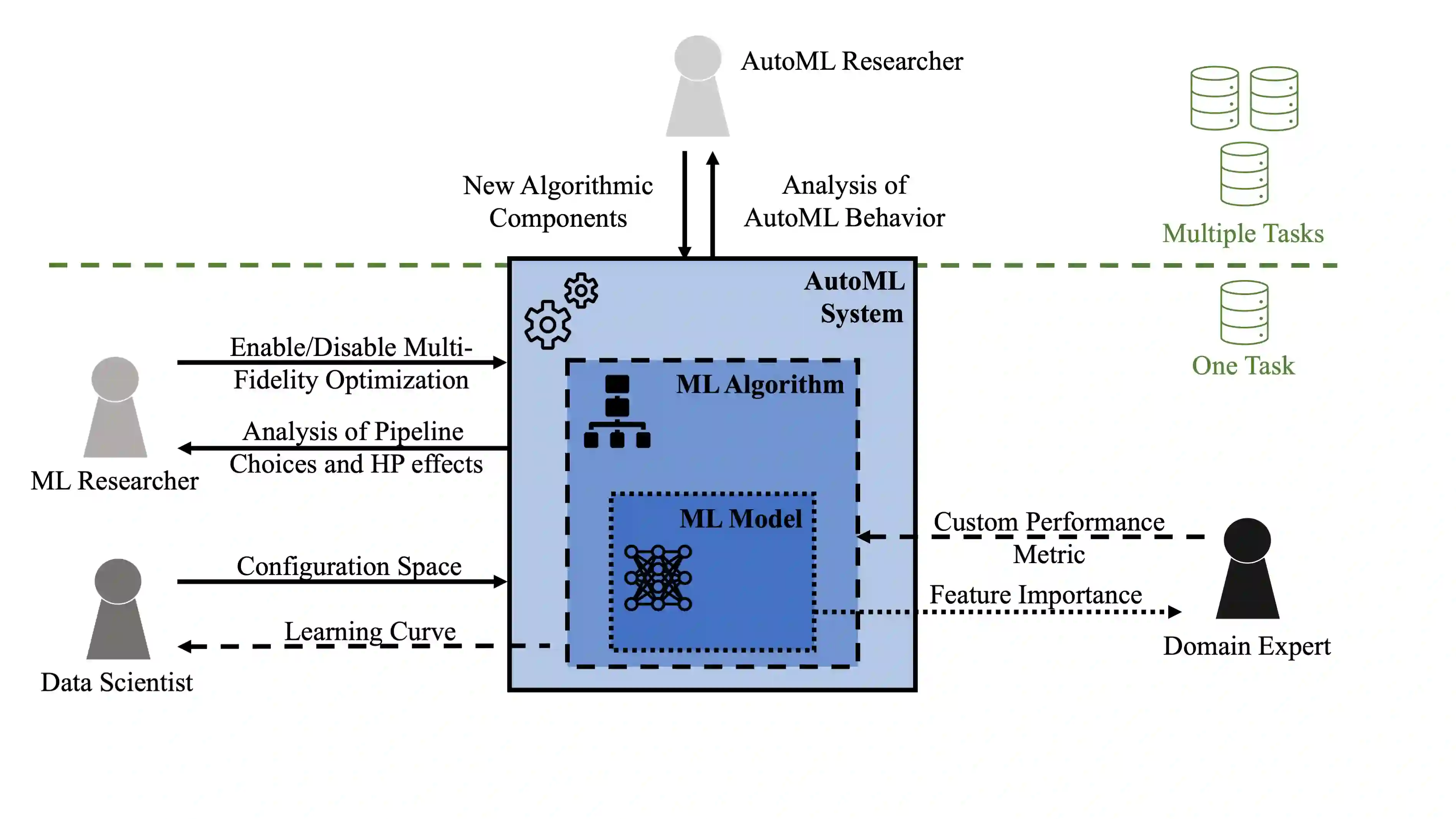
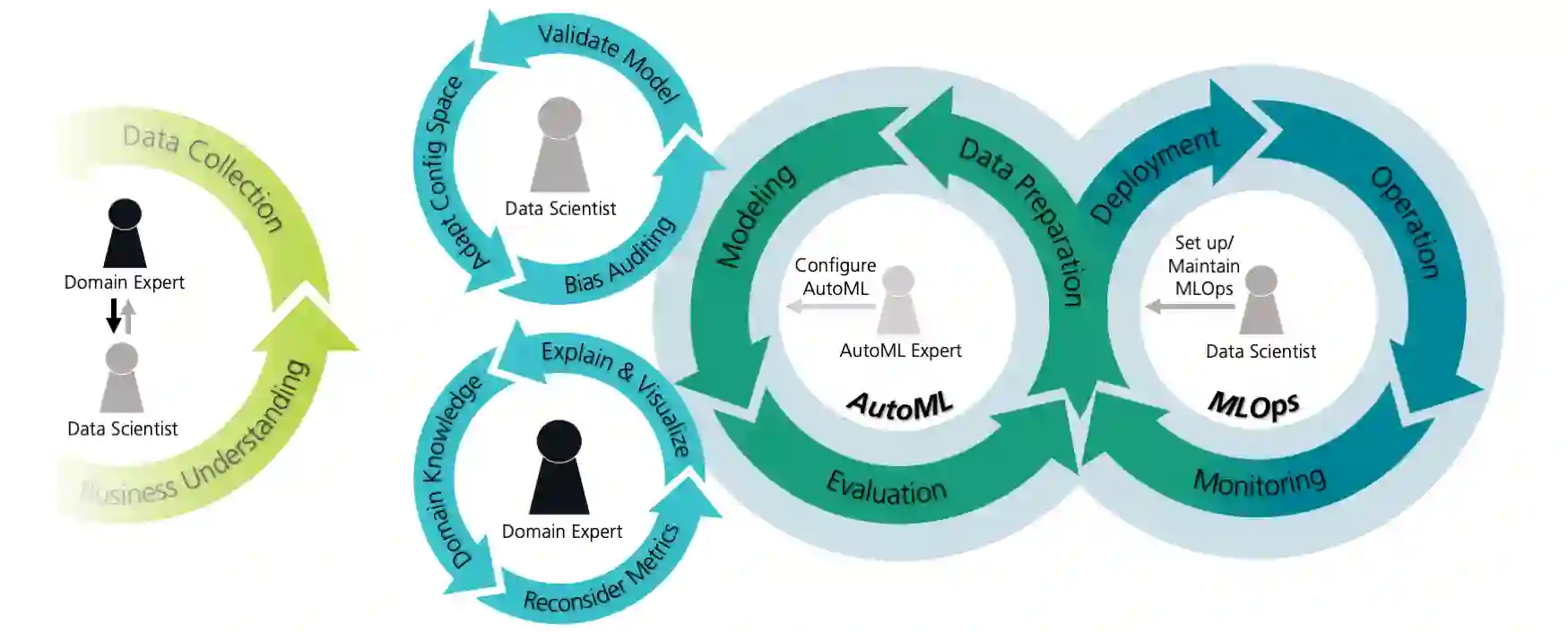
Automated machine learning (AutoML) was formed around the fundamental objectives of automatically and efficiently configuring machine learning (ML) workflows, aiding the research of new ML algorithms, and contributing to the democratization of ML by making it accessible to a broader audience. Over the past decade, commendable achievements in AutoML have primarily focused on optimizing predictive performance. This focused progress, while substantial, raises questions about how well AutoML has met its broader, original goals. In this position paper, we argue that a key to unlocking AutoML's full potential lies in addressing the currently underexplored aspect of user interaction with AutoML systems, including their diverse roles, expectations, and expertise. We envision a more human-centered approach in future AutoML research, promoting the collaborative design of ML systems that tightly integrates the complementary strengths of human expertise and AutoML methodologies.
翻译:自动机器学习(AutoML)最初围绕三大核心目标形成:自动高效配置机器学习工作流、辅助新型机器学习算法研究、以及通过降低使用门槛推动机器学习大众化。过去十年间,AutoML领域取得的显著成就主要聚焦于优化预测性能。这种聚焦式发展虽成果丰硕,却引发了关于AutoML在多大程度上实现了其更宏大的原始目标的思考。在本立场论文中,我们主张解锁AutoML全部潜能的关键在于解决当前未被充分探索的维度——用户与AutoML系统的交互模式,涵盖用户多元角色、预期目标及专业背景。我们设想未来AutoML研究应采用更以人为中心的方法,促进机器学习系统的协作式设计,将人类专业能力与AutoML方法论的优势深度融合。




相关内容



 微信扫码咨询专知VIP会员