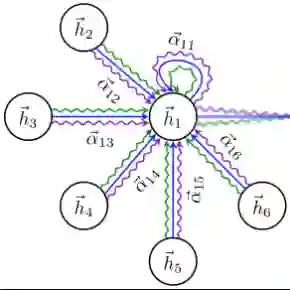
In the era of widespread social networks, the rapid dissemination of fake news has emerged as a significant threat, inflicting detrimental consequences across various dimensions of people's lives. Machine learning and deep learning approaches have been extensively employed for identifying fake news. However, a significant challenge in identifying fake news is the limited availability of labeled news datasets. Therefore, the One-Class Learning (OCL) approach, utilizing only a small set of labeled data from the interest class, can be a suitable approach to address this challenge. On the other hand, representing data as a graph enables access to diverse content and structural information, and label propagation methods on graphs can be effective in predicting node labels. In this paper, we adopt a graph-based model for data representation and introduce a semi-supervised and one-class approach for fake news detection, called LOSS-GAT. Initially, we employ a two-step label propagation algorithm, utilizing Graph Neural Networks (GNNs) as an initial classifier to categorize news into two groups: interest (fake) and non-interest (real). Subsequently, we enhance the graph structure using structural augmentation techniques. Ultimately, we predict the final labels for all unlabeled data using a GNN that induces randomness within the local neighborhood of nodes through the aggregation function. We evaluate our proposed method on five common datasets and compare the results against a set of baseline models, including both OCL and binary labeled models. The results demonstrate that LOSS-GAT achieves a notable improvement, surpassing 10%, with the advantage of utilizing only a limited set of labeled fake news. Noteworthy, LOSS-GAT even outperforms binary labeled models.


翻译:在社交网络广泛普及的时代,虚假新闻的快速传播已成为重大威胁,对人们生活的各个维度造成损害性影响。机器学习与深度学习方法已被广泛用于虚假新闻识别,然而,标记新闻数据集的有限可用性成为该领域的一个关键挑战。因此,仅利用少量兴趣类标记数据的单类学习(OCL)方法成为应对这一挑战的可行方案。另一方面,将数据表示为图结构有助于获取多样化的内容与结构信息,而图上的标签传播方法在预测节点标签方面具有有效性。本文采用基于图的模型进行数据表示,并提出一种名为LOSS-GAT的半监督单类虚假新闻检测方法。首先,我们采用两步标签传播算法,利用图神经网络(GNN)作为初始分类器将新闻划分为兴趣类(虚假)与非兴趣类(真实)两组。随后,通过结构增强技术优化图结构。最终,我们利用具有聚合函数诱导节点局部邻域随机性的GNN,对所有未标记数据预测最终标签。我们在五个常用数据集上评估所提方法,并与包含OCL及二分类标记模型在内的基准模型进行对比。结果表明,LOSS-GAT在仅利用有限标记虚假新闻的优势下,实现了超过10%的显著性能提升。值得注意的是,LOSS-GAT甚至优于二分类标记模型。


0
下载
关闭预览

相关内容

FlowQA: Grasping Flow in History for Conversational Machine Comprehension
专知会员服务
34+阅读 · 2019年10月18日
Stabilizing Transformers for Reinforcement Learning
专知会员服务
60+阅读 · 2019年10月17日
《DeepGCNs: Making GCNs Go as Deep as CNNs》
专知会员服务
32+阅读 · 2019年10月17日
Keras François Chollet 《Deep Learning with Python 》, 386页pdf
专知会员服务
164+阅读 · 2019年10月12日
【SIGGRAPH2019】TensorFlow 2.0深度学习计算机图形学应用
专知会员服务
41+阅读 · 2019年10月9日
Hierarchically Structured Meta-learning
CreateAMind
27+阅读 · 2019年5月22日
Transferring Knowledge across Learning Processes
CreateAMind
29+阅读 · 2019年5月18日
Unsupervised Learning via Meta-Learning
CreateAMind
44+阅读 · 2019年1月3日
meta learning 17年:MAML SNAIL
CreateAMind
11+阅读 · 2019年1月2日
A Technical Overview of AI & ML in 2018 & Trends for 2019
待字闺中
18+阅读 · 2018年12月24日
STRCF for Visual Object Tracking
统计学习与视觉计算组
15+阅读 · 2018年5月29日
Hierarchical Imitation - Reinforcement Learning
CreateAMind
19+阅读 · 2018年5月25日
Focal Loss for Dense Object Detection
统计学习与视觉计算组
12+阅读 · 2018年3月15日
IJCAI | Cascade Dynamics Modeling with Attention-based RNN
KingsGarden
13+阅读 · 2017年7月16日
From Softmax to Sparsemax-ICML16(1)
KingsGarden
74+阅读 · 2016年11月26日
国家自然科学基金
13+阅读 · 2017年12月31日
国家自然科学基金
2+阅读 · 2015年12月31日
国家自然科学基金
47+阅读 · 2015年12月31日
国家自然科学基金
2+阅读 · 2015年12月31日
国家自然科学基金
3+阅读 · 2015年12月31日
国家自然科学基金
0+阅读 · 2014年12月31日
国家自然科学基金
2+阅读 · 2014年12月31日
VIP会员
最新内容
【ICLR2026】基于小型语言模型的终身智能体
专知会员服务
0+阅读 · 今天15:50
全面的反无人机系统培训计划
专知会员服务
1+阅读 · 今天10:28
探秘Palantir:驱动美情报的科技巨头
专知会员服务
3+阅读 · 今天3:14
《美国海军军事海运司令部 2026年手册》
专知会员服务
3+阅读 · 今天3:05
《人工智能使能系统可靠性框架》
专知会员服务
7+阅读 · 今天2:28
2026“人工智能+”行业发展蓝皮书(附下载)
专知会员服务
17+阅读 · 4月26日
《强化学习数学基础》
专知会员服务
13+阅读 · 4月26日
相关VIP内容
FlowQA: Grasping Flow in History for Conversational Machine Comprehension
专知会员服务
34+阅读 · 2019年10月18日
Stabilizing Transformers for Reinforcement Learning
专知会员服务
60+阅读 · 2019年10月17日
《DeepGCNs: Making GCNs Go as Deep as CNNs》
专知会员服务
32+阅读 · 2019年10月17日
Keras François Chollet 《Deep Learning with Python 》, 386页pdf
专知会员服务
164+阅读 · 2019年10月12日
【SIGGRAPH2019】TensorFlow 2.0深度学习计算机图形学应用
专知会员服务
41+阅读 · 2019年10月9日
相关资讯
Hierarchically Structured Meta-learning
CreateAMind
27+阅读 · 2019年5月22日
Transferring Knowledge across Learning Processes
CreateAMind
29+阅读 · 2019年5月18日
Unsupervised Learning via Meta-Learning
CreateAMind
44+阅读 · 2019年1月3日
meta learning 17年:MAML SNAIL
CreateAMind
11+阅读 · 2019年1月2日
A Technical Overview of AI & ML in 2018 & Trends for 2019
待字闺中
18+阅读 · 2018年12月24日
STRCF for Visual Object Tracking
统计学习与视觉计算组
15+阅读 · 2018年5月29日
Hierarchical Imitation - Reinforcement Learning
CreateAMind
19+阅读 · 2018年5月25日
Focal Loss for Dense Object Detection
统计学习与视觉计算组
12+阅读 · 2018年3月15日
IJCAI | Cascade Dynamics Modeling with Attention-based RNN
KingsGarden
13+阅读 · 2017年7月16日
From Softmax to Sparsemax-ICML16(1)
KingsGarden
74+阅读 · 2016年11月26日
相关基金
国家自然科学基金
13+阅读 · 2017年12月31日
国家自然科学基金
2+阅读 · 2015年12月31日
国家自然科学基金
47+阅读 · 2015年12月31日
国家自然科学基金
2+阅读 · 2015年12月31日
国家自然科学基金
3+阅读 · 2015年12月31日
国家自然科学基金
0+阅读 · 2014年12月31日
国家自然科学基金
2+阅读 · 2014年12月31日
Top
微信扫码咨询专知VIP会员