

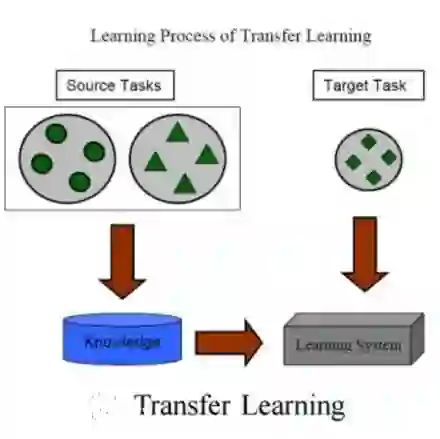
Quantum computing has the potential to solve problems that are intractable for classical systems, yet the high error rates in contemporary quantum devices often exceed tolerable limits for useful algorithm execution. Quantum Error Correction (QEC) mitigates this by employing redundancy, distributing quantum information across multiple data qubits and utilizing syndrome qubits to monitor their states for errors. The syndromes are subsequently interpreted by a decoding algorithm to identify and correct errors in the data qubits. This task is complex due to the multiplicity of error sources affecting both data and syndrome qubits as well as syndrome extraction operations. Additionally, identical syndromes can emanate from different error sources, necessitating a decoding algorithm that evaluates syndromes collectively. Although machine learning (ML) decoders such as multi-layer perceptrons (MLPs) and convolutional neural networks (CNNs) have been proposed, they often focus on local syndrome regions and require retraining when adjusting for different code distances. We introduce a transformer-based QEC decoder which employs self-attention to achieve a global receptive field across all input syndromes. It incorporates a mixed loss training approach, combining both local physical error and global parity label losses. Moreover, the transformer architecture's inherent adaptability to variable-length inputs allows for efficient transfer learning, enabling the decoder to adapt to varying code distances without retraining. Evaluation on six code distances and ten different error configurations demonstrates that our model consistently outperforms non-ML decoders, such as Union Find (UF) and Minimum Weight Perfect Matching (MWPM), and other ML decoders, thereby achieving best logical error rates. Moreover, the transfer learning can save over 10x of training cost.
翻译:量子计算在解决经典系统难以处理的问题上展现出潜力,但当前量子器件的高错误率常超出有用算法执行的可容忍范围。量子纠错通过冗余技术缓解这一问题,将量子信息分布在多个数据量子比特上,并利用综合征量子比特监测其状态以检测错误。随后,解码算法通过分析综合征来识别并纠正数据量子比特中的错误。由于数据量子比特、综合征量子比特以及综合征提取操作中存在的多种错误源,这一任务极为复杂。此外,相同的综合征可能源自不同错误源,这要求解码算法能对综合征进行整体评估。尽管已有多种基于机器学习的解码器(如多层感知机和卷积神经网络)被提出,但它们通常聚焦于局部综合征区域,且在调整不同码距时需要重新训练。我们提出了一种基于 Transformer 的量子纠错解码器,通过自注意力机制实现对全部输入综合征的全局感知。该解码器采用混合损失训练方法,结合了局部物理错误损失与全局校验标签损失。此外,Transformer架构对可变长度输入的固适应能力支持高效迁移学习,使解码器无需重新训练即可适应不同码距。在六种码距和十种不同错误配置下的评估表明,我们的模型在逻辑错误率上持续优于非机器学习解码器(如Union Find和最小权重完美匹配)及其他机器学习解码器。同时,迁移学习可节省超过10倍的训练成本。






相关内容




 微信扫码咨询专知VIP会员