

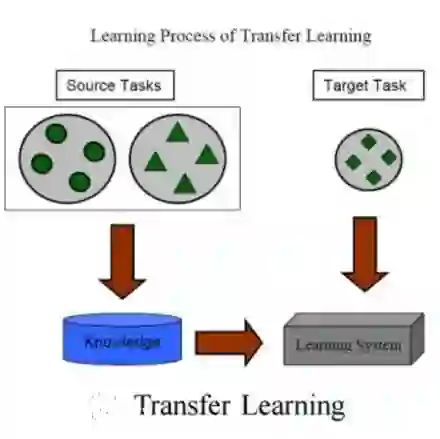
Precise delineation of multiple organs or abnormal regions in the human body from medical images plays an essential role in computer-aided diagnosis, surgical simulation, image-guided interventions, and especially in radiotherapy treatment planning. Thus, it is of great significance to explore automatic segmentation approaches, among which deep learning-based approaches have evolved rapidly and witnessed remarkable progress in multi-organ segmentation. However, obtaining an appropriately sized and fine-grained annotated dataset of multiple organs is extremely hard and expensive. Such scarce annotation limits the development of high-performance multi-organ segmentation models but promotes many annotation-efficient learning paradigms. Among these, studies on transfer learning leveraging external datasets, semi-supervised learning using unannotated datasets and partially-supervised learning integrating partially-labeled datasets have led the dominant way to break such dilemma in multi-organ segmentation. We first review the traditional fully supervised method, then present a comprehensive and systematic elaboration of the 3 abovementioned learning paradigms in the context of multi-organ segmentation from both technical and methodological perspectives, and finally summarize their challenges and future trends.
翻译:从医学图像中精确勾画出人体内的多个器官或异常区域,在计算机辅助诊断、手术模拟、图像引导干预,尤其放射治疗计划中起着至关重要的作用。因此,探索自动分割方法具有重要意义,其中基于深度学习的方法发展迅速,在多器官分割领域取得了显著进展。然而,获取规模合适且精细标注的多器官数据集极其困难且成本高昂。这种稀缺标注限制了高性能多器官分割模型的发展,但催生了许多标注高效的学习范式。在这些范式中,利用外部数据集进行迁移学习、利用无标注数据集进行半监督学习以及整合部分标注数据集进行部分监督学习的研究,已成为突破多器官分割这一困境的主流途径。我们首先回顾传统的全监督方法,然后从技术和方法论角度,全面且系统地阐述上述三种学习范式在多器官分割中的应用,最后总结其面临的挑战与未来趋势。




相关内容




 微信扫码咨询专知VIP会员