

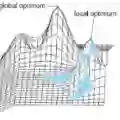
Navigating mobile robots through environments shared with humans is challenging. From the perspective of the robot, humans are dynamic obstacles that must be avoided. These obstacles make the collision-free space nonconvex, which leads to two distinct passing behaviors per obstacle (passing left or right). For local planners, such as receding-horizon trajectory optimization, each behavior presents a local optimum in which the planner can get stuck. This may result in slow or unsafe motion even when a better plan exists. In this work, we identify trajectories for multiple locally optimal driving behaviors, by considering their topology. This identification is made consistent over successive iterations by propagating the topology information. The most suitable high-level trajectory guides a local optimization-based planner, resulting in fast and safe motion plans. We validate the proposed planner on a mobile robot in simulation and real-world experiments.
翻译:在与人共享的环境中导航移动机器人具有挑战性。从机器人的视角来看,人类是必须规避的动态障碍物。这些障碍物使无碰撞空间变为非凸,进而导致每个障碍物产生两种不同的绕行行为(从左侧或右侧通过)。对于局部规划器(如滚动时域轨迹优化),每种行为均对应一个局部最优解,规划器可能陷入其中。即使存在更优规划,这仍可能导致缓慢或不安全的运动。在本工作中,我们通过考虑多种局部最优驾驶行为的拓扑结构来识别其对应轨迹。通过传播拓扑信息,该识别过程在连续迭代中保持一致。最合适的高层轨迹引导基于局部优化的规划器,从而生成快速且安全的运动规划。我们在仿真和真实世界实验中,于移动机器人上验证了所提出的规划器。




相关内容



 微信扫码咨询专知VIP会员