

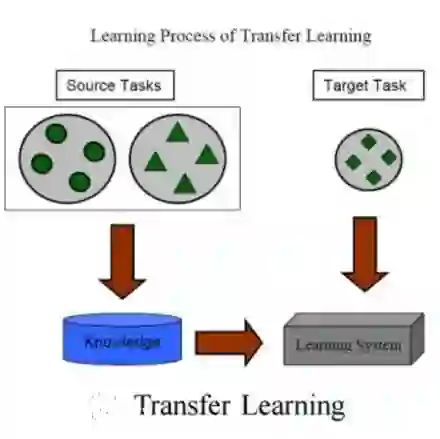
Real-time reconstruction of magnetohydrodynamic equilibria is essential for plasma shaping, stability assessment and feedback control in magnetic confinement fusion. However, Grad-Shafranov equilibrium calculations remain largely device-specific and iterative, limiting their use in latency-constrained control settings. Existing neural approaches can accelerate individual equilibrium predictions, but they do not generally provide reusable models across changing plasma boundaries or tokamak geometries. Here we show that equilibrium reconstruction can be recast as a cross-device operator learning problem. We develop a domain-specific neural operator framework that maps geometry and profile parameters directly to the poloidal flux field, replacing repeated solve-on-demand computation with amortized operator inference. Using the analytically tractable Solov'ev family as a controlled Grad-Shafranov testbed, we generate equilibria across eight geometrically distinct tokamak-like configurations and benchmark five neural operator architectures under four transfer-learning strategies. Single-geometry pretraining gives poor transfer to unseen devices, whereas multi-geometry pretraining enables data-efficient adaptation. The Wavelet Neural Operator gives the strongest cross-geometry performance, reaching mean relative L2 errors below 4% with 100 labelled target equilibria and below 2% with full fine-tuning. The predicted magnetic fields satisfy the divergence-free constraint to numerical precision, and four architectures achieve millisecond or sub-millisecond inference. These results identify neural operator pretraining as a route towards reusable, real-time equilibrium inference across fusion device configurations.
翻译:实时重建磁流体动力学平衡对于磁约束聚变中的等离子体成形、稳定性评估及反馈控制至关重要。然而,Grad-Shafranov平衡计算目前仍高度依赖特定装置且需迭代求解,限制了其在延迟敏感控制场景中的应用。现有神经方法虽能加速单次平衡预测,但通常无法提供可跨变化等离子体边界或托卡马克几何复用的模型。本文表明,平衡重建可重构为跨装置算子学习问题。我们开发了一个领域特定的神经算子框架,可将几何与剖面参数直接映射至极向磁通场,用摊销算子推理替代重复的按需求解计算。利用解析可解的Solov'ev族作为受控Grad-Shafranov测试平台,我们在八种几何差异显著的托卡马克类构型中生成平衡数据,并在四种迁移学习策略下评估五种神经算子架构。单几何预训练对未见装置泛化效果差,而多几何预训练则实现数据高效自适应。小波神经算子在跨几何性能上表现最优:使用100个标记目标平衡时,平均相对L2误差低于4%;完全微调后低于2%。预测磁场以数值精度满足散度自由约束,四种架构达到毫秒或亚毫秒级推理。这些结果揭示了神经算子预训练可作为跨聚变装置构型实现可复用、实时平衡推理的有效路径。




相关内容


 微信扫码咨询专知VIP会员