

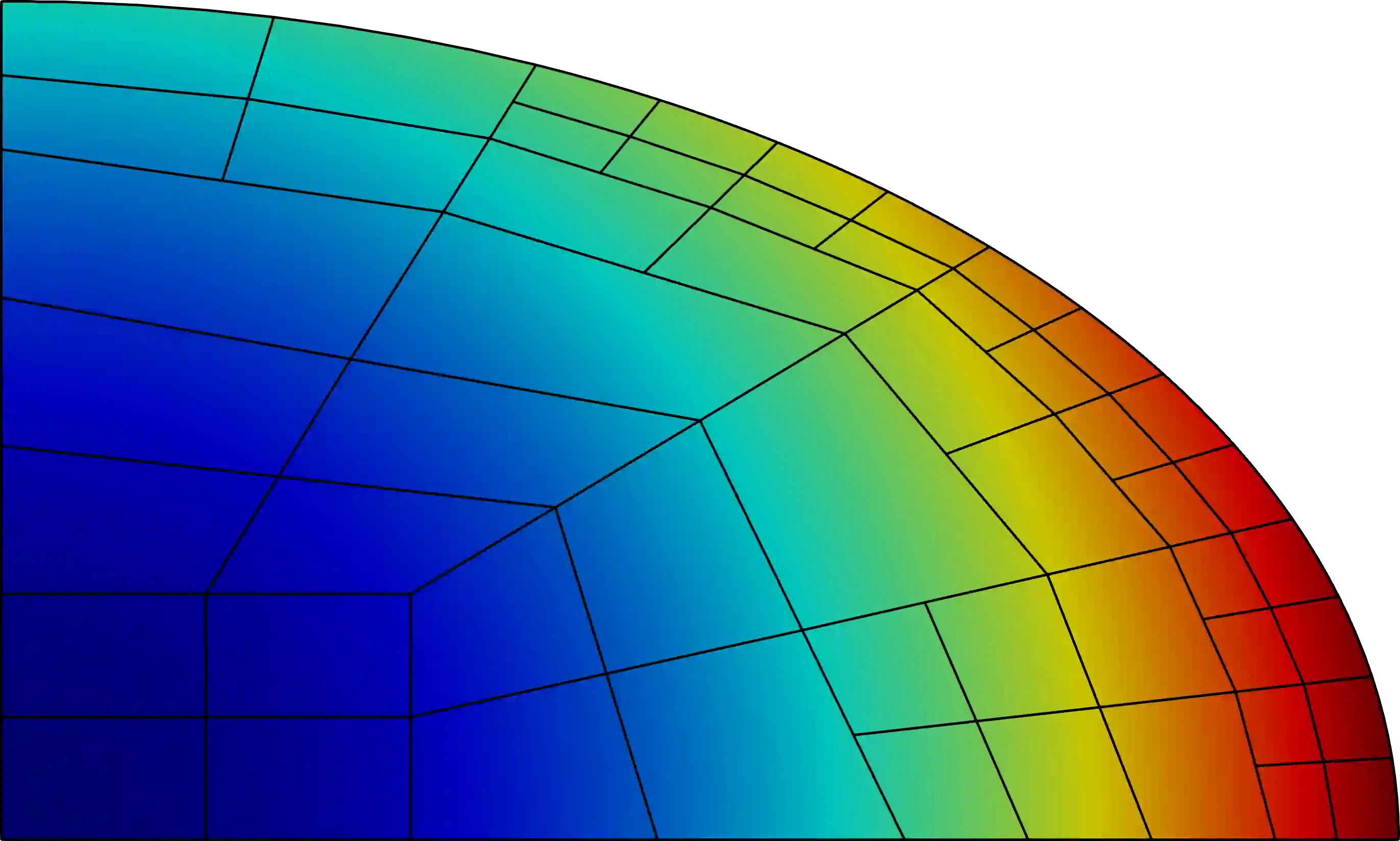
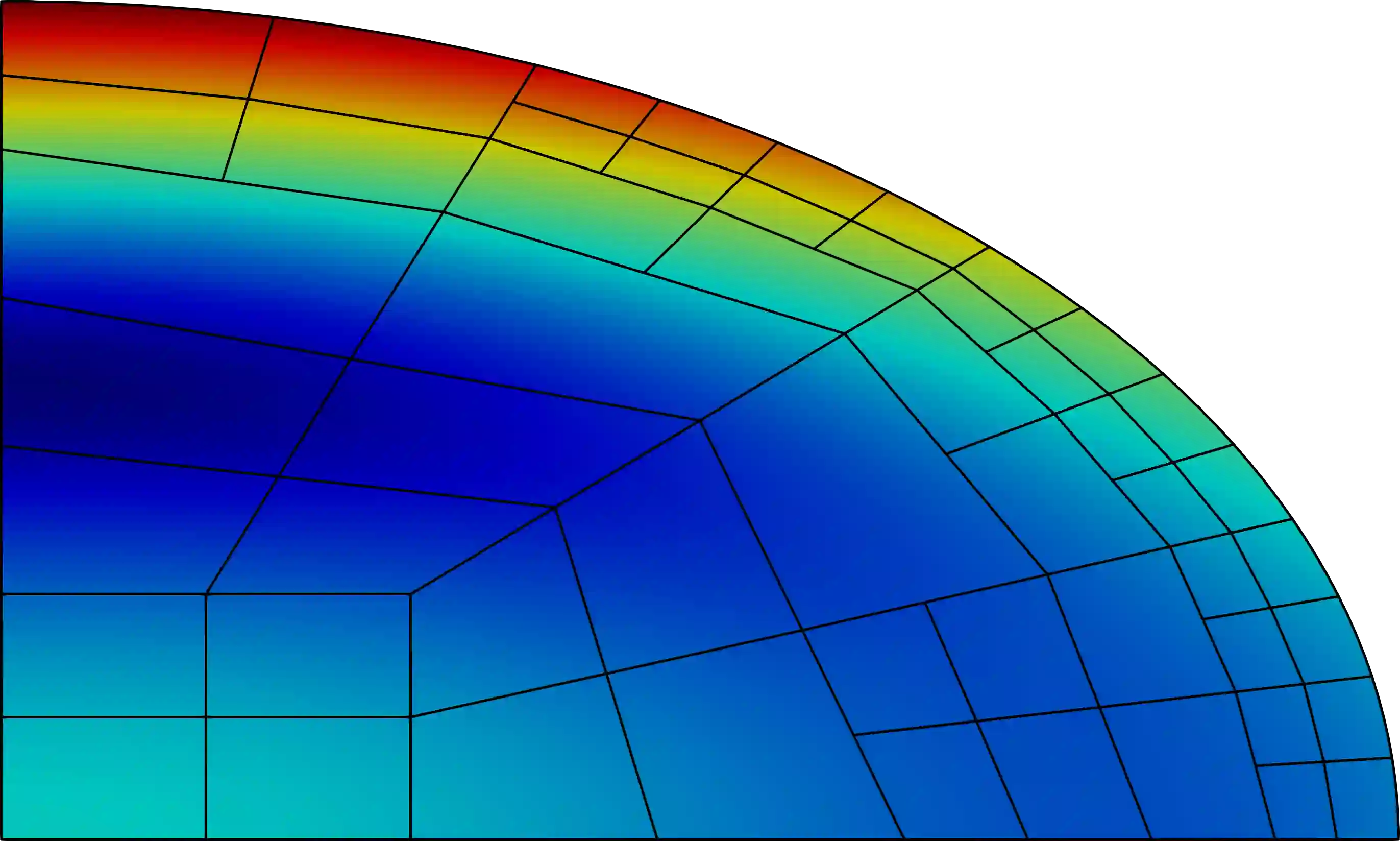
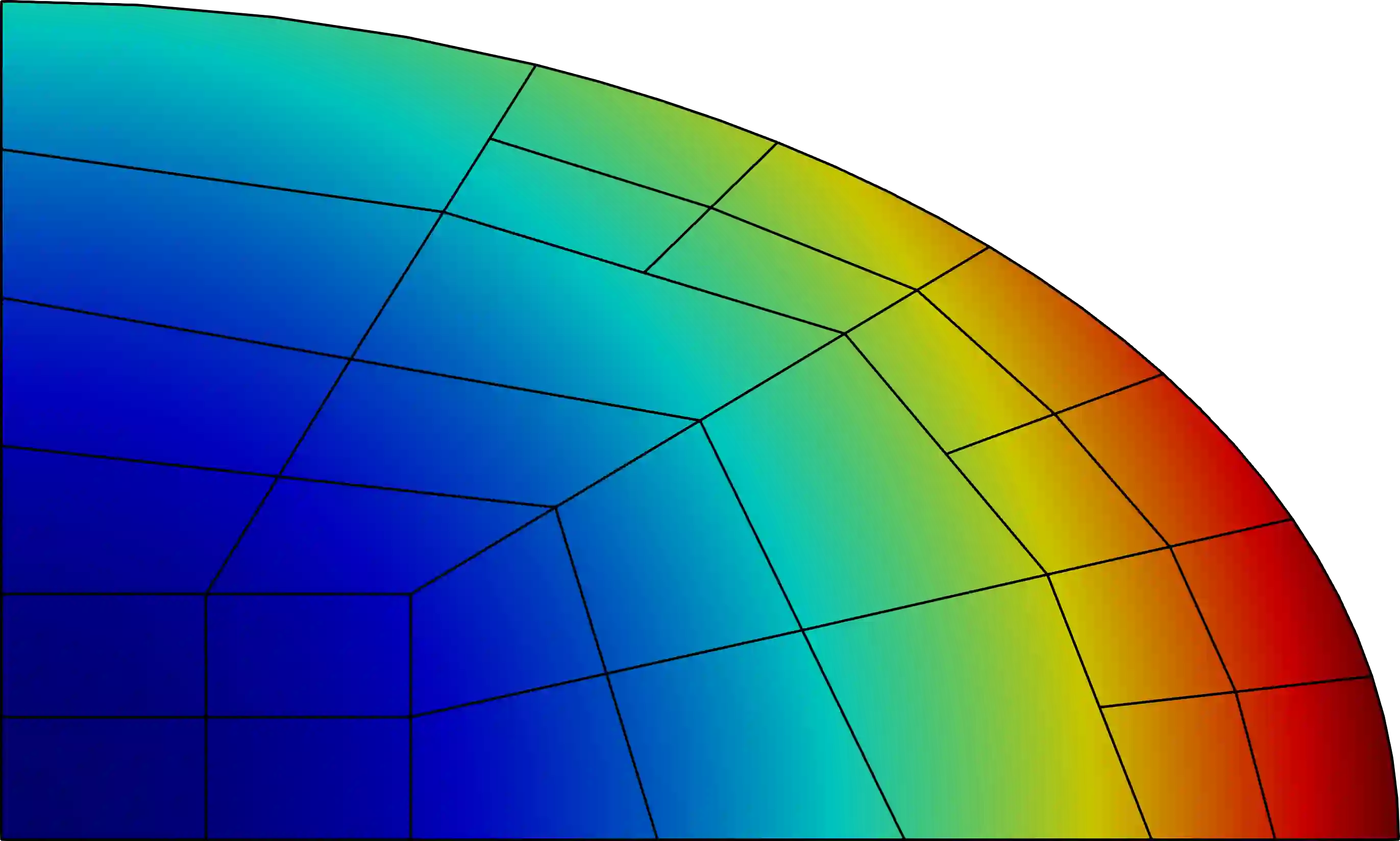
Adaptive finite element methods are a powerful tool to obtain numerical simulation results in a reasonable time. Due to complex chemical and mechanical couplings in lithium-ion batteries, numerical simulations are very helpful to investigate promising new battery active materials such as amorphous silicon featuring a higher energy density than graphite. Based on a thermodynamically consistent continuum model with large deformation and chemo-mechanically coupled approach, we compare three different spatial adaptive refinement strategies: Kelly-, gradient recovery- and residual based error estimation. For the residual based case, the strong formulation of the residual is explicitly derived. With amorphous silicon as example material, we investigate two 3D representative host particle geometries, reduced with symmetry assumptions to a 1D unit interval and a 2D elliptical domain. Our numerical studies show that the Kelly estimator overestimates the error, whereas the gradient recovery estimator leads to lower refinement levels and a good capture of the change of the lithium flux. The residual based error estimator reveals a strong dependency on the cell error part which can be improved by a more suitable choice of constants to be more efficient. In a 2D domain, the concentration has a larger influence on the mesh distribution than the Cauchy stress.
翻译:自适应有限元方法是合理时间内获取数值模拟结果的有力工具。由于锂离子电池中存在复杂的化学-力学耦合作用,数值模拟对于研究有望替代石墨且能量密度更高的非晶硅等新型电池活性材料非常有帮助。基于一个包含大变形和化学-力学耦合方法的热力学一致连续介质模型,我们比较了三种不同的空间自适应细化策略:Kelly误差估计、梯度恢复误差估计和残差误差估计。对于基于残差的情况,明确推导了残差的强形式。以非晶硅为示例材料,我们研究了两种具有代表性且通过对称性假设简化为1D单位区间和2D椭圆域的三维宿主颗粒几何结构。数值研究表明,Kelly估计器高估了误差,而梯度恢复估计器能够降低细化水平并很好地捕捉锂通量的变化。基于残差的误差估计器显示出对单元误差部分的强烈依赖性,通过更合适地选取常数可以提高其效率。在二维域中,浓度对网格分布的影响大于柯西应力。




相关内容



 微信扫码咨询专知VIP会员