

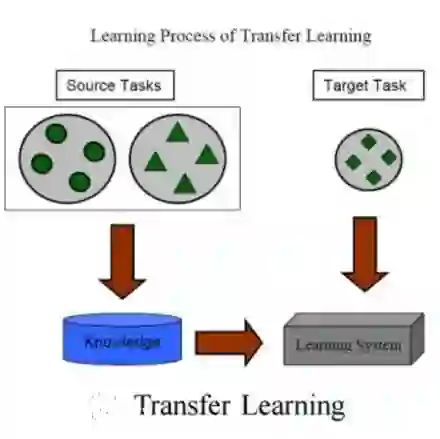
Diabetic retinopathy (DR) is a significant cause of vision impairment, emphasizing the critical need for early detection and timely intervention to avert visual deterioration. Diagnosing DR is inherently complex, as it necessitates the meticulous examination of intricate retinal images by experienced specialists. This makes the early diagnosis of DR essential for effective treatment and the prevention of eventual blindness. Traditional diagnostic methods, relying on human interpretation of these medical images, face challenges in terms of accuracy and efficiency. In the present research, we introduce a novel method that offers superior precision in DR diagnosis, compared to these traditional methods, by employing advanced deep learning techniques. Central to this approach is the concept of transfer learning. This entails using pre-existing, well-established models, specifically InceptionResNetv2 and Inceptionv3, to extract features and fine-tune select layers to cater to the unique requirements of this specific diagnostic task. Concurrently, we also present a newly devised model, DiaCNN, which is tailored for the classification of eye diseases. To validate the efficacy of the proposed methodology, we leveraged the Ocular Disease Intelligent Recognition (ODIR) dataset, which comprises eight different eye disease categories. The results were promising. The InceptionResNetv2 model, incorporating transfer learning, registered an impressive 97.5% accuracy in both the training and testing phases. Its counterpart, the Inceptionv3 model, achieved an even more commendable 99.7% accuracy during training, and 97.5% during testing. Remarkably, the DiaCNN model showcased unparalleled precision, achieving 100% accuracy in training and 98.3\% in testing.
翻译:糖尿病视网膜病变(DR)是导致视力损伤的重要原因,凸显了早期检测与及时干预以预防视力恶化的关键需求。DR诊断本身极为复杂,需要经验丰富的专家对精细的视网膜图像进行细致检查。这使得DR的早期诊断对有效治疗和预防最终失明至关重要。传统诊断方法依赖人工解读这些医学影像,在准确性和效率方面面临挑战。在本研究中,我们提出了一种新方法,通过采用先进的深度学习技术,相较于传统方法在DR诊断中实现了更高的精度。该方法的核心是迁移学习概念,即利用预先训练好的成熟模型(具体为InceptionResNetv2和Inceptionv3)提取特征,并微调特定层以适应本诊断任务的独特需求。同时,我们还提出了一个全新设计的模型DiaCNN,专门用于眼科疾病的分类。为验证所提方法的有效性,我们利用了包含八种不同眼科疾病类别的眼科疾病智能识别(ODIR)数据集。结果令人振奋:采用迁移学习的InceptionResNetv2模型在训练和测试阶段均达到了97.5%的准确率;其对应模型Inceptionv3在训练阶段取得了更为显著的99.7%准确率,测试阶段为97.5%。值得注意的是,DiaCNN模型展现出无与伦比的精度,在训练阶段实现了100%的准确率,测试阶段达到98.3%。




相关内容




 微信扫码咨询专知VIP会员