

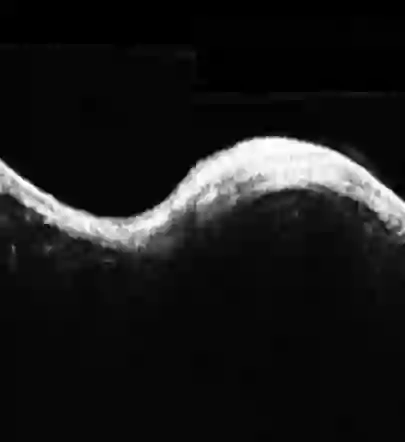
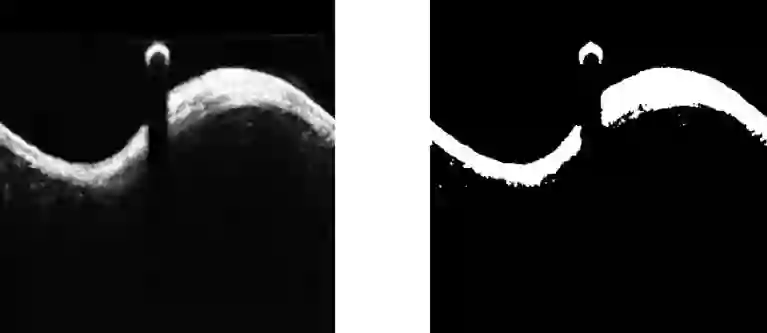
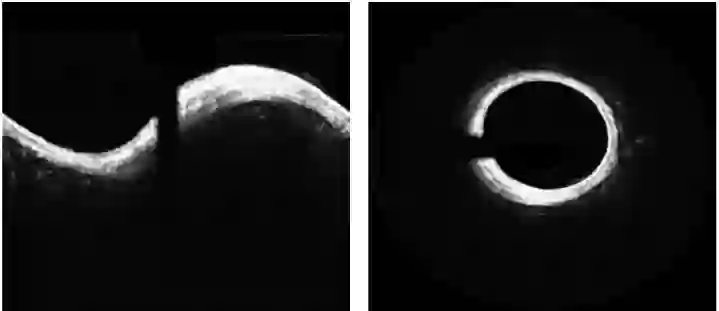
Intracoronary Optical Coherence Tomography (OCT) enables high-resolution visualization of coronary vessel anatomy but presents challenges due to noise, imaging artifacts, and complex tissue structures. This paper proposes a fully automated pipeline for vessel segmentation and classification in OCT images using machine learning techniques. The proposed method integrates image preprocessing, guidewire artifact removal, polar-to-Cartesian transformation, unsupervised K-means clustering, and local feature extraction. These features are used to train Logistic Regression and Support Vector Machine classifiers for pixel-wise vessel classification. Experimental results demonstrate excellent performance, achieving precision, recall, and F1-score values up to 1.00 and overall classification accuracy of 99.68%. The proposed approach provides accurate vessel boundary detection while maintaining low computational complexity and requiring minimal manual annotation. This method offers a reliable and efficient solution for automated OCT image analysis and has potential applications in clinical decision support and real-time medical image processing.
翻译:冠状动脉内光学相干断层扫描(OCT)能够实现冠状动脉血管结构的高分辨率可视化,但由于噪声、成像伪影和复杂的组织结构而面临挑战。本文提出了一种利用机器学习技术实现OCT图像血管分割与分类的全自动化流程。该方法整合了图像预处理、导丝伪影去除、极坐标-笛卡尔坐标转换、无监督K均值聚类和局部特征提取。这些特征被用于训练逻辑回归和支持向量机分类器,以实现像素级血管分类。实验结果表明该方法性能优异,精确率、召回率和F1分数值最高可达1.00,总体分类准确率达99.68%。所提出的方法在保持低计算复杂度和最少人工标注需求的同时,实现了精确的血管边界检测。该方法为自动化OCT图像分析提供了可靠高效的解决方案,在临床决策支持和实时医学图像处理领域具有潜在应用价值。






相关内容


 微信扫码咨询专知VIP会员