

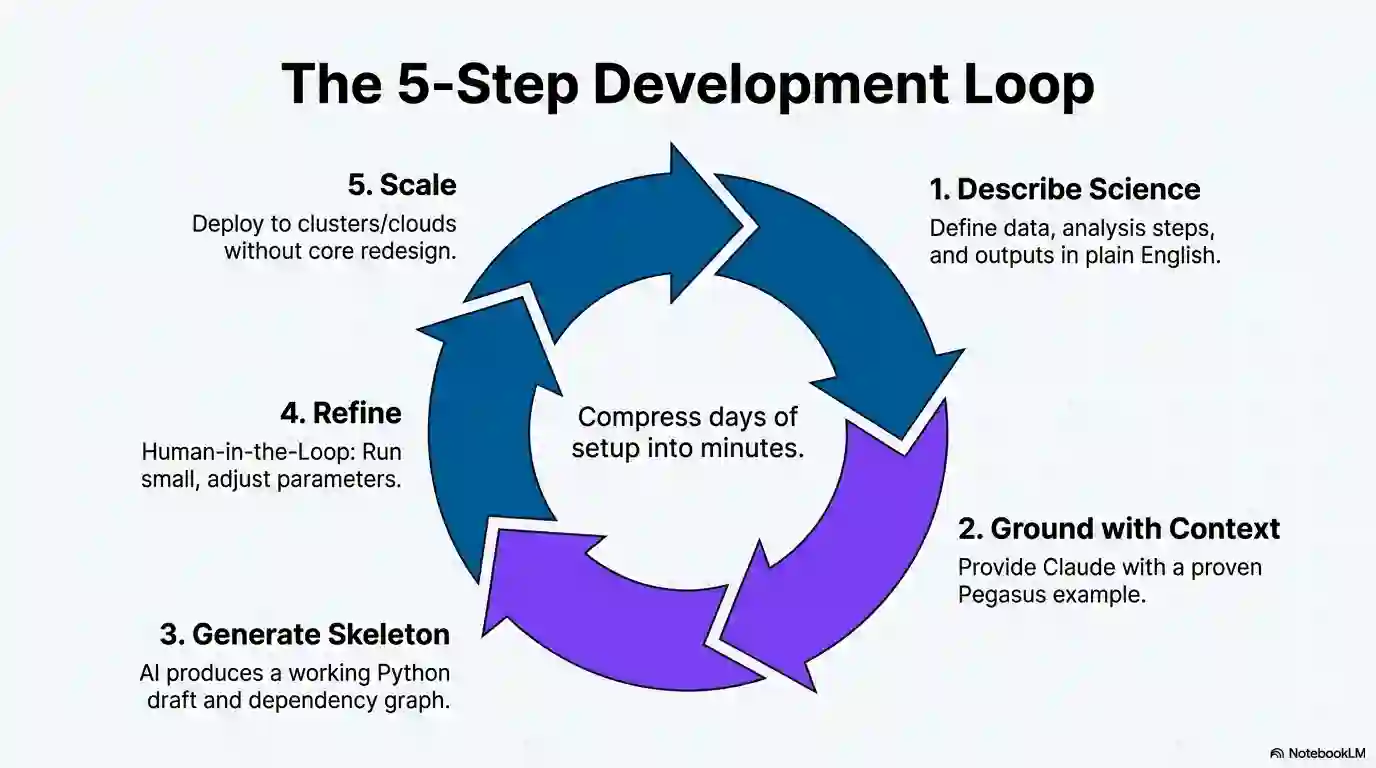
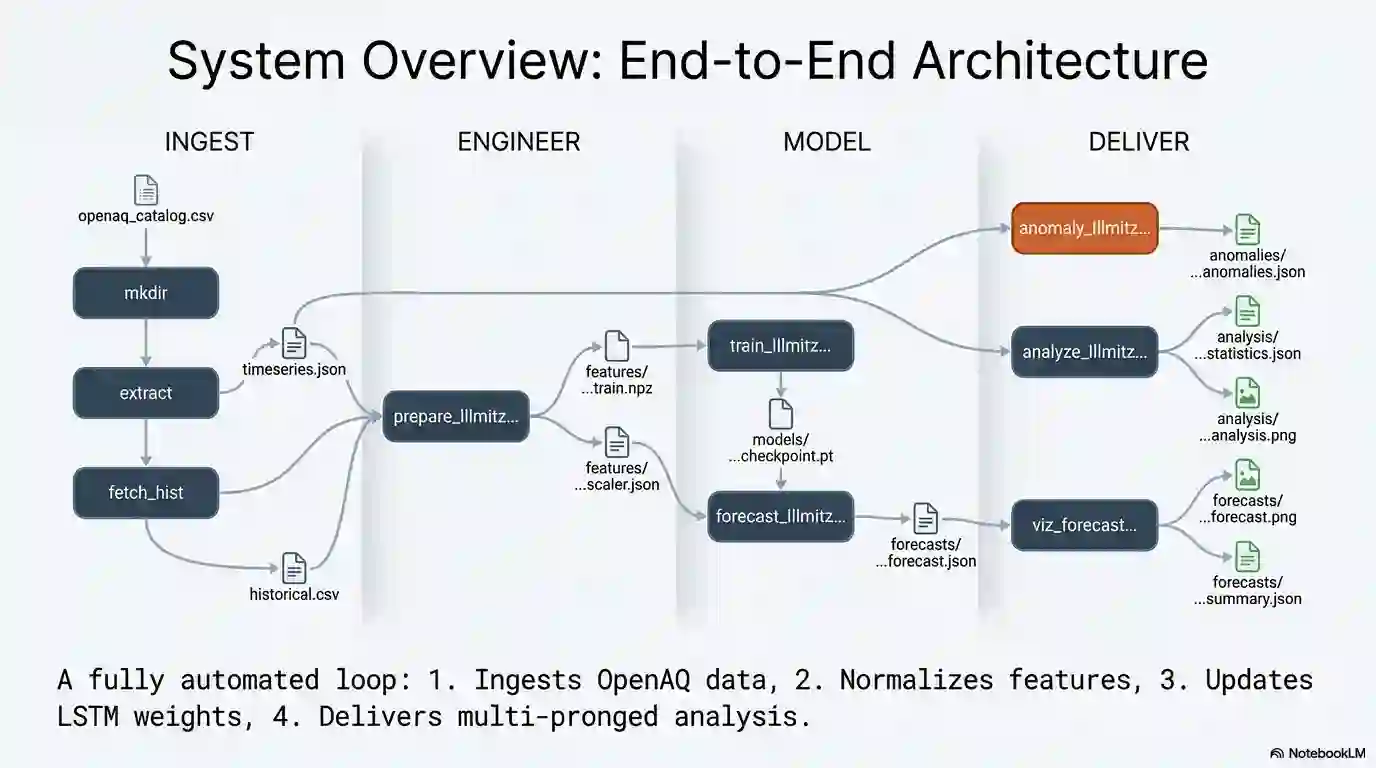
Scientists increasingly rely on sensor-based data; however transforming raw streams into insights across the edge-to-cloud continuum remains difficult due to the breadth of expertise required to coordinate the necessary data and computation flow. This paper introduces a pattern-based, AI-assisted methodology for rapid development of sensor-driven applications. Using Pegasus workflows executing on the FABRIC testbed, we demonstrate a 5-step development loop that shifts workflow construction and deployment from code-first to intent-first design. Starting from an existing Orcasound hydrophone workflow as a reusable template, we generate and refine workflows for air quality, earthquake, and soil moisture monitoring applications. We further show how these workflows extend to edge resources-including BlueField-3 DPUs and Raspberry Pis-through configuration and placement rather than workflow redesign. Our evaluation, from the perspective of a novice Pegasus user, shows that AI-assisted pattern reuse compresses multi-stage workflow development to 1-1.5 days per workflow while preserving the rigor and portability of workflow-based execution.
翻译:科学家日益依赖基于传感器的数据,但将原始数据流转化为边缘到云连续体中的洞察仍存在困难,因为协调必要的数据与计算流程需要广泛的专业知识。本文提出一种基于模式、AI辅助的传感驱动应用快速开发方法论。通过使用在FABRIC测试平台上执行的Pegasus工作流,我们展示了一个5步开发循环,将工作流构建与部署从"代码优先"转向"意图优先"设计。以现有Orcasound水听器工作流作为可复用模板,我们为空气质量监测、地震监测和土壤湿度监测应用生成并优化工作流。进一步展示这些工作流如何通过配置和部署位置(而非工作流重新设计)扩展至边缘资源——包括BlueField-3 DPU和树莓派。从Pegasus新手用户视角进行的评估表明,AI辅助的模式复用将多阶段工作流开发压缩至每个工作流1-1.5天,同时保持基于工作流执行的严谨性与可移植性。




相关内容



 微信扫码咨询专知VIP会员