

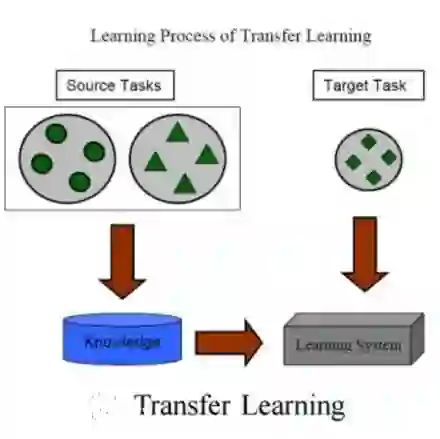
Raman spectroscopy, a photonic modality based on the inelastic backscattering of coherent light, is a valuable asset to the intraoperative sensing space, offering non-ionizing potential and highly-specific molecular fingerprint-like spectroscopic signatures that can be used for diagnosis of pathological tissue in the dynamic surgical field. Though Raman suffers from weakness in intensity, Surface-Enhanced Raman Spectroscopy (SERS), which uses metal nanostructures to amplify Raman signals, can achieve detection sensitivities that rival traditional photonic modalities. In this study, we outline a robotic Raman system that can reliably pinpoint the location and boundaries of a tumor embedded in healthy tissue, modeled here as a tissue-mimicking phantom with selectively infused Gold Nanostar regions. Further, due to the relative dearth of collected biological SERS or Raman data, we implement transfer learning to achieve 100% validation classification accuracy for Gold Nanostars compared to Control Agarose, thus providing a proof-of-concept for Raman-based deep learning training pipelines. We reconstruct a surgical field of 30x60mm in 10.2 minutes, and achieve 98.2% accuracy, preserving relative measurements between features in the phantom. We also achieve an 84.3% Intersection-over-Union score, which is the extent of overlap between the ground truth and predicted reconstructions. Lastly, we also demonstrate that the Raman system and classification algorithm do not discern based on sample color, but instead on presence of SERS agents. This study provides a crucial step in the translation of intelligent Raman systems in intraoperative oncological spaces.
翻译:拉曼光谱作为一种基于相干光非弹性背向散射的光子学技术,在术中传感领域具有重要价值:其具备非电离辐射潜力,并能提供类似分子指纹的高度特异性光谱特征,可用于动态手术野中病理组织的诊断。尽管拉曼信号强度较弱,但基于金属纳米结构放大拉曼信号的表面增强拉曼光谱技术(SERS)可达到与传统光子学方法相媲美的检测灵敏度。本研究设计了一套机器人拉曼系统,可可靠定位健康组织中肿瘤的位置与边界——我们采用选择性灌注金纳米星的仿体组织模型进行模拟。针对生物SERS/拉曼数据相对匮乏的问题,我们引入迁移学习,使金纳米星相较于对照组琼脂糖的验证分类准确率达到100%,为基于拉曼的深度学习训练流程提供了概念验证。研究者在10.2分钟内完成了30×60mm手术区域的重建,重建精度达98.2%,并保持了仿体特征间的相对测量值。交并比达到84.3%,该指标反映真实值与预测重建区域的重叠程度。此外,我们证明拉曼系统与分类算法不依赖样本颜色差异进行识别,而是依据SERS试剂的存在与否。本研究为智能拉曼系统在术中肿瘤学领域的转化应用迈出了关键一步。




相关内容



 微信扫码咨询专知VIP会员