

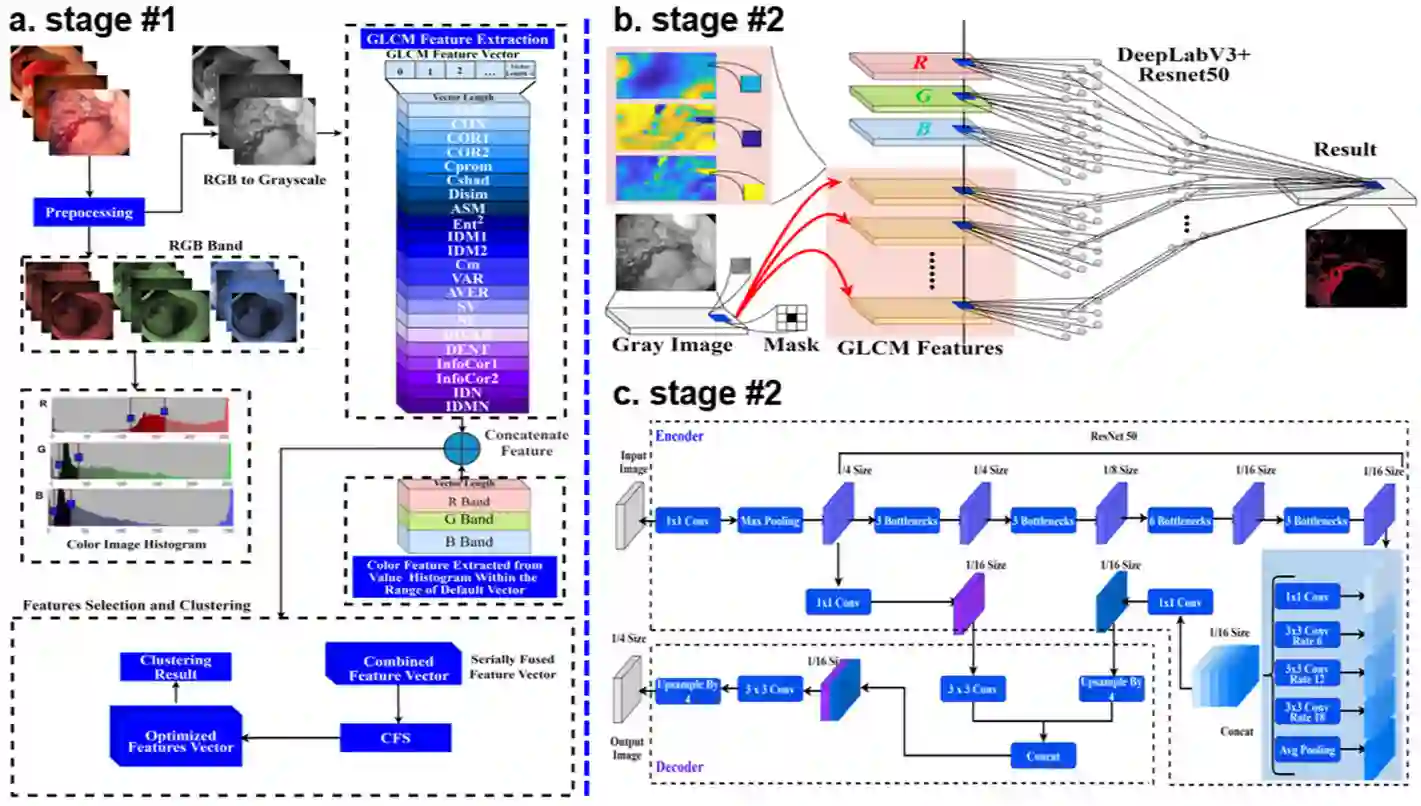
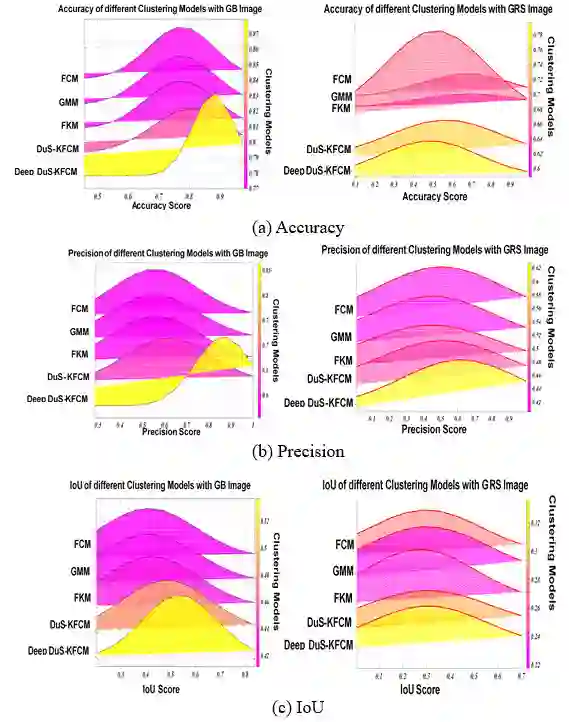
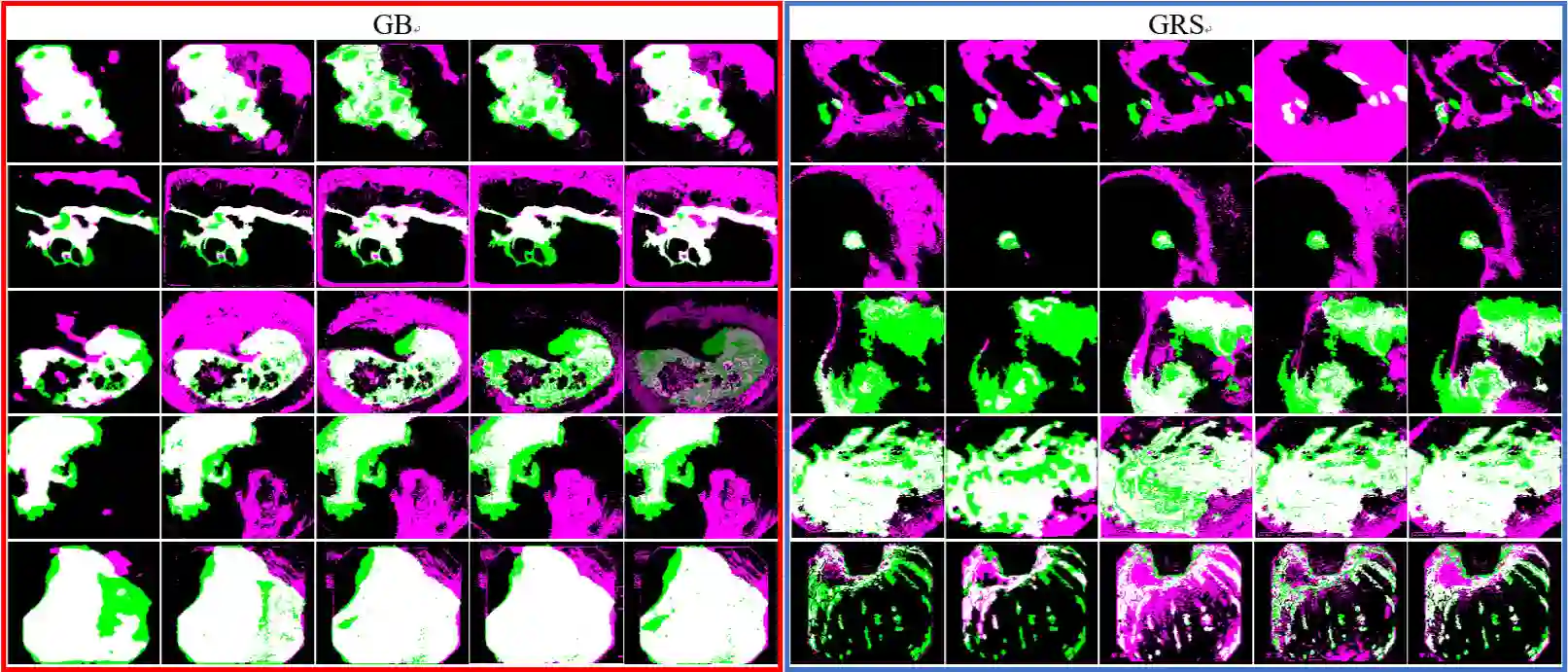
Timely and precise classification and segmentation of gastric bleeding in endoscopic imagery are pivotal for the rapid diagnosis and intervention of gastric complications, which is critical in life-saving medical procedures. Traditional methods grapple with the challenge posed by the indistinguishable intensity values of bleeding tissues adjacent to other gastric structures. Our study seeks to revolutionize this domain by introducing a novel deep learning model, the Dual Spatial Kernelized Constrained Fuzzy C-Means (Deep DuS-KFCM) clustering algorithm. This Hybrid Neuro-Fuzzy system synergizes Neural Networks with Fuzzy Logic to offer a highly precise and efficient identification of bleeding regions. Implementing a two-fold coarse-to-fine strategy for segmentation, this model initially employs the Spatial Kernelized Fuzzy C-Means (SKFCM) algorithm enhanced with spatial intensity profiles and subsequently harnesses the state-of-the-art DeepLabv3+ with ResNet50 architecture to refine the segmentation output. Through extensive experiments across mainstream gastric bleeding and red spots datasets, our Deep DuS-KFCM model demonstrated unprecedented accuracy rates of 87.95%, coupled with a specificity of 96.33%, outperforming contemporary segmentation methods. The findings underscore the model's robustness against noise and its outstanding segmentation capabilities, particularly for identifying subtle bleeding symptoms, thereby presenting a significant leap forward in medical image processing.
翻译:在内窥镜图像中对胃出血进行及时精确的分类与分割,对于胃部并发症的快速诊断和干预至关重要,这在挽救生命的医疗程序中具有关键意义。传统方法面临邻近其他胃组织的出血区域因强度值难以区分所带来的挑战。本研究旨在通过引入一种新颖的深度学习模型——双空间核化约束模糊C均值(Deep DuS-KFCM)聚类算法,彻底革新这一领域。该混合神经模糊系统将神经网络与模糊逻辑相结合,实现了对出血区域的高度精确和高效识别。模型采用由粗到精的两阶段分割策略:首先应用结合空间强度特征的增强型空间核化模糊C均值(SKFCM)算法进行初步处理,随后利用基于ResNet50架构的先进DeepLabv3+模型对分割结果进行精细化处理。通过在主流胃出血及红斑数据集上进行大量实验,我们的Deep DuS-KFCM模型取得了87.95%的准确率和96.33%的特异性,性能超越了现有分割方法。研究结果证明了该模型对噪声的鲁棒性及其卓越的分割能力,尤其在识别细微出血症状方面表现突出,从而标志着医学图像处理领域的一次重大飞跃。




相关内容





 微信扫码咨询专知VIP会员