

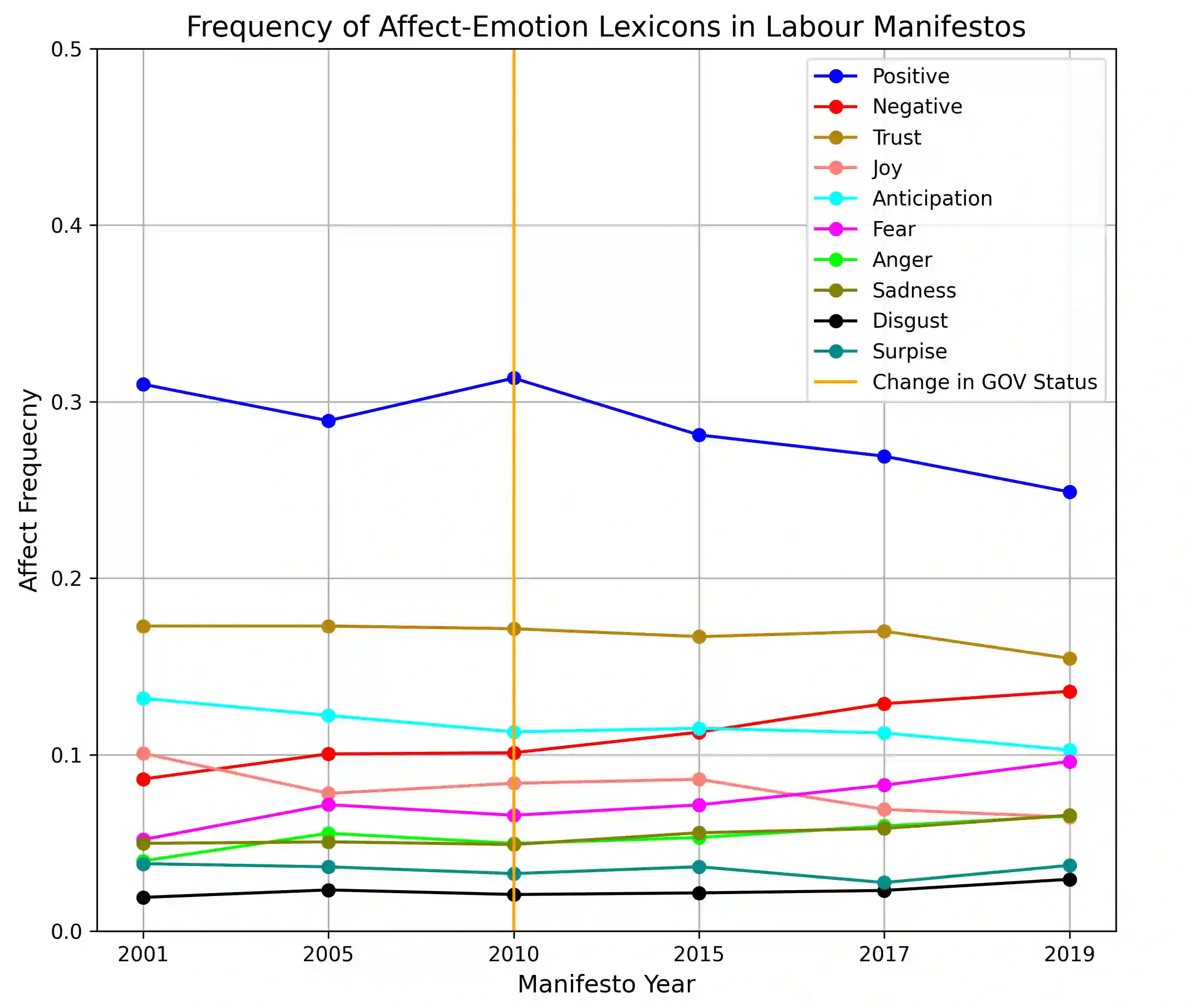
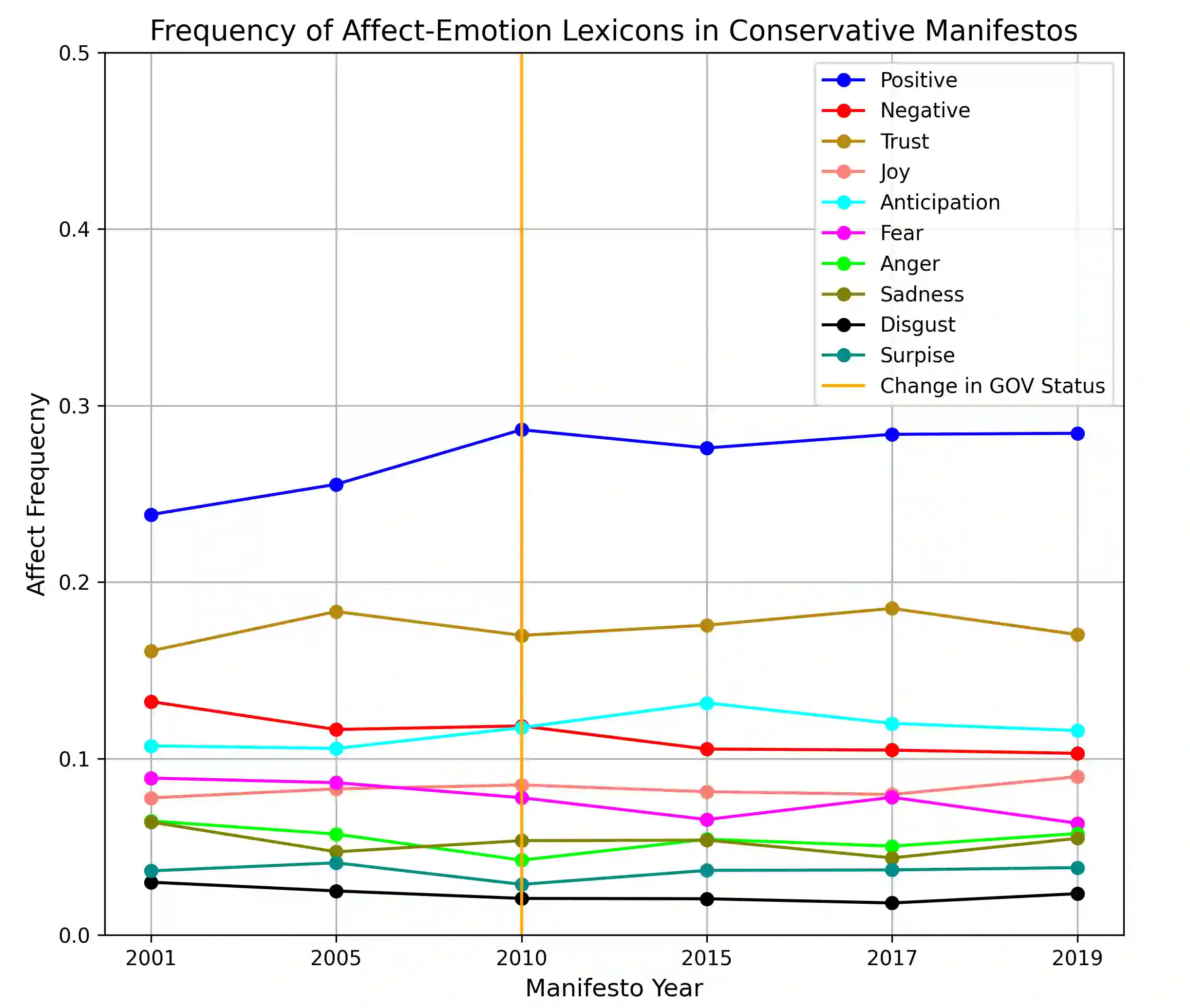
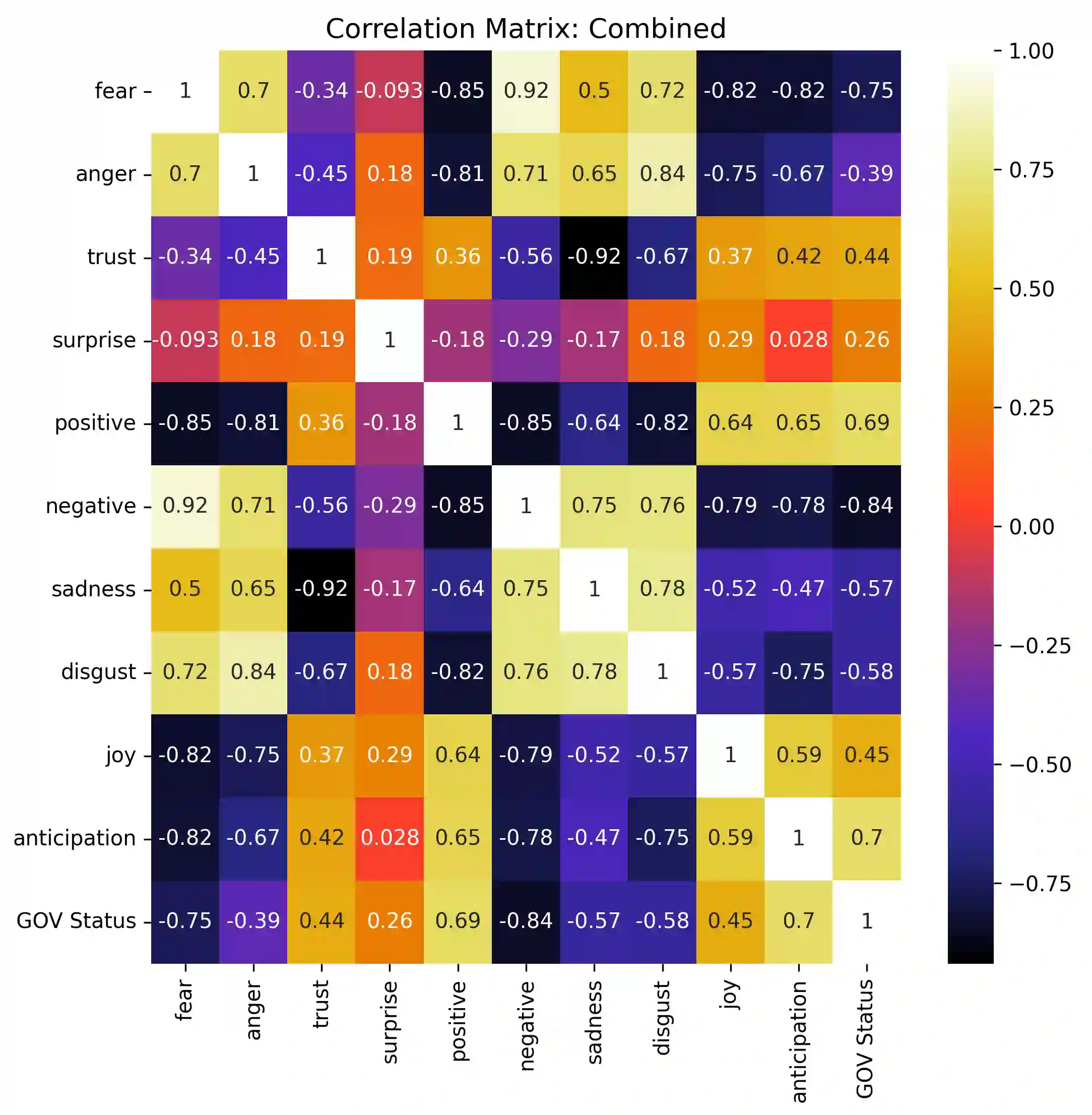
The study involved the analysis of emotion-associated language in the UK Conservative and Labour party general election manifestos between 2000 to 2019. While previous research have shown a general correlation between ideological positioning and overlap of public policies, there are still conflicting results in matters of sentiments in such manifestos. Using new data, we present how valence level can be swayed by party status within government with incumbent parties presenting a higher frequency in positive emotion-associated words while negative emotion-associated words are more prevalent in opposition parties. We also demonstrate that parties with ideological similitude use positive language prominently further adding to the literature on the relationship between sentiments and party status.
翻译:本研究分析了2000年至2019年间英国保守党与工党大选宣言中的情感相关语言。尽管先前研究已表明意识形态立场与公共政策重叠之间存在普遍相关性,但在宣言的情感表达方面仍存在相互矛盾的结果。通过运用新数据,我们揭示了效价水平如何受政党在政府中地位的影响:执政党使用积极情感相关词汇的频率更高,而在野党则更频繁使用消极情感相关词汇。我们还证明,意识形态相似的政党显著偏好使用积极语言,这进一步丰富了关于情感与政党地位关系的学术文献。





相关内容



 微信扫码咨询专知VIP会员