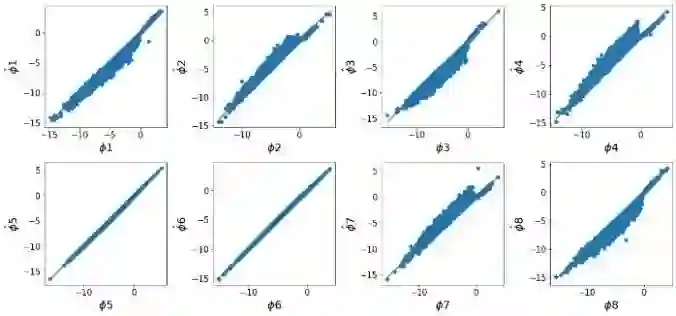
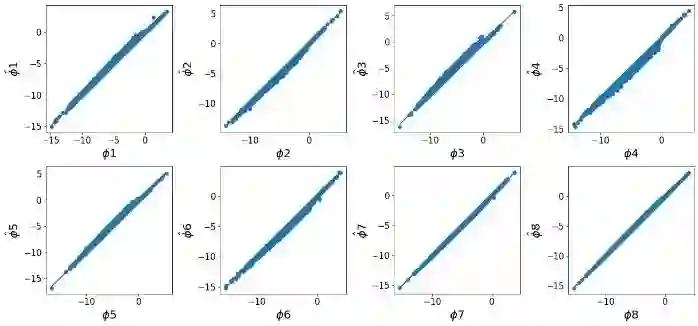
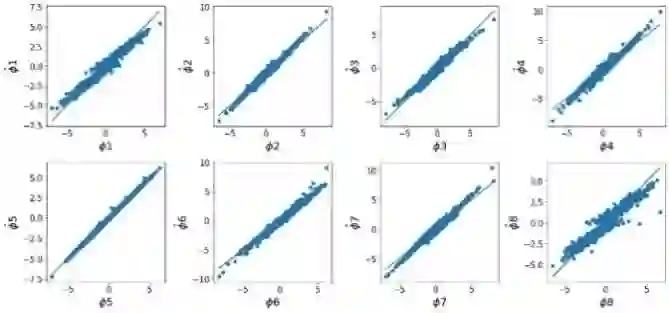
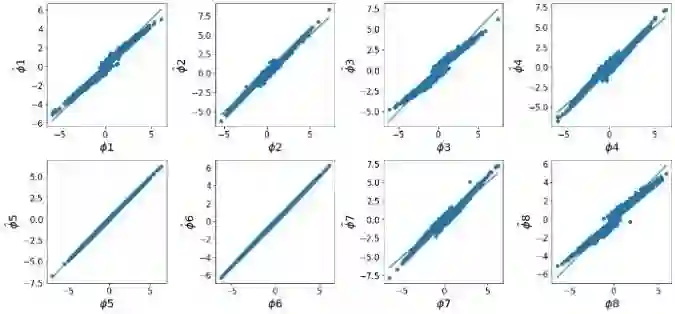
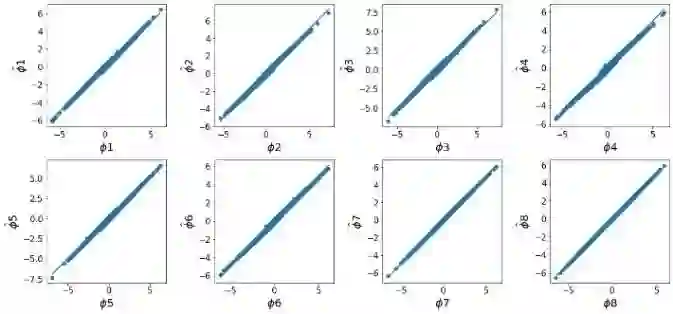
SHAP (SHapley Additive exPlanations) has become a popular method to attribute the prediction of a machine learning model on an input to its features. One main challenge of SHAP is the computation time. An exact computation of Shapley values requires exponential time complexity. Therefore, many approximation methods are proposed in the literature. In this paper, we propose methods that can compute SHAP exactly in polynomial time or even faster for SHAP definitions that satisfy our additivity and dummy assumptions (eg, kernal SHAP and baseline SHAP). We develop different strategies for models with different levels of model structure information: known functional decomposition, known order of model (defined as highest order of interaction in the model), or unknown order. For the first case, we demonstrate an additive property and a way to compute SHAP from the lower-order functional components. For the second case, we derive formulas that can compute SHAP in polynomial time. Both methods yield exact SHAP results. Finally, if even the order of model is unknown, we propose an iterative way to approximate Shapley values. The three methods we propose are computationally efficient when the order of model is not high which is typically the case in practice. We compare with sampling approach proposed in Castor & Gomez (2008) using simulation studies to demonstrate the efficacy of our proposed methods.


翻译:SHAP(SHapley Additive exPlanations)已成为将机器学习模型对输入的预测归因于其特征的流行方法。SHAP的主要挑战之一是计算时间。精确计算Shapley值需要指数级时间复杂度。因此,文献中提出了许多近似方法。在本文中,我们提出了一些方法,针对满足可加性和虚拟变量假设(例如,kernal SHAP和baseline SHAP)的SHAP定义,能够以多项式时间甚至更快的速度精确计算SHAP。我们针对具有不同级别模型结构信息的模型开发了不同策略:已知功能分解、已知模型阶数(定义为模型中交互作用的最高阶)或未知阶数。对于第一种情况,我们证明了一个可加性性质以及一种从低阶功能组件计算SHAP的方法。对于第二种情况,我们推导出能够以多项式时间计算SHAP的公式。这两种方法都产生精确的SHAP结果。最后,如果连模型阶数也未知,我们提出了一种迭代方法来近似Shapley值。当模型阶数不高时(这在实践中通常是典型情况),我们提出的这三种方法计算效率较高。我们通过仿真研究,与Castor & Gomez(2008)提出的采样方法进行比较,以证明我们提出方法的有效性。
0
下载
关闭预览

相关内容

ACM/IEEE第23届模型驱动工程语言和系统国际会议,是模型驱动软件和系统工程的首要会议系列,由ACM-SIGSOFT和IEEE-TCSE支持组织。自1998年以来,模型涵盖了建模的各个方面,从语言和方法到工具和应用程序。模特的参加者来自不同的背景,包括研究人员、学者、工程师和工业专业人士。MODELS 2019是一个论坛,参与者可以围绕建模和模型驱动的软件和系统交流前沿研究成果和创新实践经验。今年的版本将为建模社区提供进一步推进建模基础的机会,并在网络物理系统、嵌入式系统、社会技术系统、云计算、大数据、机器学习、安全、开源等新兴领域提出建模的创新应用以及可持续性。 官网链接:http://www.modelsconference.org/
FlowQA: Grasping Flow in History for Conversational Machine Comprehension
专知会员服务
34+阅读 · 2019年10月18日
Stabilizing Transformers for Reinforcement Learning
专知会员服务
60+阅读 · 2019年10月17日
《DeepGCNs: Making GCNs Go as Deep as CNNs》
专知会员服务
32+阅读 · 2019年10月17日
Keras François Chollet 《Deep Learning with Python 》, 386页pdf
专知会员服务
164+阅读 · 2019年10月12日
开源书:PyTorch深度学习起步
专知会员服务
51+阅读 · 2019年10月11日
【SIGGRAPH2019】TensorFlow 2.0深度学习计算机图形学应用
专知会员服务
41+阅读 · 2019年10月9日
Hierarchically Structured Meta-learning
CreateAMind
27+阅读 · 2019年5月22日
Transferring Knowledge across Learning Processes
CreateAMind
29+阅读 · 2019年5月18日
强化学习的Unsupervised Meta-Learning
CreateAMind
18+阅读 · 2019年1月7日
Unsupervised Learning via Meta-Learning
CreateAMind
44+阅读 · 2019年1月3日
A Technical Overview of AI & ML in 2018 & Trends for 2019
待字闺中
18+阅读 · 2018年12月24日
disentangled-representation-papers
CreateAMind
26+阅读 · 2018年9月12日
Single-Shot Object Detection with Enriched Semantics
统计学习与视觉计算组
14+阅读 · 2018年8月29日
STRCF for Visual Object Tracking
统计学习与视觉计算组
15+阅读 · 2018年5月29日
Focal Loss for Dense Object Detection
统计学习与视觉计算组
12+阅读 · 2018年3月15日
IJCAI | Cascade Dynamics Modeling with Attention-based RNN
KingsGarden
13+阅读 · 2017年7月16日
国家自然科学基金
2+阅读 · 2017年12月31日
国家自然科学基金
13+阅读 · 2017年12月31日
国家自然科学基金
47+阅读 · 2015年12月31日
国家自然科学基金
0+阅读 · 2015年12月31日
国家自然科学基金
2+阅读 · 2015年12月31日
国家自然科学基金
2+阅读 · 2015年12月31日
国家自然科学基金
3+阅读 · 2015年12月31日
国家自然科学基金
0+阅读 · 2014年12月31日
国家自然科学基金
0+阅读 · 2014年12月31日
国家自然科学基金
2+阅读 · 2014年12月31日
Arxiv
0+阅读 · 2023年10月19日
Arxiv
13+阅读 · 2021年5月3日
Knowledge Embedding Based Graph Convolutional Network
Arxiv
24+阅读 · 2021年4月23日
Arxiv
10+阅读 · 2021年2月26日
Geometric Graph Convolutional Neural Networks
Arxiv
10+阅读 · 2019年9月11日
Arxiv
14+阅读 · 2018年5月15日
VIP会员
最新内容
学习数据的几何:形状空间分析数学综述
专知会员服务
7+阅读 · 6月17日
定向能反无人机系统最新发展动态
专知会员服务
8+阅读 · 6月17日
从燃煤战舰到算法战争:水面指挥的永恒要求
专知会员服务
6+阅读 · 6月17日
相关VIP内容
FlowQA: Grasping Flow in History for Conversational Machine Comprehension
专知会员服务
34+阅读 · 2019年10月18日
Stabilizing Transformers for Reinforcement Learning
专知会员服务
60+阅读 · 2019年10月17日
《DeepGCNs: Making GCNs Go as Deep as CNNs》
专知会员服务
32+阅读 · 2019年10月17日
Keras François Chollet 《Deep Learning with Python 》, 386页pdf
专知会员服务
164+阅读 · 2019年10月12日
开源书:PyTorch深度学习起步
专知会员服务
51+阅读 · 2019年10月11日
【SIGGRAPH2019】TensorFlow 2.0深度学习计算机图形学应用
专知会员服务
41+阅读 · 2019年10月9日
相关资讯
Hierarchically Structured Meta-learning
CreateAMind
27+阅读 · 2019年5月22日
Transferring Knowledge across Learning Processes
CreateAMind
29+阅读 · 2019年5月18日
强化学习的Unsupervised Meta-Learning
CreateAMind
18+阅读 · 2019年1月7日
Unsupervised Learning via Meta-Learning
CreateAMind
44+阅读 · 2019年1月3日
A Technical Overview of AI & ML in 2018 & Trends for 2019
待字闺中
18+阅读 · 2018年12月24日
disentangled-representation-papers
CreateAMind
26+阅读 · 2018年9月12日
Single-Shot Object Detection with Enriched Semantics
统计学习与视觉计算组
14+阅读 · 2018年8月29日
STRCF for Visual Object Tracking
统计学习与视觉计算组
15+阅读 · 2018年5月29日
Focal Loss for Dense Object Detection
统计学习与视觉计算组
12+阅读 · 2018年3月15日
IJCAI | Cascade Dynamics Modeling with Attention-based RNN
KingsGarden
13+阅读 · 2017年7月16日
相关论文
Arxiv
0+阅读 · 2023年10月19日
Arxiv
13+阅读 · 2021年5月3日
Knowledge Embedding Based Graph Convolutional Network
Arxiv
24+阅读 · 2021年4月23日
Arxiv
10+阅读 · 2021年2月26日
Geometric Graph Convolutional Neural Networks
Arxiv
10+阅读 · 2019年9月11日
Arxiv
14+阅读 · 2018年5月15日
相关基金
国家自然科学基金
2+阅读 · 2017年12月31日
国家自然科学基金
13+阅读 · 2017年12月31日
国家自然科学基金
47+阅读 · 2015年12月31日
国家自然科学基金
0+阅读 · 2015年12月31日
国家自然科学基金
2+阅读 · 2015年12月31日
国家自然科学基金
2+阅读 · 2015年12月31日
国家自然科学基金
3+阅读 · 2015年12月31日
国家自然科学基金
0+阅读 · 2014年12月31日
国家自然科学基金
0+阅读 · 2014年12月31日
国家自然科学基金
2+阅读 · 2014年12月31日
Top
微信扫码咨询专知VIP会员