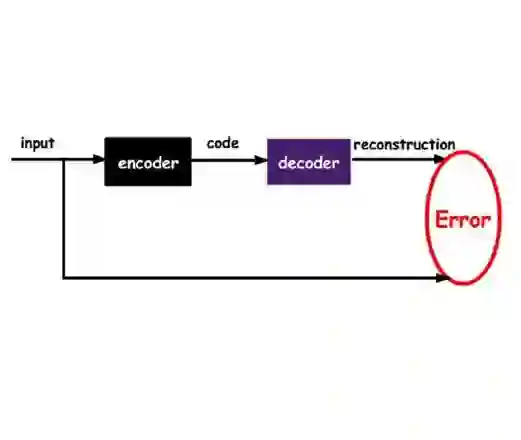
We introduce sparse autoencoder neural operators (SAE-NOs), a new class of sparse autoencoders that operate in function spaces rather than fixed-dimensional Euclidean representations. We formalize the functional representation hypothesis, where data are explained through sparse compositions of structured functions. Unlike standard SAEs that represent concepts with scalar activations, SAE-NOs parameterize concepts as functions, enabling representations that capture not only a concept's presence, but also how and where it is expressed across the input domain. We achieve this through joint sparsity: concept sparsity selects active concepts, while domain sparsity governs where they are expressed. We instantiate this framework using Fourier neural operators (SAE-FNOs), parameterizing concepts as integral operators in the Fourier domain. This functional and spectral parameterization is particularly advantageous when data exhibit spatial structure across scales or when concepts are frequency-structured. We characterize SAE-FNO on vision data and demonstrate that it learns localized patterns, uses concepts more efficiently, and exhibits stable concept characteristics across sparsity levels. We further show that SAE-FNO adapts to changes in domain size and generalizes across discretizations, operating at resolutions beyond those seen during training, where standard SAEs fail. We also introduce lifting into SAEs and show theoretically and empirically that it acts as a preconditioner that accelerates optimization. Overall, our results show that moving from vector-valued to functional parameterizations, with concept and domain sparsity, extends SAEs from representing concept presence to modeling structured concept expression, highlighting the importance of parameterization.


翻译:暂无翻译

0
下载
关闭预览

相关内容

综述 | Self-Evolving Coding Agents:自进化编程智能体
AutoResearch AI综述:迈向AI驱动的科学发现自动化
专知会员服务
19+阅读 · 5月26日
《利用自适应交互增强有人无人编队协同》217页
专知会员服务
98+阅读 · 2024年11月23日
[ICML2022] NeuroFluid: 流体仿真的人工智能新范式
专知会员服务
28+阅读 · 2022年6月8日
专知会员服务
38+阅读 · 2021年5月15日
Hierarchically Structured Meta-learning
CreateAMind
27+阅读 · 2019年5月22日
深度学习中Attention Mechanism详细介绍:原理、分类及应用
深度学习与NLP
10+阅读 · 2019年2月18日
Unsupervised Learning via Meta-Learning
CreateAMind
44+阅读 · 2019年1月3日
A Technical Overview of AI & ML in 2018 & Trends for 2019
待字闺中
18+阅读 · 2018年12月24日
自然语言处理 | 使用Spacy 进行自然语言处理(二)
机器学习和数学
10+阅读 · 2018年8月27日
自然语言处理 | 使用Spacy 进行自然语言处理
机器学习和数学
19+阅读 · 2018年8月22日
论文浅尝 | Improved Neural Relation Detection for KBQA
开放知识图谱
13+阅读 · 2018年1月21日
From Softmax to Sparsemax-ICML16(1)
KingsGarden
74+阅读 · 2016年11月26日
自然语言处理工具包spaCy介绍
AINLP
18+阅读 · 2016年11月14日
国家自然科学基金
2+阅读 · 2015年12月31日
国家自然科学基金
2+阅读 · 2015年12月31日
国家自然科学基金
3+阅读 · 2015年12月31日
国家自然科学基金
1+阅读 · 2015年12月31日
国家自然科学基金
4+阅读 · 2015年12月31日
国家自然科学基金
0+阅读 · 2014年12月31日
国家自然科学基金
0+阅读 · 2014年12月31日
国家自然科学基金
19+阅读 · 2008年12月31日
Toward Identifiable Sparse Autoencoders
Arxiv
0+阅读 · 11月3日
VIP会员
最新内容
《美空军2026条令文件:对海压制作战》
专知会员服务
11+阅读 · 11月9日
人工智能与战争的未来
专知会员服务
4+阅读 · 11月8日
《Agent Mosaic:识别智能体LLM系统中的机密泄露》
人工智能在军事教育中的应用:若干视角与经验
“星链”减速与不断适应的乌克兰
专知会员服务
7+阅读 · 11月6日
美国中期选举之后:帕兰提尔面临不确定性?
专知会员服务
4+阅读 · 11月6日
相关资讯
Hierarchically Structured Meta-learning
CreateAMind
27+阅读 · 2019年5月22日
深度学习中Attention Mechanism详细介绍:原理、分类及应用
深度学习与NLP
10+阅读 · 2019年2月18日
Unsupervised Learning via Meta-Learning
CreateAMind
44+阅读 · 2019年1月3日
A Technical Overview of AI & ML in 2018 & Trends for 2019
待字闺中
18+阅读 · 2018年12月24日
自然语言处理 | 使用Spacy 进行自然语言处理(二)
机器学习和数学
10+阅读 · 2018年8月27日
自然语言处理 | 使用Spacy 进行自然语言处理
机器学习和数学
19+阅读 · 2018年8月22日
论文浅尝 | Improved Neural Relation Detection for KBQA
开放知识图谱
13+阅读 · 2018年1月21日
From Softmax to Sparsemax-ICML16(1)
KingsGarden
74+阅读 · 2016年11月26日
自然语言处理工具包spaCy介绍
AINLP
18+阅读 · 2016年11月14日
相关基金
国家自然科学基金
2+阅读 · 2015年12月31日
国家自然科学基金
2+阅读 · 2015年12月31日
国家自然科学基金
3+阅读 · 2015年12月31日
国家自然科学基金
1+阅读 · 2015年12月31日
国家自然科学基金
4+阅读 · 2015年12月31日
国家自然科学基金
0+阅读 · 2014年12月31日
国家自然科学基金
0+阅读 · 2014年12月31日
国家自然科学基金
19+阅读 · 2008年12月31日
Top
微信扫码咨询专知VIP会员