Gait analysis holds significant importance in monitoring daily health, particularly among older adults. Advancements in sensor technology enable the capture of movement in real-life environments and generate big data. Machine learning, notably deep learning (DL), shows promise to use these big data in gait analysis. However, the inherent black-box nature of these models poses challenges for their clinical application. This study aims to enhance transparency in DL-based gait classification for aged-related gait patterns using Explainable Artificial Intelligence, such as SHAP. A total of 244 subjects, comprising 129 adults and 115 older adults (age>65), were included. They performed a 3-minute walking task while accelerometers were affixed to the lumbar segment L3. DL models, convolutional neural network (CNN) and gated recurrent unit (GRU), were trained using 1-stride and 8-stride accelerations, respectively, to classify adult and older adult groups. SHAP was employed to explain the models' predictions. CNN achieved a satisfactory performance with an accuracy of 81.4% and an AUC of 0.89, and GRU demonstrated promising results with an accuracy of 84.5% and an AUC of 0.94. SHAP analysis revealed that both CNN and GRU assigned higher SHAP values to the data from vertical and walking directions, particularly emphasizing data around heel contact, spanning from the terminal swing to loading response phases. Furthermore, SHAP values indicated that GRU did not treat every stride equally. CNN accurately distinguished between adults and older adults based on the characteristics of a single stride's data. GRU achieved accurate classification by considering the relationships and subtle differences between strides. In both models, data around heel contact emerged as most critical, suggesting differences in acceleration and deceleration patterns during walking between different age groups.


翻译:步态分析在监测日常健康中具有重要意义,尤其是在老年人群中。传感器技术的进步使得在真实生活环境中捕捉运动数据并生成大数据成为可能。机器学习,尤其是深度学习,在步态分析中展现出利用这些大数据的潜力。然而,这些模型固有的"黑箱"特性对其临床应用构成了挑战。本研究旨在通过可解释人工智能(如SHAP)增强基于深度学习的年龄相关步态模式分类的透明度。研究纳入244名受试者,包括129名成年人和115名老年人(年龄>65岁)。受试者进行3分钟步行任务,同时将加速度计固定于腰椎第三椎体(L3)节段。分别采用1步幅和8步幅的加速度数据训练卷积神经网络和门控循环单元深度学习模型,用于区分成人和老年人群。采用SHAP方法解释模型预测结果。CNN取得了令人满意的性能,准确率为81.4%,AUC为0.89;GRU展现了良好的结果,准确率为84.5%,AUC为0.94。SHAP分析显示,CNN和GRU均对垂直方向和步行方向的数据赋予更高的SHAP值,尤其强调从摆动末期到支撑相中期跟触地阶段的数据。此外,SHAP值表明GRU对每个步幅的处理并不相同。CNN基于单步幅数据特征准确区分成人和老年人;GRU则通过考虑步幅间的关系和细微差异实现准确分类。在两个模型中,跟触地阶段的数据最为关键,提示不同年龄组在行走过程中的加速度和减速度模式存在差异。


0
下载
关闭预览

相关内容

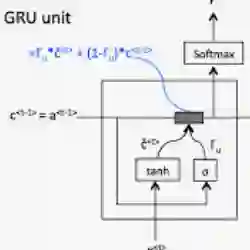
循环神经网络的一种门机制
Linux导论,Introduction to Linux,96页ppt
专知会员服务
82+阅读 · 2020年7月26日
FlowQA: Grasping Flow in History for Conversational Machine Comprehension
专知会员服务
34+阅读 · 2019年10月18日
Stabilizing Transformers for Reinforcement Learning
专知会员服务
60+阅读 · 2019年10月17日
Keras François Chollet 《Deep Learning with Python 》, 386页pdf
专知会员服务
164+阅读 · 2019年10月12日
强化学习最新教程,17页pdf
专知会员服务
182+阅读 · 2019年10月11日
【SIGGRAPH2019】TensorFlow 2.0深度学习计算机图形学应用
专知会员服务
41+阅读 · 2019年10月9日
Hierarchically Structured Meta-learning
CreateAMind
27+阅读 · 2019年5月22日
Transferring Knowledge across Learning Processes
CreateAMind
29+阅读 · 2019年5月18日
Unsupervised Learning via Meta-Learning
CreateAMind
44+阅读 · 2019年1月3日
A Technical Overview of AI & ML in 2018 & Trends for 2019
待字闺中
18+阅读 · 2018年12月24日
disentangled-representation-papers
CreateAMind
26+阅读 · 2018年9月12日
STRCF for Visual Object Tracking
统计学习与视觉计算组
15+阅读 · 2018年5月29日
Focal Loss for Dense Object Detection
统计学习与视觉计算组
12+阅读 · 2018年3月15日
IJCAI | Cascade Dynamics Modeling with Attention-based RNN
KingsGarden
13+阅读 · 2017年7月16日
From Softmax to Sparsemax-ICML16(1)
KingsGarden
74+阅读 · 2016年11月26日
国家自然科学基金
13+阅读 · 2017年12月31日
国家自然科学基金
3+阅读 · 2016年12月31日
国家自然科学基金
3+阅读 · 2015年12月31日
国家自然科学基金
2+阅读 · 2015年12月31日
国家自然科学基金
0+阅读 · 2014年12月31日
国家自然科学基金
2+阅读 · 2014年12月31日
国家自然科学基金
13+阅读 · 2014年12月31日
国家自然科学基金
6+阅读 · 2014年12月31日
国家自然科学基金
1+阅读 · 2014年12月31日
VIP会员
最新内容
无人机自主控制与人工智能:系统性综述
专知会员服务
10+阅读 · 今天7:25
巡飞弹与反无人机系统——现代战场的两大支柱
专知会员服务
3+阅读 · 今天6:54
《打造“黄金舰队”》57页报告
专知会员服务
3+阅读 · 今天6:52
《北约数字教官网络发展路径》128页报告
专知会员服务
2+阅读 · 今天6:33
ECCV 2026 | MIMFlow:MIM与归一化流统一图像生成
专知会员服务
7+阅读 · 6月25日
网状网络及其在军事领域的运用
专知会员服务
8+阅读 · 6月25日
无美国参与的欧洲战争方式(万字长文)
专知会员服务
8+阅读 · 6月25日
《国防领域敏感性分析白皮书》
专知会员服务
9+阅读 · 6月25日
综述 | 从问答到任务完成:Agent系统与Harness设计
专知会员服务
10+阅读 · 6月24日
Agentic RL:框架、实践与长程智能体训练
专知会员服务
10+阅读 · 6月24日
相关资讯
Hierarchically Structured Meta-learning
CreateAMind
27+阅读 · 2019年5月22日
Transferring Knowledge across Learning Processes
CreateAMind
29+阅读 · 2019年5月18日
Unsupervised Learning via Meta-Learning
CreateAMind
44+阅读 · 2019年1月3日
A Technical Overview of AI & ML in 2018 & Trends for 2019
待字闺中
18+阅读 · 2018年12月24日
disentangled-representation-papers
CreateAMind
26+阅读 · 2018年9月12日
STRCF for Visual Object Tracking
统计学习与视觉计算组
15+阅读 · 2018年5月29日
Focal Loss for Dense Object Detection
统计学习与视觉计算组
12+阅读 · 2018年3月15日
IJCAI | Cascade Dynamics Modeling with Attention-based RNN
KingsGarden
13+阅读 · 2017年7月16日
From Softmax to Sparsemax-ICML16(1)
KingsGarden
74+阅读 · 2016年11月26日
相关基金
国家自然科学基金
13+阅读 · 2017年12月31日
国家自然科学基金
3+阅读 · 2016年12月31日
国家自然科学基金
3+阅读 · 2015年12月31日
国家自然科学基金
2+阅读 · 2015年12月31日
国家自然科学基金
0+阅读 · 2014年12月31日
国家自然科学基金
2+阅读 · 2014年12月31日
国家自然科学基金
13+阅读 · 2014年12月31日
国家自然科学基金
6+阅读 · 2014年12月31日
国家自然科学基金
1+阅读 · 2014年12月31日
Top
微信扫码咨询专知VIP会员