

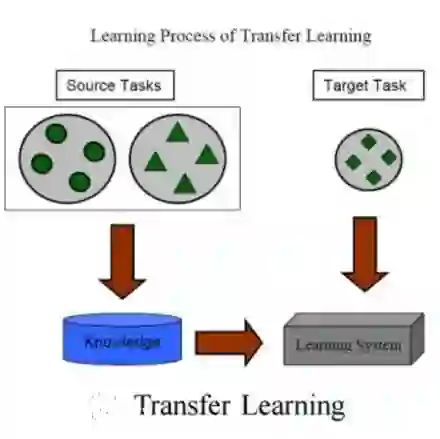
Relative abundance, measured as the number of animals caught per unit of sampling effort (CPUE), is commonly used to monitor fish and wildlife populations, largely because sampling methods are cost-effective to implement. Modeling relative abundance, however, requires the assumption that the detection probability is constant across sampling events. This assumption is likely not valid, as the probability of detection often varies as a function of several factors, including the characteristics of individual animals and environmental conditions at the time of sampling. In contrast, methods to estimate absolute abundance, such as capture-recapture (CR), account for variable detection, but are often infeasible to implement across large spatiotemporal scales. Despite this, CR data are sometimes available for species of interest, albeit at smaller spatiotemporal extents. Leveraging information on detection probabilities from CR data to help inform estimates of widely available CPUE data could strengthen inferences about the status of fish and wildlife populations. We propose an approach to (i) learn the effect of environmental covariates on detection probabilities from CR data and (ii) transfer these detection functions to CPUE models for improved inference. Shown empirically through a simulation study, this approach improves estimates of abundance and the ability to detect temporal trends. We apply our transfer learning method using CR and CPUE data to recreationally important smallmouth bass (\textit{Micropterus dolomieu}) fisheries in Pennsylvania, USA rivers.
翻译:相对丰度(以单位采样努力量捕获的动物数量,CPUE衡量)通常用于监测鱼类和野生动物种群,主要因为这种采样方法成本效益较高。然而,对相对丰度进行建模需要假设探测概率在每次采样事件中保持恒定。这一假设很可能不成立,因为探测概率常随多种因素变化,包括个体动物的特征及采样时的环境条件。相比之下,估算绝对丰度的方法(如捕获-再捕获(CR))能够考虑可变探测性,但往往难以在大时空尺度上实施。尽管如此,对于目标物种而言,有时仍可获得较小时空尺度上的CR数据。利用CR数据中关于探测概率的信息来辅助推断广泛可得的CPUE数据,可以加强对鱼类和野生动物种群状况的认识。我们提出一种方法,用于:(i) 从CR数据中学习环境协变量对探测概率的影响,(ii) 将这些探测函数迁移至CPUE模型以改进推断。通过模拟研究的实证检验,该方法能提高丰度估计的准确性,并增强对时间趋势的检测能力。我们结合CR和CPUE数据,将这种迁移学习方法应用于美国宾夕法尼亚州河流中具有休闲渔业价值的小口黑鲈(\textit{Micropterus dolomieu})种群。




相关内容


 微信扫码咨询专知VIP会员