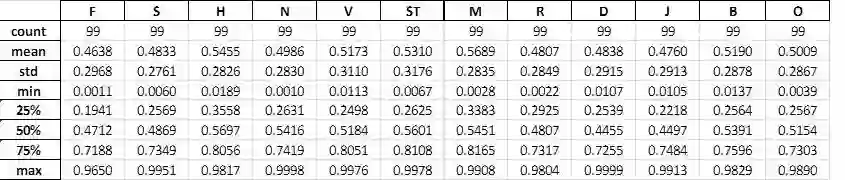
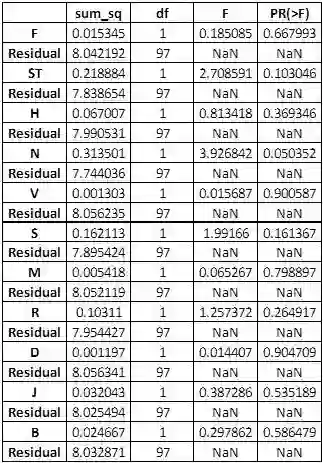
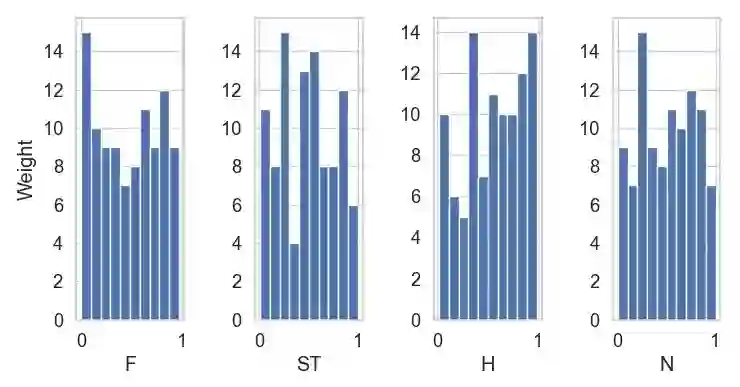
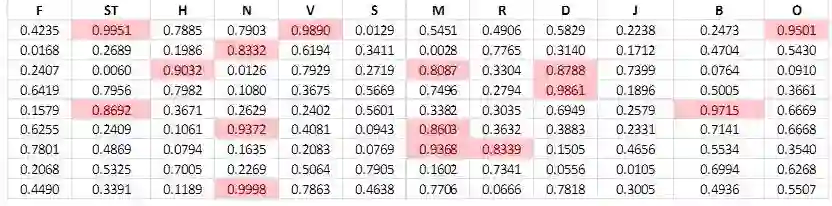
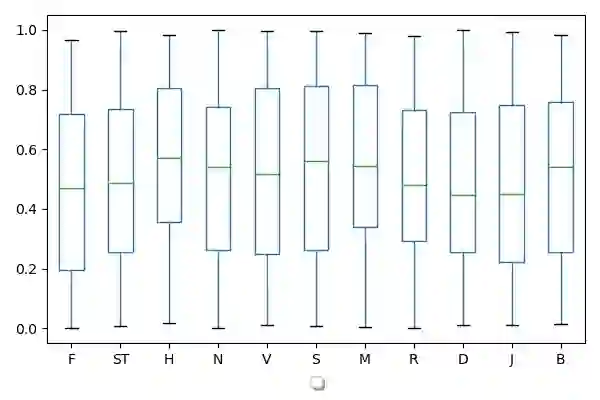
Clinicians conduct routine diagnosis by scrutinizing signs and symptoms of patients in treating epidemics. This skill evolves through trial-and-error and improves with time. The success of the therapeutic regimen relies largely on the accuracy of interpretation of such sign-symptoms, based on which the clinician ranks the potent causes of the epidemic and analyzes their interdependence to devise sustainable containment strategies. This study proposed an alternative medical front, a VIRtual DOCtor (VIRDOC), that can self-consistently rank key contributors of an epidemic and also correctly identify the infection stage, using the language of statistical modelling and Machine Learning. VIRDOC analyzes medical data and then translates these into a vector comprising Multiple Linear Regression (MLR) coefficients to probabilistically predict scores that compare with clinical experience-based assessment. The VIRDOC algorithm, risk managed through ANOVA, has been tested on dengue epidemic data (N=100 with 11 weighted sign-symptoms). Results highly encouraging with ca 75% accurate fatality prediction, compared to 71.4% from traditional diagnosis. The algorithm can be generically extended to analyze other epidemic forms.


翻译:临床医生通过仔细检查病人在治疗流行病方面的症状和症状进行常规诊断。这种技能通过试验和感应过程演化,并随着时间的推移不断改进。治疗疗法的成功主要取决于对这种症状的精确解释,临床医生据此排列了该流行病的有力原因,并分析了其相互依存性,以制定可持续的遏制战略。这项研究建议了另一种医疗战线,即VIRTAL DOCtor(VIRDOC),它可以自我一致地排在某一流行病的主要发病者的位置,并且也可以正确地确定感染阶段,使用统计模型和机器学习的语言。VIRDOC分析医疗数据,然后将这些数据转化为由多线性回归(MLRR)系数构成的矢量,以概率预测与临床经验评估相比较的得分数。VIRDC算法,通过ANOVA管理的风险,已经根据登革热流行病数据进行了测试(N=100,11个加权信号-症状),结果非常令人鼓舞,75%的准确致命性预测是传统诊断的71.4%。算法可以扩展为其他的通用分析形式。
1
下载
关闭预览

相关内容

【干货书】真实机器学习,264页pdf,Real-World Machine Learning
Keras François Chollet 《Deep Learning with Python 》, 386页pdf
专知会员服务
164+阅读 · 2019年10月12日
机器学习入门的经验与建议
专知会员服务
94+阅读 · 2019年10月10日
【哈佛大学商学院课程Fall 2019】机器学习可解释性
专知会员服务
106+阅读 · 2019年10月9日
【CMU】机器学习导论课程(Introduction to Machine Learning)
专知会员服务
62+阅读 · 2019年8月26日
计算机 | 入门级EI会议ICVRIS 2019诚邀稿件
Call4Papers
10+阅读 · 2019年6月24日
Transferring Knowledge across Learning Processes
CreateAMind
29+阅读 · 2019年5月18日
Unsupervised Learning via Meta-Learning
CreateAMind
44+阅读 · 2019年1月3日
meta learning 17年:MAML SNAIL
CreateAMind
11+阅读 · 2019年1月2日
Ray RLlib: Scalable 降龙十八掌
CreateAMind
9+阅读 · 2018年12月28日
A Technical Overview of AI & ML in 2018 & Trends for 2019
待字闺中
18+阅读 · 2018年12月24日
Hierarchical Disentangled Representations
CreateAMind
4+阅读 · 2018年4月15日
分布式TensorFlow入门指南
机器学习研究会
4+阅读 · 2017年11月28日
Andrew NG的新书《Machine Learning Yearning》
我爱机器学习
11+阅读 · 2016年12月7日
Arxiv
18+阅读 · 2021年3月16日
Learning From Positive and Unlabeled Data: A Survey
Arxiv
5+阅读 · 2018年11月12日
Arxiv
5+阅读 · 2018年5月31日
VIP会员
最新内容
世界模型入门:从序贯决策到通用智能体
专知会员服务
8+阅读 · 10月24日
军事域更好使用人工智能的实用指南
专知会员服务
10+阅读 · 10月22日
《衡量语言模型中的作战规划能力》
专知会员服务
14+阅读 · 10月20日
Maven智能系统:帕兰提尔军事人工智能平台详解
专知会员服务
17+阅读 · 10月20日
《测试自动化框架在敏捷软件开发中的角色》
专知会员服务
9+阅读 · 10月20日
俄罗斯如何拦截乌克兰无人机与巡航导弹
专知会员服务
13+阅读 · 10月15日
《武器-目标分配问题:精确与近似求解算法》
专知会员服务
19+阅读 · 10月15日
相关资讯
计算机 | 入门级EI会议ICVRIS 2019诚邀稿件
Call4Papers
10+阅读 · 2019年6月24日
Transferring Knowledge across Learning Processes
CreateAMind
29+阅读 · 2019年5月18日
Unsupervised Learning via Meta-Learning
CreateAMind
44+阅读 · 2019年1月3日
meta learning 17年:MAML SNAIL
CreateAMind
11+阅读 · 2019年1月2日
Ray RLlib: Scalable 降龙十八掌
CreateAMind
9+阅读 · 2018年12月28日
A Technical Overview of AI & ML in 2018 & Trends for 2019
待字闺中
18+阅读 · 2018年12月24日
Hierarchical Disentangled Representations
CreateAMind
4+阅读 · 2018年4月15日
分布式TensorFlow入门指南
机器学习研究会
4+阅读 · 2017年11月28日
Andrew NG的新书《Machine Learning Yearning》
我爱机器学习
11+阅读 · 2016年12月7日
Top
微信扫码咨询专知VIP会员