

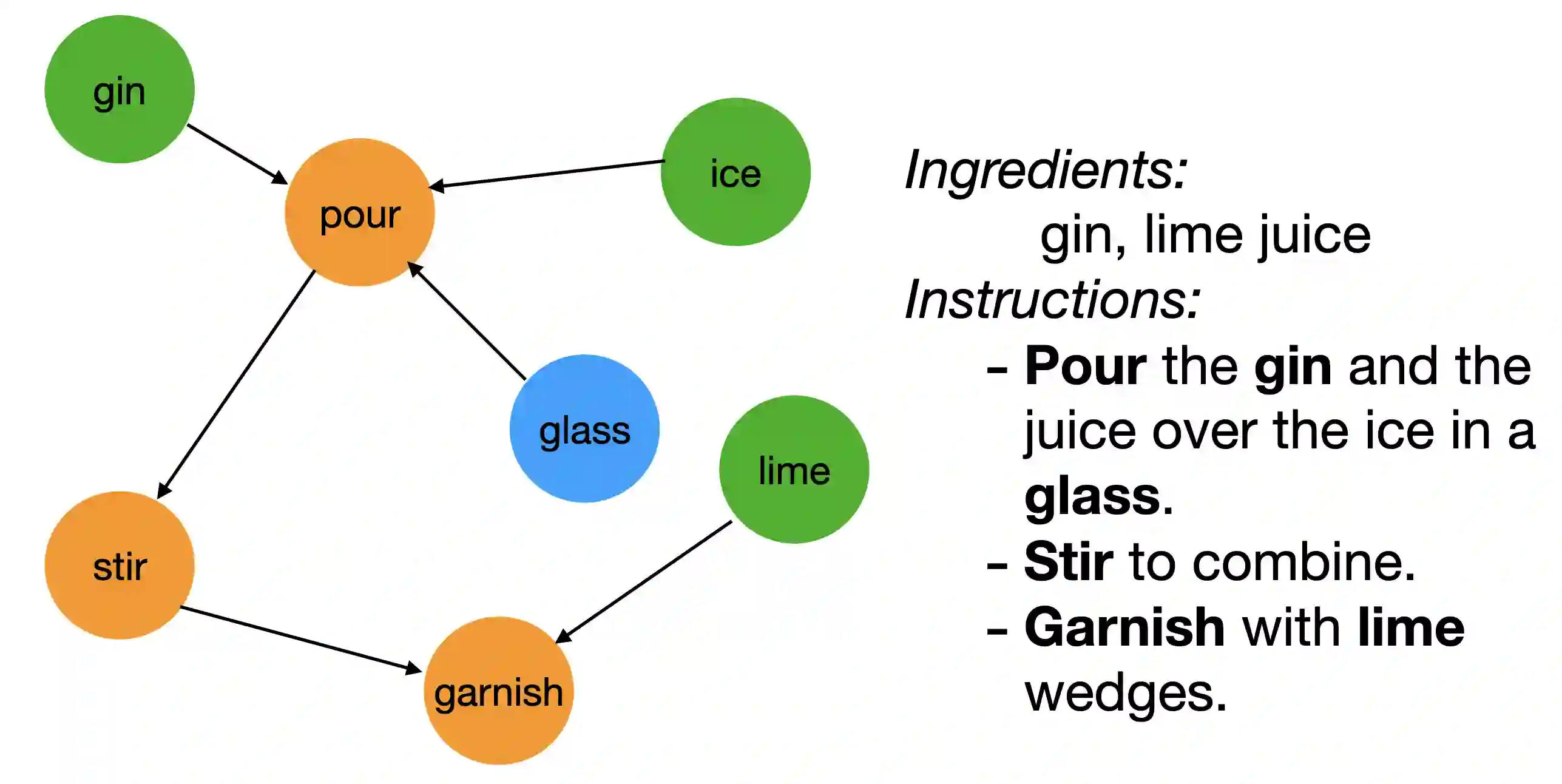
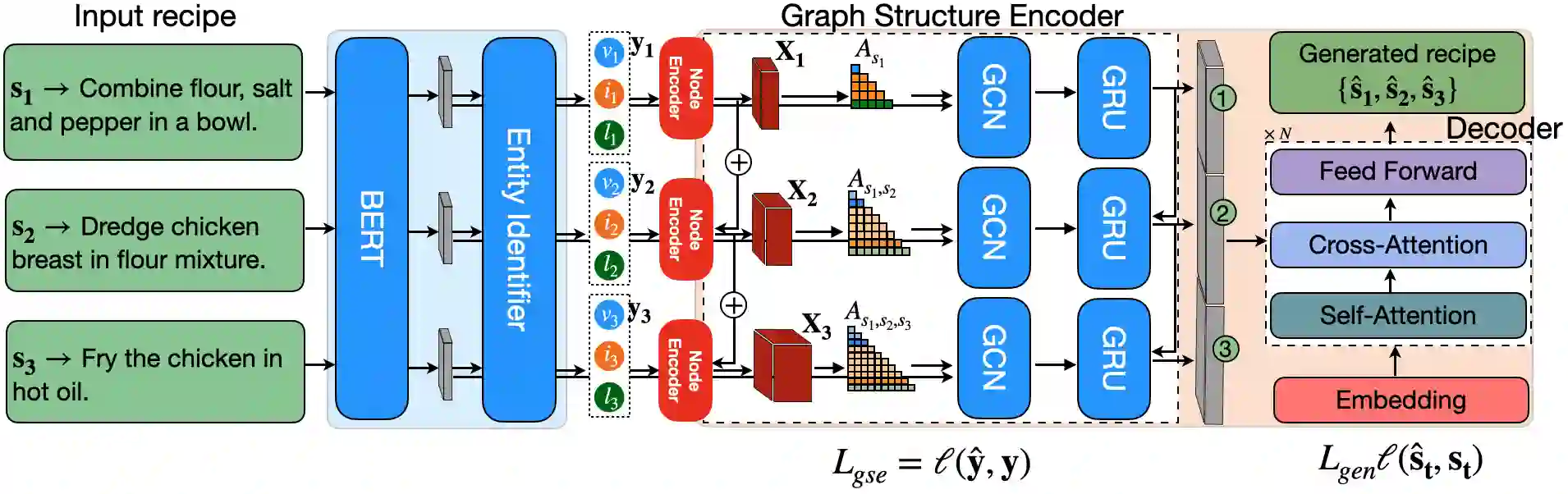
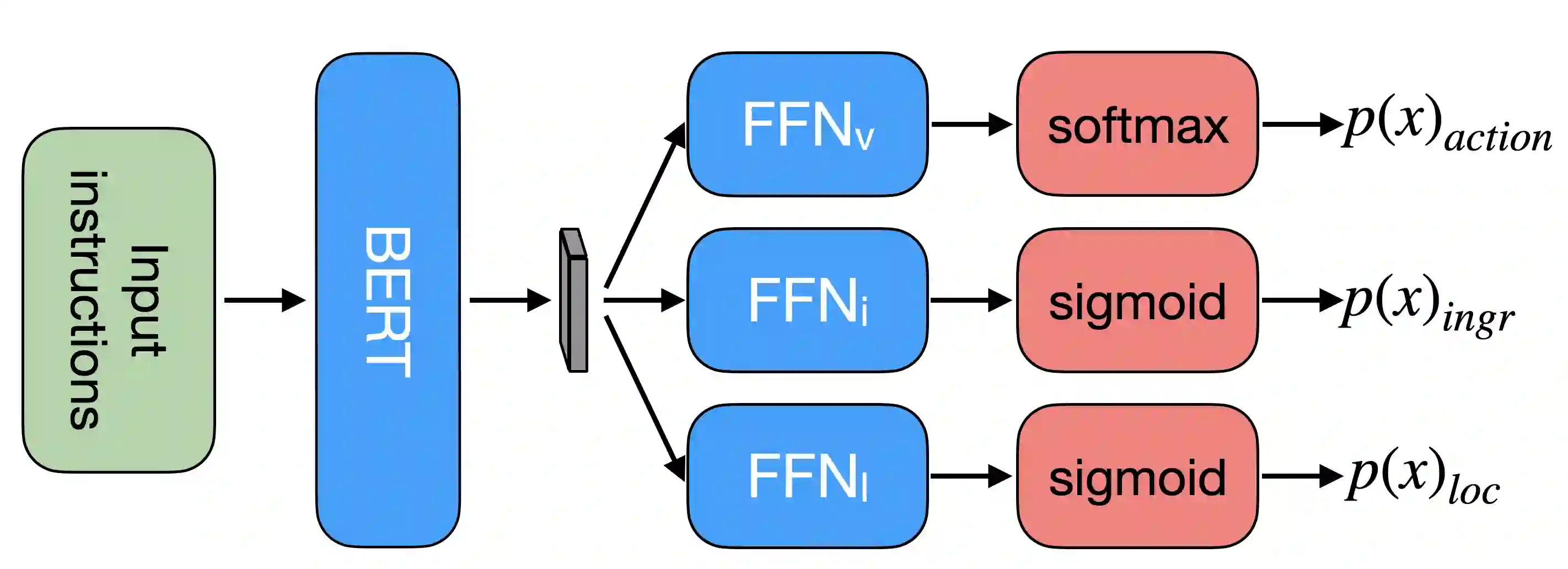
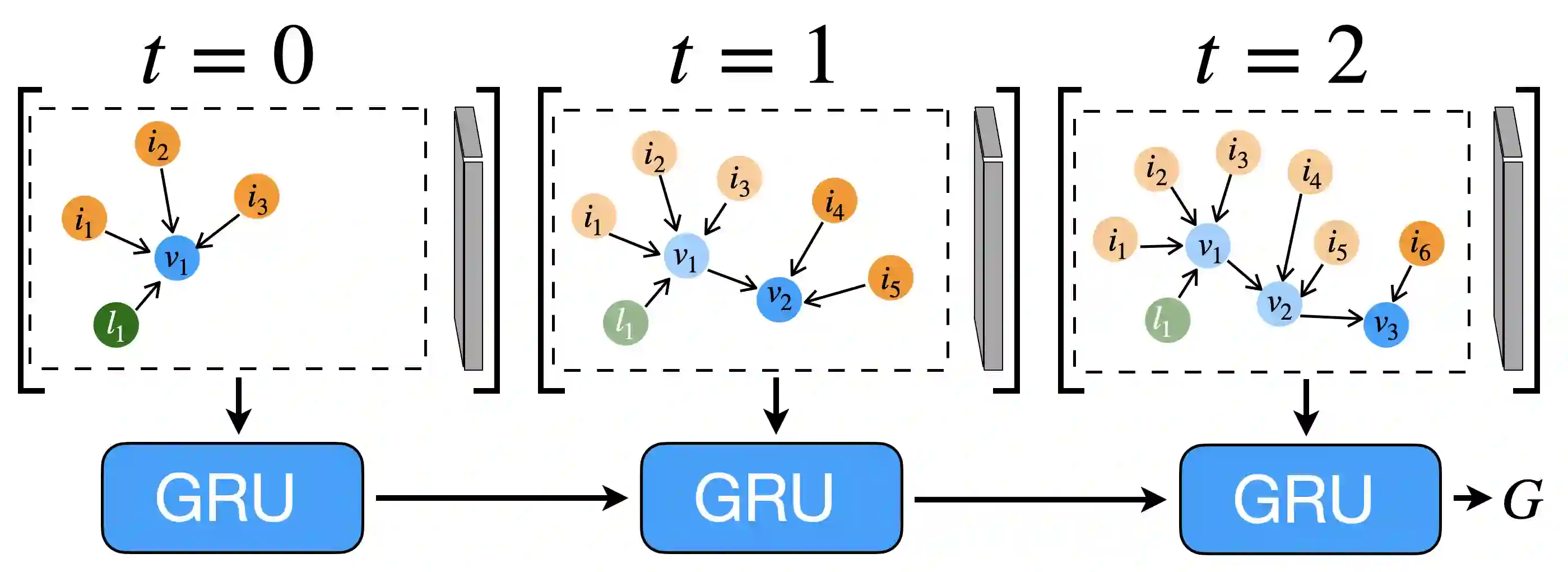
Cooking recipes are one of the most readily available kinds of procedural text. They consist of natural language instructions that can be challenging to interpret. In this paper, we propose a model to identify relevant information from recipes and generate a graph to represent the sequence of actions in the recipe. In contrast with other approaches, we use an unsupervised approach. We iteratively learn the graph structure and the parameters of a $\mathsf{GNN}$ encoding the texts (text-to-graph) one sequence at a time while providing the supervision by decoding the graph into text (graph-to-text) and comparing the generated text to the input. We evaluate the approach by comparing the identified entities with annotated datasets, comparing the difference between the input and output texts, and comparing our generated graphs with those generated by state of the art methods.
翻译:烹饪食谱是最易获取的程序性文本之一。它们包含具有挑战性的自然语言指令。本文提出一个模型,用于识别食谱中的相关信息并生成代表食谱动作序列的图。与其他方法不同,我们采用非监督方法。我们迭代学习图结构以及编码文本的$\mathsf{GNN}$(文本到图)参数,每次处理一个序列,同时通过将图解码为文本(图到文本)并将生成文本与输入文本进行比较来提供监督。我们通过比较识别的实体与标注数据集、评估输入与输出文本的差异,以及将生成的图与最先进方法生成的图进行对比来评估该方法。




相关内容



 微信扫码咨询专知VIP会员