

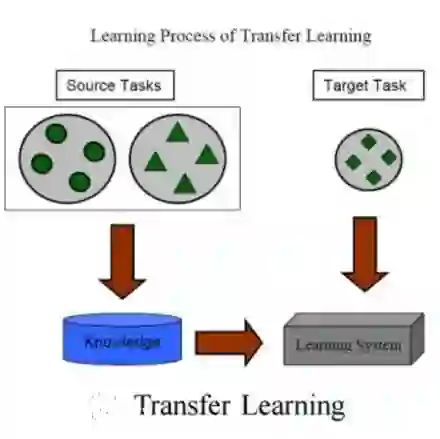
Background: Cardiac resynchronization therapy (CRT) has emerged as an effective treatment for heart failure patients with electrical dyssynchrony. However, accurately predicting which patients will respond to CRT remains a challenge. This study explores the application of deep transfer learning techniques to train a predictive model for CRT response. Methods: In this study, the short-time Fourier transform (STFT) technique was employed to transform ECG signals into two-dimensional images. A transfer learning approach was then applied on the MIT-BIT ECG database to pre-train a convolutional neural network (CNN) model. The model was fine-tuned to extract relevant features from the ECG images, and then tested on our dataset of CRT patients to predict their response. Results: Seventy-one CRT patients were enrolled in this study. The transfer learning model achieved an accuracy of 72% in distinguishing responders from non-responders in the local dataset. Furthermore, the model showed good sensitivity (0.78) and specificity (0.79) in identifying CRT responders. The performance of our model outperformed clinic guidelines and traditional machine learning approaches. Conclusion: The utilization of ECG images as input and leveraging the power of transfer learning allows for improved accuracy in identifying CRT responders. This approach offers potential for enhancing patient selection and improving outcomes of CRT.
翻译:背景:心脏再同步治疗(CRT)已成为治疗伴有电不同步的心力衰竭患者的有效方法。然而,准确预测哪些患者将对CRT产生反应仍是一项挑战。本研究探讨了深度迁移学习技术在训练CRT反应预测模型中的应用。方法:本研究采用短时傅里叶变换(STFT)技术将心电图信号转换为二维图像。随后,在MIT-BIT心电图数据库上应用迁移学习方法,预训练了一个卷积神经网络(CNN)模型。该模型经过微调以从心电图图像中提取相关特征,然后在我们收集的CRT患者数据集上进行测试,以预测其反应。结果:本研究共纳入71例CRT患者。迁移学习模型在区分本地数据集中的应答者与非应答者方面达到了72%的准确率。此外,该模型在识别CRT应答者时表现出良好的敏感性(0.78)和特异性(0.79)。我们的模型性能优于临床指南和传统机器学习方法。结论:利用心电图图像作为输入并借助迁移学习的力量,可提高识别CRT应答者的准确性。该方法有望改善患者筛选并提升CRT的临床结局。




相关内容




 微信扫码咨询专知VIP会员