

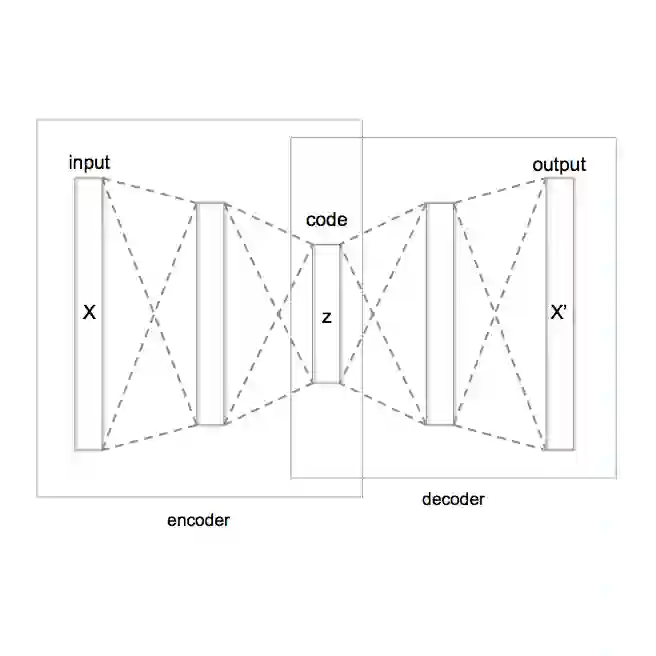
Measurement of a physical quantity such as light intensity is an integral part of many reconstruction and decision scenarios but can be costly in terms of acquisition time, invasion of or damage to the environment and storage. Data minimisation and compliance with data protection laws is also an important consideration. Where there are a range of measurements that can be made, some may be more informative and compliant with the overall measurement objective than others. We develop an active sequential inference algorithm that uses the low dimensional representational latent space from a variational autoencoder (VAE) to choose which measurement to make next. Our aim is to recover high dimensional data by making as few measurements as possible. We adapt the VAE encoder to map partial data measurements on to the latent space of the complete data. The algorithm draws samples from this latent space and uses the VAE decoder to generate data conditional on the partial measurements. Estimated measurements are made on the generated data and fed back through the partial VAE encoder to the latent space where they can be evaluated prior to making a measurement. Starting from no measurements and a normal prior on the latent space, we consider alternative strategies for choosing the next measurement and updating the predictive posterior prior for the next step. The algorithm is illustrated using the Fashion MNIST dataset and a novel convolutional Hadamard pattern measurement basis. We see that useful patterns are chosen within 10 steps, leading to the convergence of the guiding generative images. Compared with using stochastic variational inference to infer the parameters of the posterior distribution for each generated data point individually, the partial VAE framework can efficiently process batches of generated data and obtains superior results with minimal measurements.
翻译:对光强等物理量的测量是许多重建与决策场景中不可或缺的环节,但在采集时间、对环境侵入或破坏以及存储方面可能成本高昂。数据最小化与遵守数据保护法规也是重要的考量因素。在可进行的一系列测量中,某些测量可能比其他测量更具信息量,且更符合整体测量目标。我们开发了一种主动顺序推断算法,该算法利用变分自编码器(VAE)的低维表征潜在空间来选择下一步应进行的测量。我们的目标是通过尽可能少的测量来恢复高维数据。我们调整VAE编码器,将部分数据测量映射到完整数据的潜在空间上。该算法从该潜在空间抽取样本,并使用VAE解码器基于部分测量生成数据。对生成数据进行估计测量,并通过部分VAE编码器反馈至潜在空间,从而在实际测量前进行评估。从无测量开始,并在潜在空间上设置正态先验,我们考虑了选择下一次测量及更新下一步预测后验先验的替代策略。该算法通过Fashion MNIST数据集和一种新颖的卷积Hadamard模式测量基进行演示。我们观察到,在10步内即可选择出有效的模式,从而引导生成图像收敛。与使用随机变分推断单独推断每个生成数据点的后验分布参数相比,部分VAE框架能够高效处理批量生成数据,并以最少的测量获得更优的结果。




相关内容



 微信扫码咨询专知VIP会员