

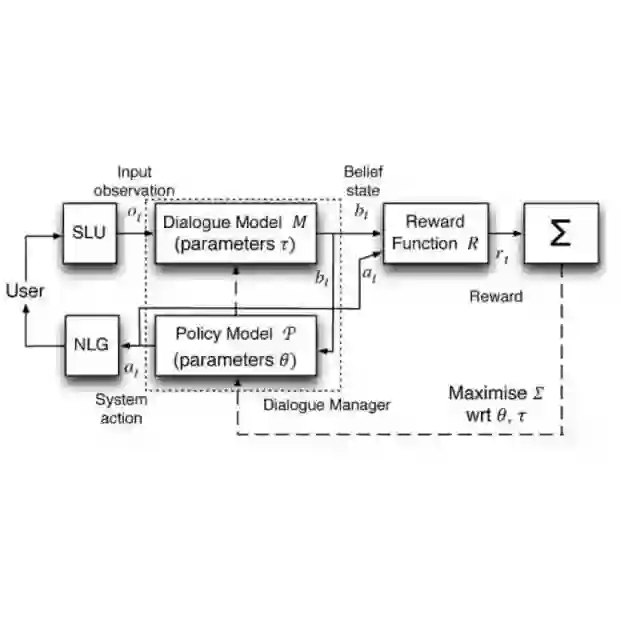
Large Language Models (LLMs), such as ChatGPT, are becoming increasingly sophisticated, demonstrating capabilities that closely resemble those of humans. These AI models are playing an essential role in assisting humans with a wide array of tasks in daily life. A significant application of AI is its use as a chat agent, responding to human inquiries across various domains. Current LLMs have shown proficiency in answering general questions. However, basic question-answering dialogue often falls short in complex diagnostic scenarios, such as legal or medical consultations. These scenarios typically necessitate Task-Oriented Dialogue (TOD), wherein an AI chat agent needs to proactively pose questions and guide users towards specific task completion. Previous fine-tuning models have underperformed in TOD, and current LLMs do not inherently possess this capability. In this paper, we introduce DiagGPT (Dialogue in Diagnosis GPT), an innovative method that extends LLMs to TOD scenarios. Our experiments reveal that DiagGPT exhibits outstanding performance in conducting TOD with users, demonstrating its potential for practical applications.
翻译:大型语言模型(如ChatGPT)正变得日益精进,展现出与人类高度相似的能力。这些AI模型在协助人类完成日常生活各类任务中发挥着关键作用。AI的重要应用之一就是作为聊天代理,回应各领域的人类咨询。当前大语言模型在回答通用问题方面已表现不俗,但在法律咨询或医疗问诊等复杂诊断场景中,基础问答对话往往难以满足需求。这类场景通常需要任务导向对话(TOD),即AI聊天代理需要主动提问并引导用户完成特定任务。以往的微调模型在TOD任务中表现欠佳,而当前大语言模型本身也不具备这种能力。本文提出DiagGPT(诊断对话系统),这是一种将大语言模型扩展至TOD场景的创新方法。实验表明,DiagGPT在与用户进行任务导向对话时展现了卓越性能,凸显其在实际应用中的潜力。




相关内容


 微信扫码咨询专知VIP会员