

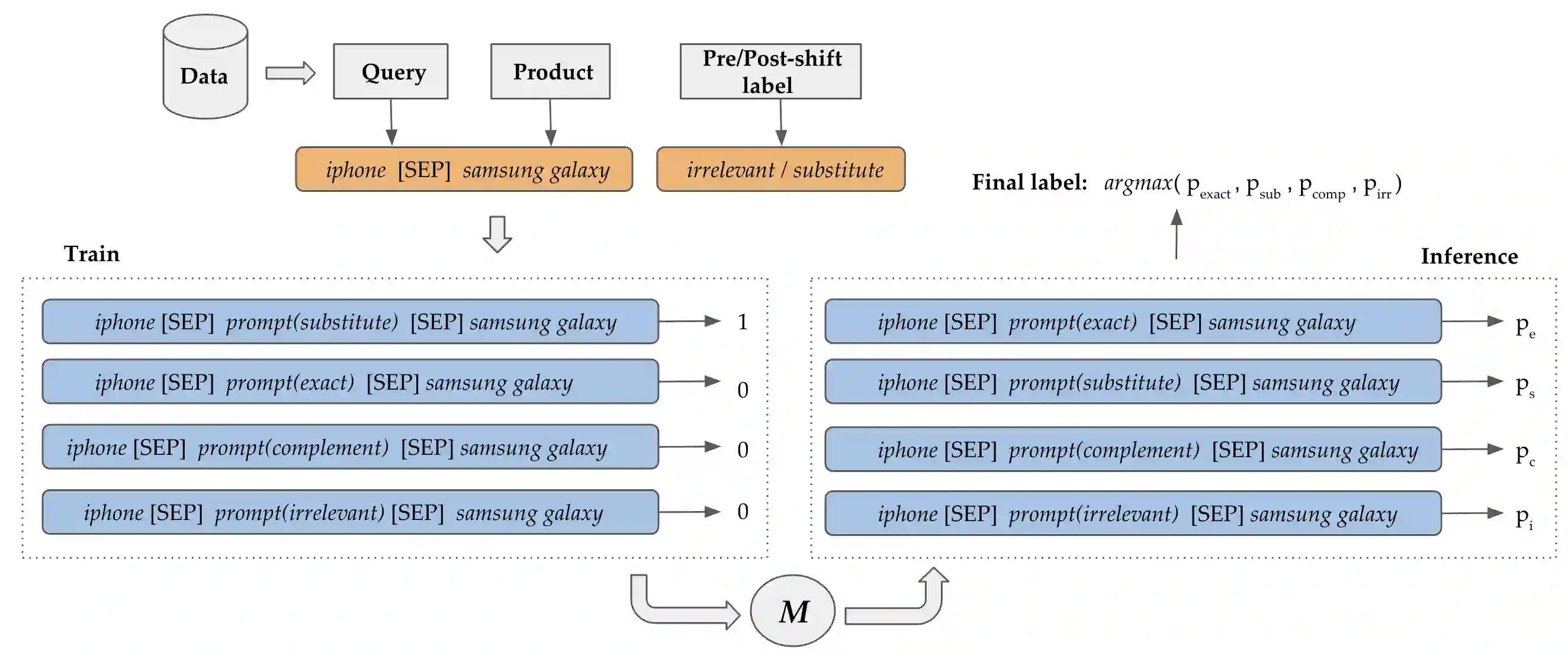
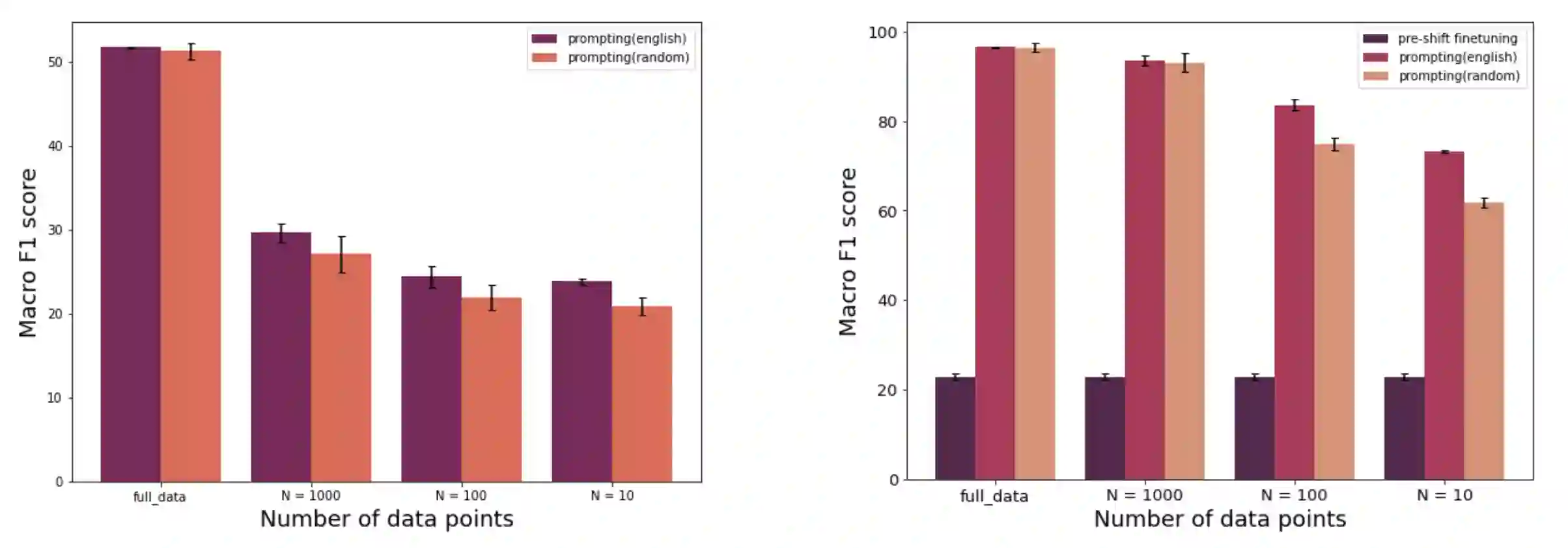
Pre-trained language models (PLMs) have seen tremendous success in text classification (TC) problems in the context of Natural Language Processing (NLP). In many real-world text classification tasks, the class definitions being learned do not remain constant but rather change with time - this is known as Concept Shift. Most techniques for handling concept shift rely on retraining the old classifiers with the newly labelled data. However, given the amount of training data required to fine-tune large DL models for the new concepts, the associated labelling costs can be prohibitively expensive and time consuming. In this work, we propose a reformulation, converting vanilla classification into an entailment-style problem that requires significantly less data to re-train the text classifier to adapt to new concepts. We demonstrate the effectiveness of our proposed method on both real world & synthetic datasets achieving absolute F1 gains upto 7% and 40% respectively in few-shot settings. Further, upon deployment, our solution also helped save 75% of labeling costs overall.
翻译:预训练语言模型(PLMs)在自然语言处理(NLP)领域的文本分类问题中取得了巨大成功。然而,在许多实际文本分类任务中,待学习的类别定义并非恒定不变,而是随时间动态变化——这一现象称为概念漂移。现有应对概念漂移的技术主要依赖使用新标注数据对旧分类器进行再训练。但由于微调大规模深度学习模型以适应新概念需要大量训练数据,相关的标注成本可能变得极其昂贵且耗时。本研究提出一种问题重构方法,将传统分类问题转化为蕴含式建模问题,从而显著减少文本分类器适应新概念所需的再训练数据量。我们在真实数据集与合成数据集上验证了该方法的效果:在少样本场景下,F1分数绝对提升分别高达7%和40%。此外,部署该方案后,整体标注成本节省了75%。




相关内容



 微信扫码咨询专知VIP会员