

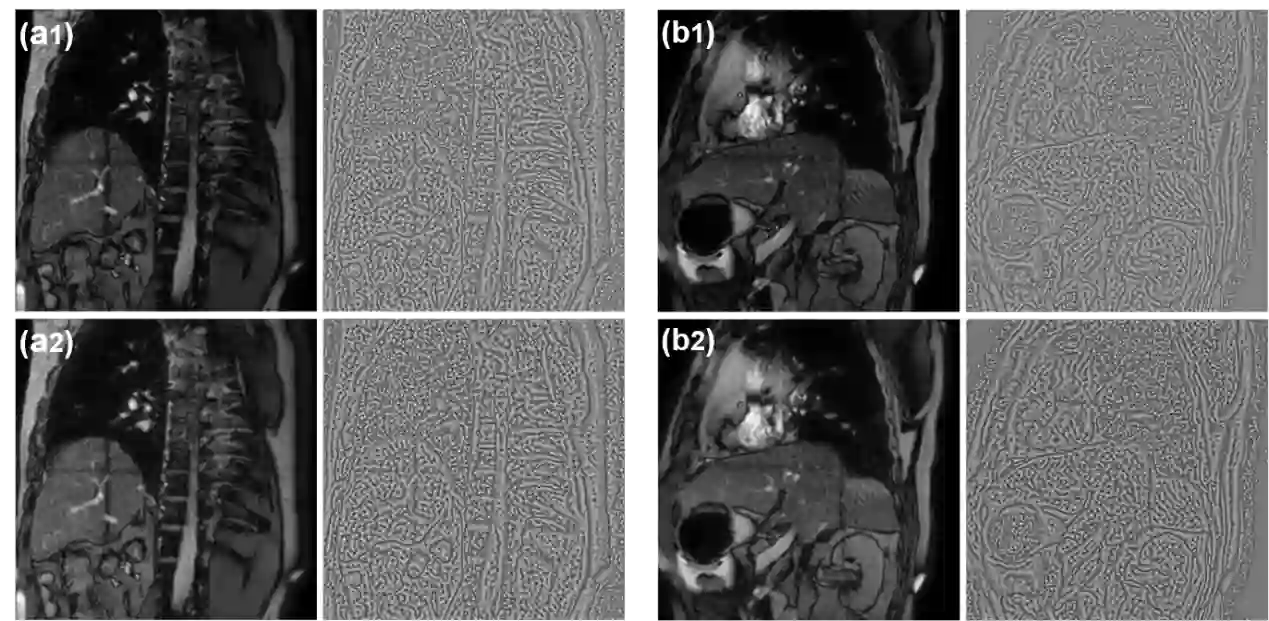
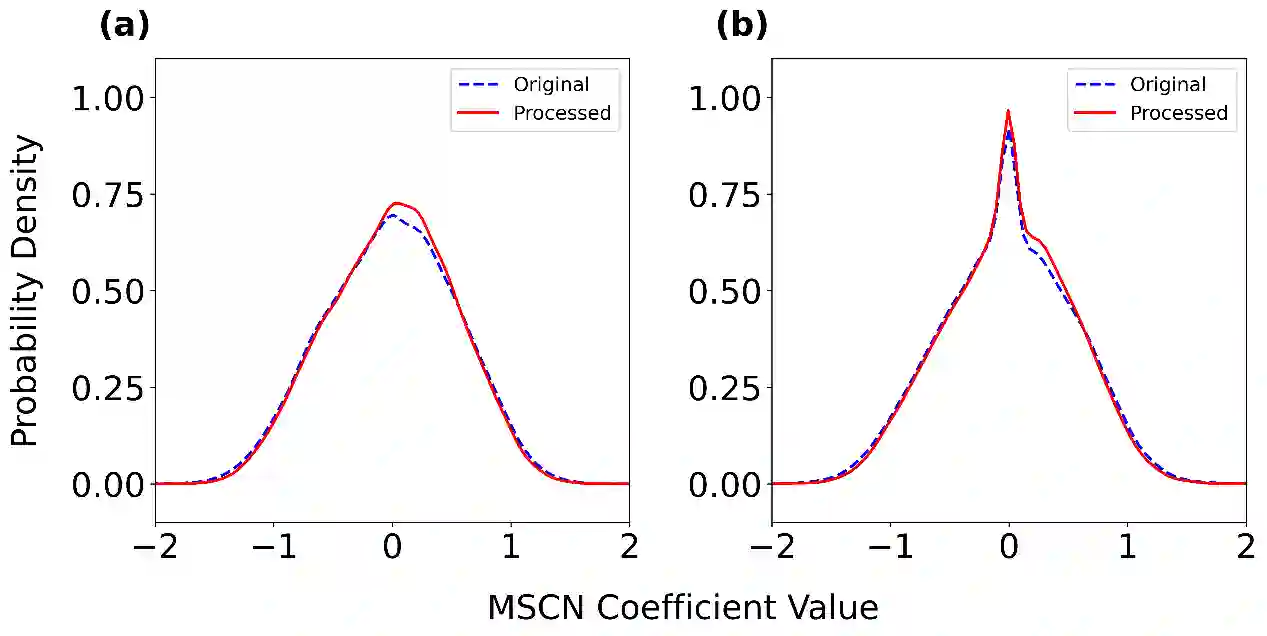
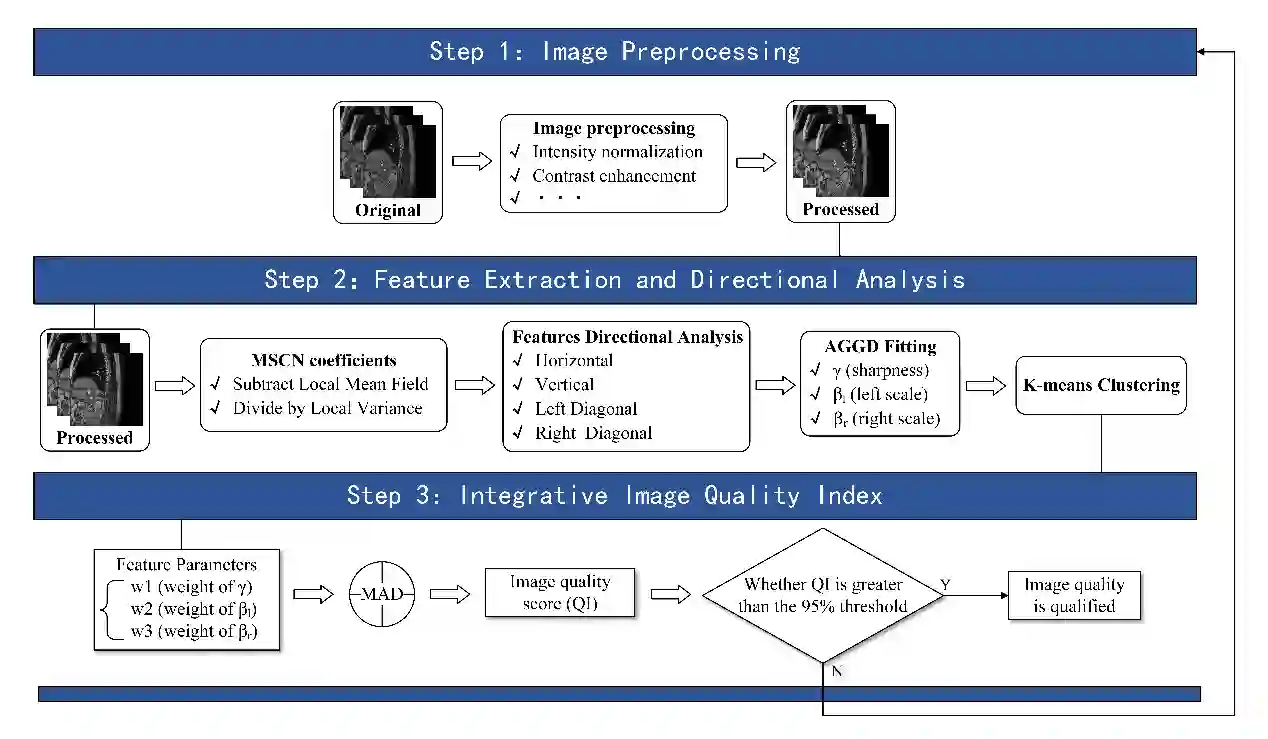
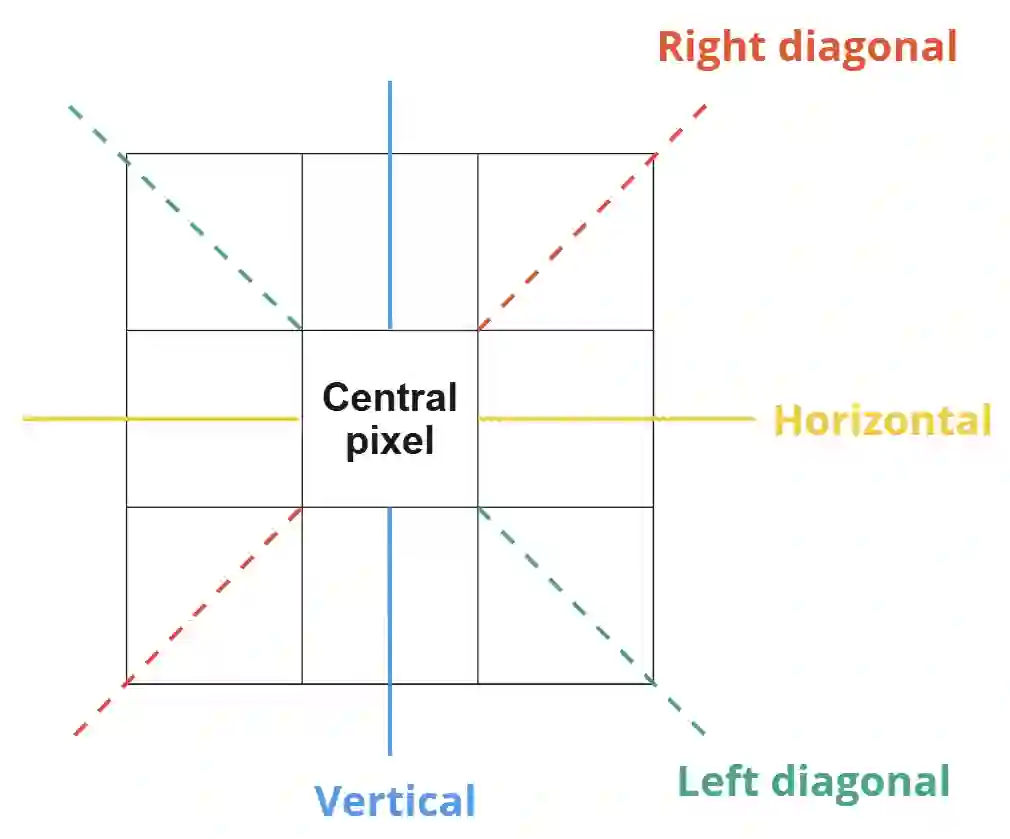
Objective:To develop a no-reference image quality assessment method using automated distortion recognition to boost MRI-guided radiotherapy precision.Methods:We analyzed 106,000 MR images from 10 patients with liver metastasis,captured with the Elekta Unity MR-LINAC.Our No-Reference Quality Assessment Model includes:1)image preprocessing to enhance visibility of key diagnostic features;2)feature extraction and directional analysis using MSCN coefficients across four directions to capture textural attributes and gradients,vital for identifying image features and potential distortions;3)integrative Quality Index(QI)calculation,which integrates features via AGGD parameter estimation and K-means clustering.The QI,based on a weighted MAD computation of directional scores,provides a comprehensive image quality measure,robust against outliers.LOO-CV assessed model generalizability and performance.Tumor tracking algorithm performance was compared with and without preprocessing to verify tracking accuracy enhancements.Results:Preprocessing significantly improved image quality,with the QI showing substantial positive changes and surpassing other metrics.After normalization,the QI's average value was 79.6 times higher than CNR,indicating improved image definition and contrast.It also showed higher sensitivity in detail recognition with average values 6.5 times and 1.7 times higher than Tenengrad gradient and entropy.The tumor tracking algorithm confirmed significant tracking accuracy improvements with preprocessed images,validating preprocessing effectiveness.Conclusions:This study introduces a novel no-reference image quality evaluation method based on automated distortion recognition,offering a new quality control tool for MRIgRT tumor tracking.It enhances clinical application accuracy and facilitates medical image quality assessment standardization, with significant clinical and research value.
翻译:目的:开发一种利用自动失真识别的无参考图像质量评估方法,以提高MRI引导放射治疗的精度。方法:我们分析了来自10例肝转移患者的106,000幅MR图像,这些图像由Elekta Unity MR-LINAC采集。我们的无参考质量评估模型包括:1) 图像预处理以增强关键诊断特征的可见性;2) 特征提取与方向分析,利用四个方向的MSCN系数捕获纹理属性和梯度,这对于识别图像特征和潜在失真至关重要;3) 综合质量指数(QI)计算,通过AGGD参数估计和K-means聚类整合特征。QI基于方向得分的加权MAD计算,提供了一个全面的图像质量度量,对异常值具有鲁棒性。留一法交叉验证(LOO-CV)评估了模型的泛化能力和性能。比较了使用与不使用预处理时肿瘤跟踪算法的性能,以验证跟踪精度的提升。结果:预处理显著改善了图像质量,QI显示出显著的积极变化并超越了其他指标。归一化后,QI的平均值是CNR的79.6倍,表明图像清晰度和对比度得到改善。在细节识别方面,QI也表现出更高的敏感性,其平均值分别是Tenengrad梯度和熵的6.5倍和1.7倍。肿瘤跟踪算法证实,使用预处理图像后跟踪精度得到显著提升,验证了预处理的有效性。结论:本研究提出了一种基于自动失真识别的新型无参考图像质量评估方法,为MRIgRT肿瘤跟踪提供了一种新的质量控制工具。它提高了临床应用的准确性,并有助于医学图像质量评估的标准化,具有重要的临床和研究价值。





相关内容





 微信扫码咨询专知VIP会员