Music structure analysis (MSA) methods traditionally search for musically meaningful patterns in audio: homogeneity, repetition, novelty, and segment-length regularity. Hand-crafted audio features such as MFCCs or chromagrams are often used to elicit these patterns. However, with more annotations of section labels (e.g., verse, chorus, and bridge) becoming available, one can use supervised feature learning to make these patterns even clearer and improve MSA performance. To this end, we take a supervised metric learning approach: we train a deep neural network to output embeddings that are near each other for two spectrogram inputs if both have the same section type (according to an annotation), and otherwise far apart. We propose a batch sampling scheme to ensure the labels in a training pair are interpreted meaningfully. The trained model extracts features that can be used in existing MSA algorithms. In evaluations with three datasets (HarmonixSet, SALAMI, and RWC), we demonstrate that using the proposed features can improve a traditional MSA algorithm significantly in both intra- and cross-dataset scenarios.


翻译:音乐结构分析(MSA)方法(MSA)传统上在音频中传统地寻找具有音乐意义的模式:同质性、重复性、新颖性和分段性常态。手工制作的音频特征,如MFCCs或染色体,常常被用来诱发这些模式。然而,随着章节标签(如诗歌、合唱和桥梁)的更多说明的出现,人们可以使用受监督的特征学习方法使这些模式更加清晰,并改进管理服务协议的性能。为此,我们采取了一种受监督的衡量学习方法:我们训练一个深层神经网络,将输出嵌入彼此相近的两种光谱输入,如果两者都具有相同的部分类型(根据注释),或者相距甚远。我们建议一个批量抽样方案,以确保培训配对中的标签得到有意义的解释。经过培训的模型摘录特征可用于现有的管理协议算法。在对三个数据集(HarmonixSet、SALAMI和RWC)的评估中,我们证明,使用拟议的特征可以大大改进内部和交叉数据配置情景中的传统管理算法。


0
下载
关闭预览

相关内容

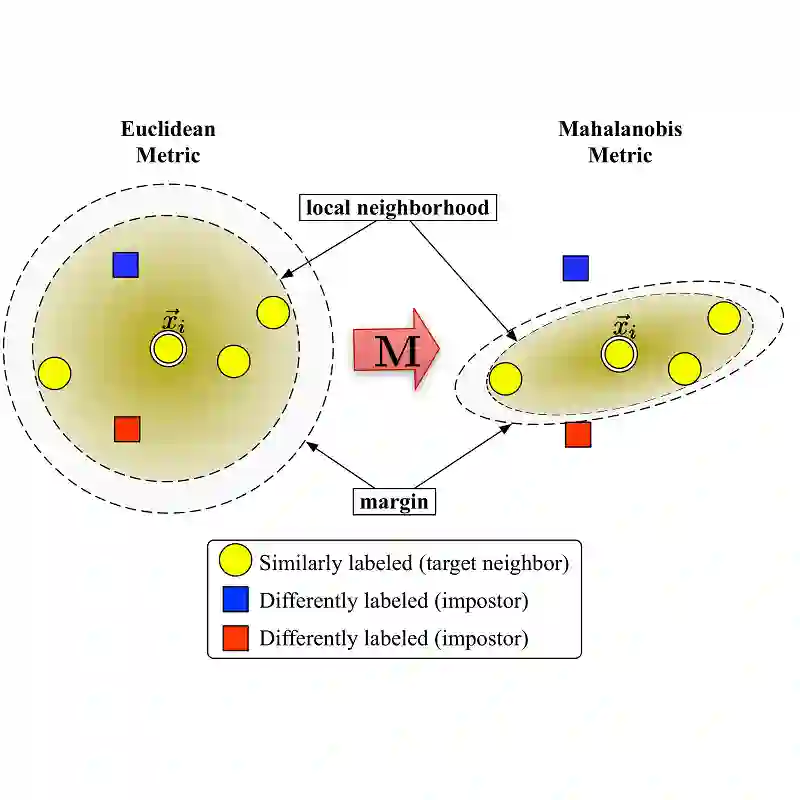
度量学习的目的为了衡量样本之间的相近程度,而这也正是模式识别的核心问题之一。大量的机器学习方法,比如K近邻、支持向量机、径向基函数网络等分类方法以及K-means聚类方法,还有一些基于图的方法,其性能好坏都主要有样本之间的相似度量方法的选择决定。 度量学习通常的目标是使同类样本之间的距离尽可能缩小,不同类样本之间的距离尽可能放大。
可解释强化学习,Explainable Reinforcement Learning: A Survey
专知会员服务
132+阅读 · 2020年5月14日
【Google】监督对比学习,Supervised Contrastive Learning
专知会员服务
75+阅读 · 2020年4月24日
100+篇《自监督学习(Self-Supervised Learning)》论文最新合集
专知会员服务
167+阅读 · 2020年3月18日
Stabilizing Transformers for Reinforcement Learning
专知会员服务
60+阅读 · 2019年10月17日
Cross-Modal & Metric Learning 跨模态检索专题-2
Hierarchically Structured Meta-learning
CreateAMind
27+阅读 · 2019年5月22日
Transferring Knowledge across Learning Processes
CreateAMind
29+阅读 · 2019年5月18日
强化学习的Unsupervised Meta-Learning
CreateAMind
18+阅读 · 2019年1月7日
Unsupervised Learning via Meta-Learning
CreateAMind
44+阅读 · 2019年1月3日
disentangled-representation-papers
CreateAMind
26+阅读 · 2018年9月12日
Hierarchical Disentangled Representations
CreateAMind
4+阅读 · 2018年4月15日
强化学习族谱
CreateAMind
26+阅读 · 2017年8月2日
强化学习 cartpole_a3c
CreateAMind
9+阅读 · 2017年7月21日
Arxiv
13+阅读 · 2019年1月26日
Arxiv
8+阅读 · 2018年5月15日
Arxiv
9+阅读 · 2018年3月28日
VIP会员
最新内容
非对称优势:美海军开发低成本反无人机技术
专知会员服务
4+阅读 · 今天4:39
《美战争部小企业创新研究(SBIR)计划》
专知会员服务
5+阅读 · 今天2:48
《军事模拟:将军事条令与目标融入AI智能体》
专知会员服务
8+阅读 · 今天2:43
【NTU博士论文】3D人体动作生成
专知会员服务
6+阅读 · 4月24日
以色列军事技术对美国军力发展的持续性赋能
专知会员服务
8+阅读 · 4月24日
《深度强化学习在兵棋推演中的应用》40页报告
专知会员服务
13+阅读 · 4月24日
《多域作战面临复杂现实》
专知会员服务
9+阅读 · 4月24日
《印度的多域作战:条令与能力发展》报告
专知会员服务
4+阅读 · 4月24日
相关资讯
Cross-Modal & Metric Learning 跨模态检索专题-2
Hierarchically Structured Meta-learning
CreateAMind
27+阅读 · 2019年5月22日
Transferring Knowledge across Learning Processes
CreateAMind
29+阅读 · 2019年5月18日
强化学习的Unsupervised Meta-Learning
CreateAMind
18+阅读 · 2019年1月7日
Unsupervised Learning via Meta-Learning
CreateAMind
44+阅读 · 2019年1月3日
disentangled-representation-papers
CreateAMind
26+阅读 · 2018年9月12日
Hierarchical Disentangled Representations
CreateAMind
4+阅读 · 2018年4月15日
强化学习族谱
CreateAMind
26+阅读 · 2017年8月2日
强化学习 cartpole_a3c
CreateAMind
9+阅读 · 2017年7月21日
Top
微信扫码咨询专知VIP会员