

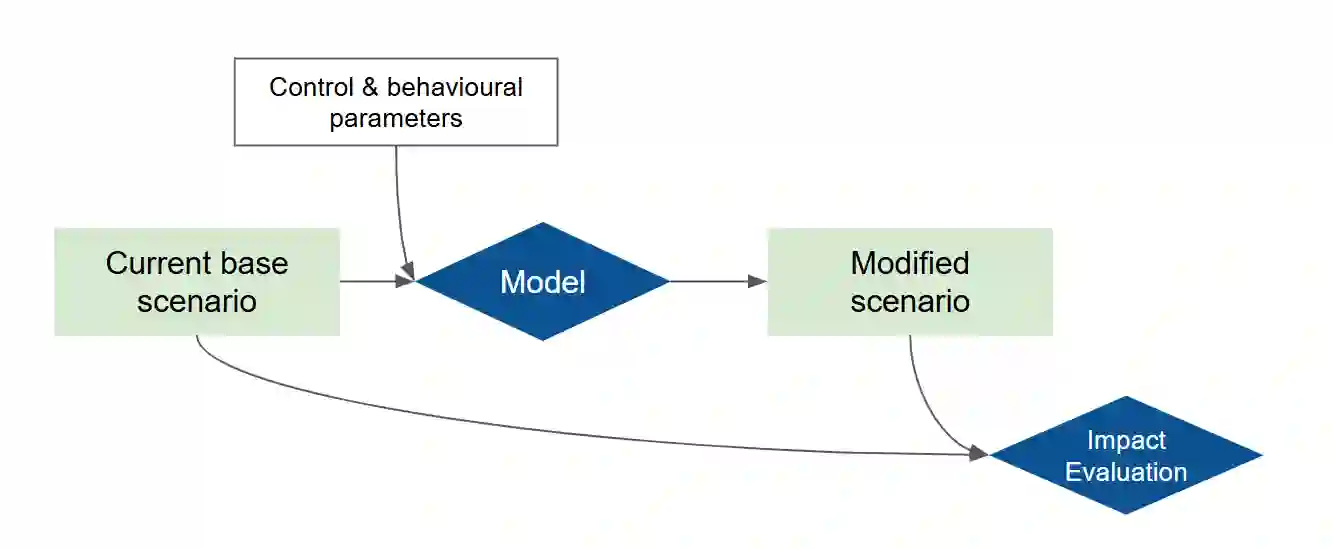
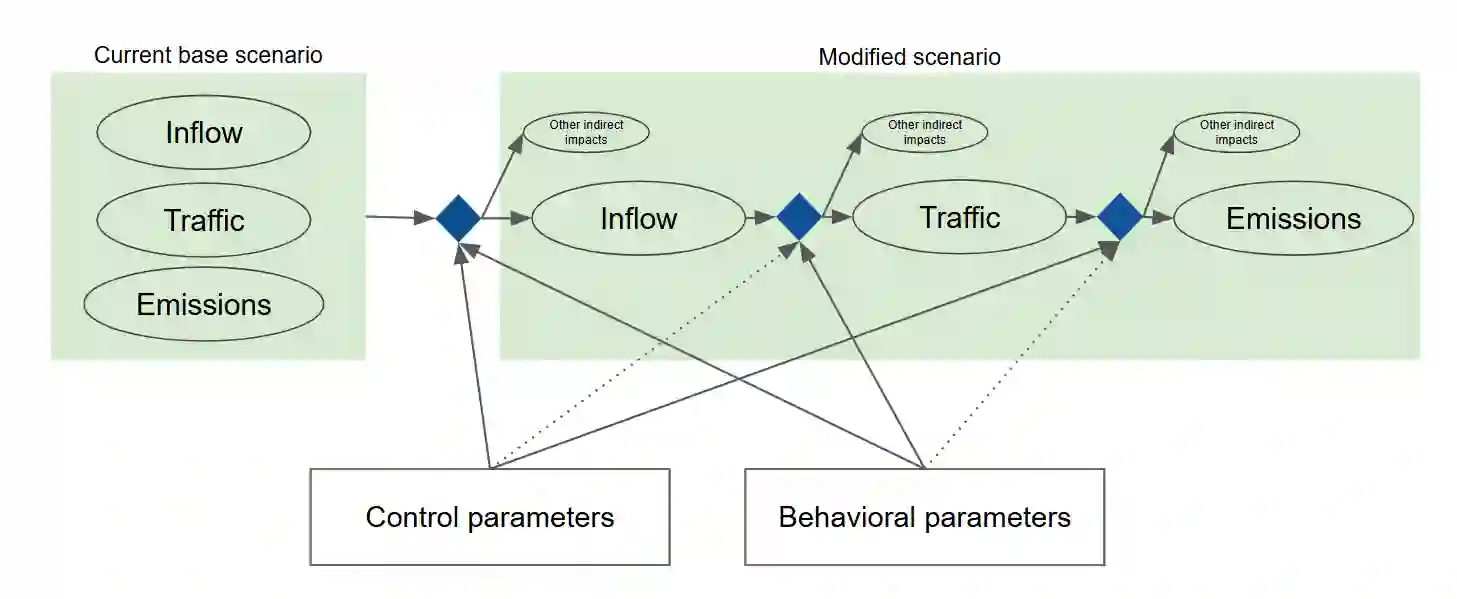
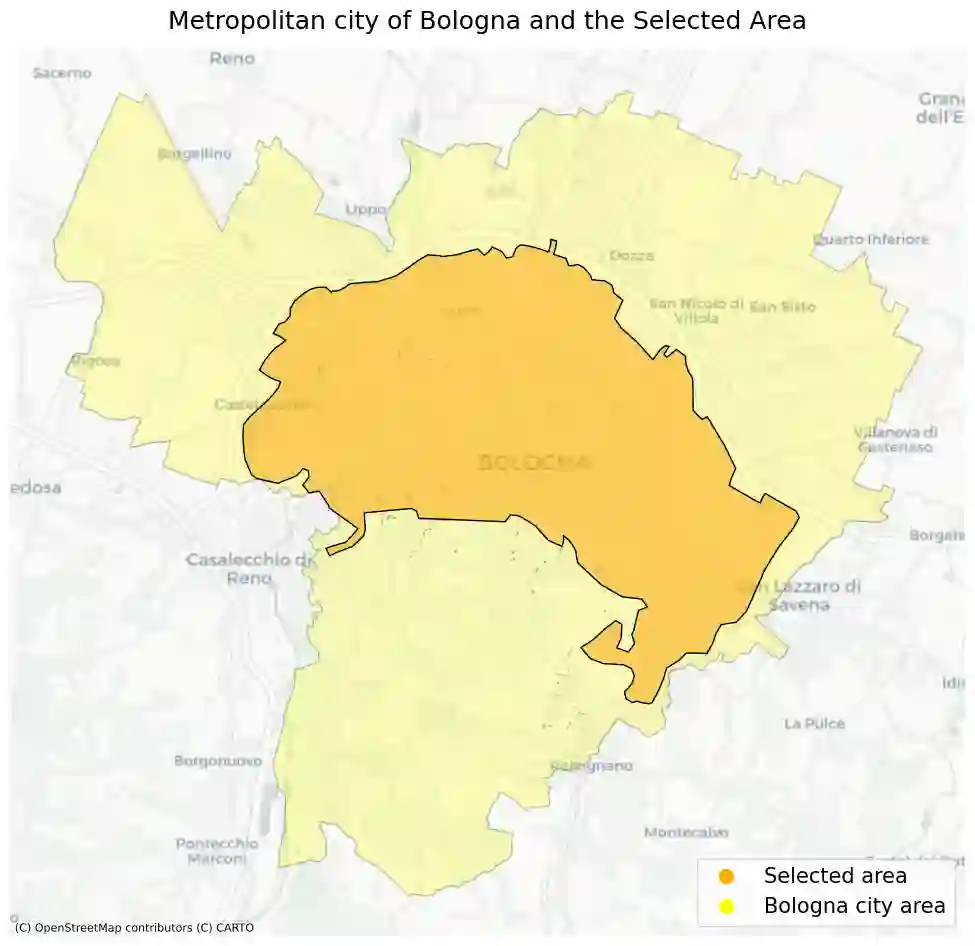
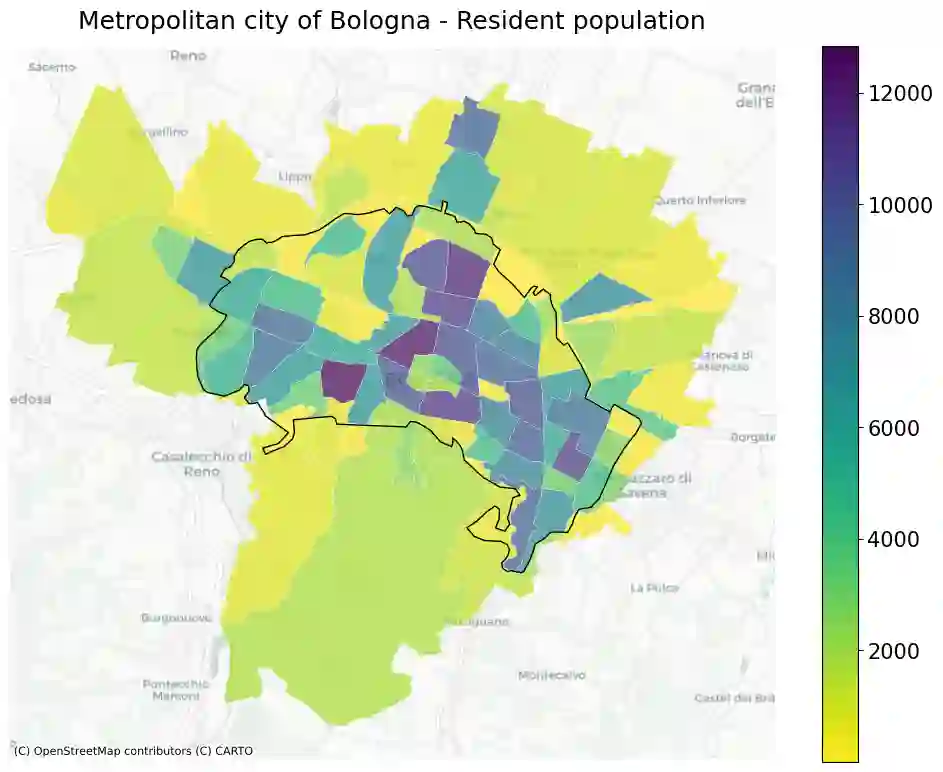
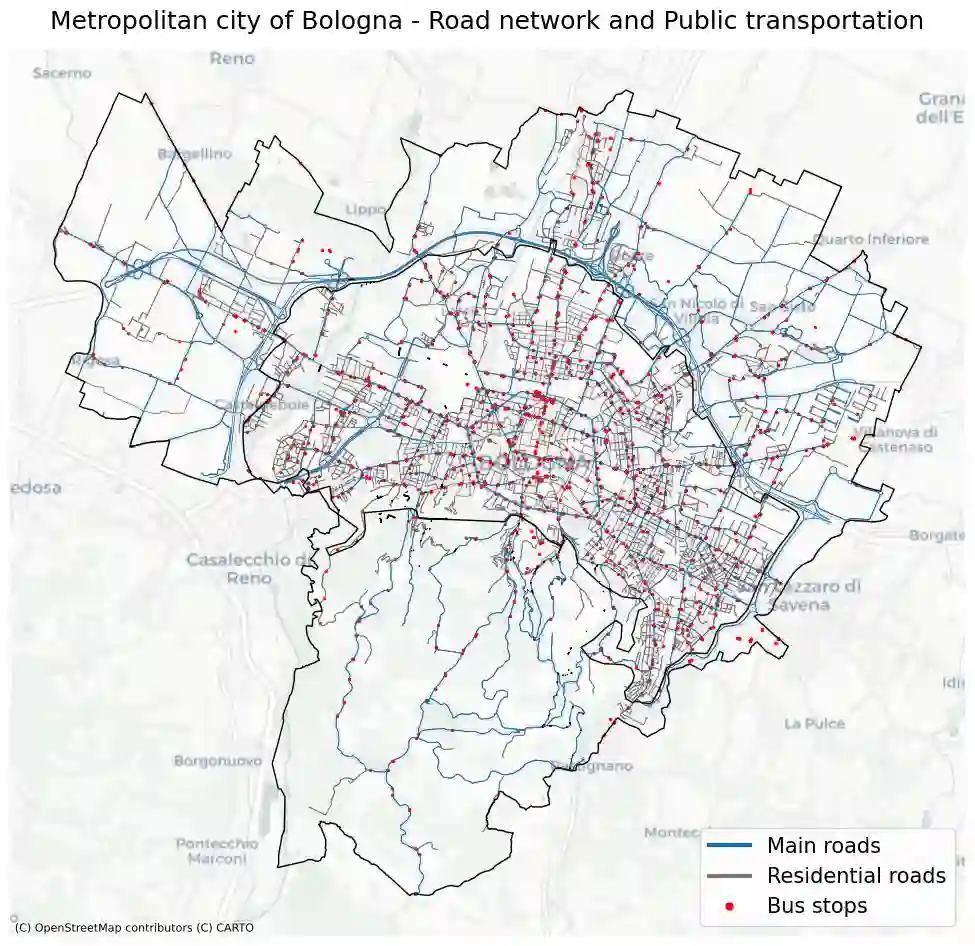
Urban traffic regulation policies are increasingly used to address congestion, emissions, and accessibility in cities, yet their impacts are difficult to assess due to the socio-technical complexity of urban mobility systems. Recent advances in data availability and computational power enable new forms of model-driven, simulation-based decision support for transportation policy design. This paper proposes a novel simulation paradigm for the ex-ante evaluation of both direct impacts (e.g., traffic conditions, modal shift, emissions) and indirect impacts spanning transportation-related effects, social equity, and economic accessibility. The approach integrates a multi-layer urban mobility model combining a physical layer of networks, flows, and emissions with a social layer capturing behavioral responses and adaptation to policy changes. Real-world data are used to instantiate the current "as-is" scenario, while policy alternatives and behavioral assumptions are encoded as model parameters to generate multiple "what-if" scenarios. The framework supports systematic comparison across scenarios by analyzing variations in simulated outcomes induced by policy interventions. The proposed approach is illustrated through a case study aims to assess the impacts of the introduction of broad urban traffic restriction schemes. Results demonstrate the framework's ability to explore alternative regulatory designs and user responses, supporting informed and anticipatory evaluation of urban traffic policies.
翻译:城市交通管制政策日益被用于解决城市拥堵、排放和可达性问题,但由于城市交通系统的社会技术复杂性,其影响难以评估。数据可用性和计算能力的最新进展为交通政策设计提供了新型的模型驱动、基于仿真的决策支持。本文提出了一种新颖的仿真范式,用于事前评估直接影响(如交通状况、出行方式转移、排放)以及涵盖交通相关效应、社会公平性和经济可达性的间接影响。该方法集成了一个多层城市交通模型,将网络、流量和排放的物理层与捕捉行为响应和政策变化适应的社会层相结合。利用真实世界数据实例化当前“现状”场景,同时将政策替代方案和行为假设编码为模型参数以生成多个“假设”场景。该框架通过分析政策干预引起的模拟结果变化,支持跨场景的系统性比较。通过一个旨在评估广泛城市交通限制方案引入影响的案例研究,阐释了所提出的方法。结果表明该框架能够探索替代性法规设计和用户响应,为城市交通政策提供知情和前瞻性的评估支持。




相关内容


 微信扫码咨询专知VIP会员