

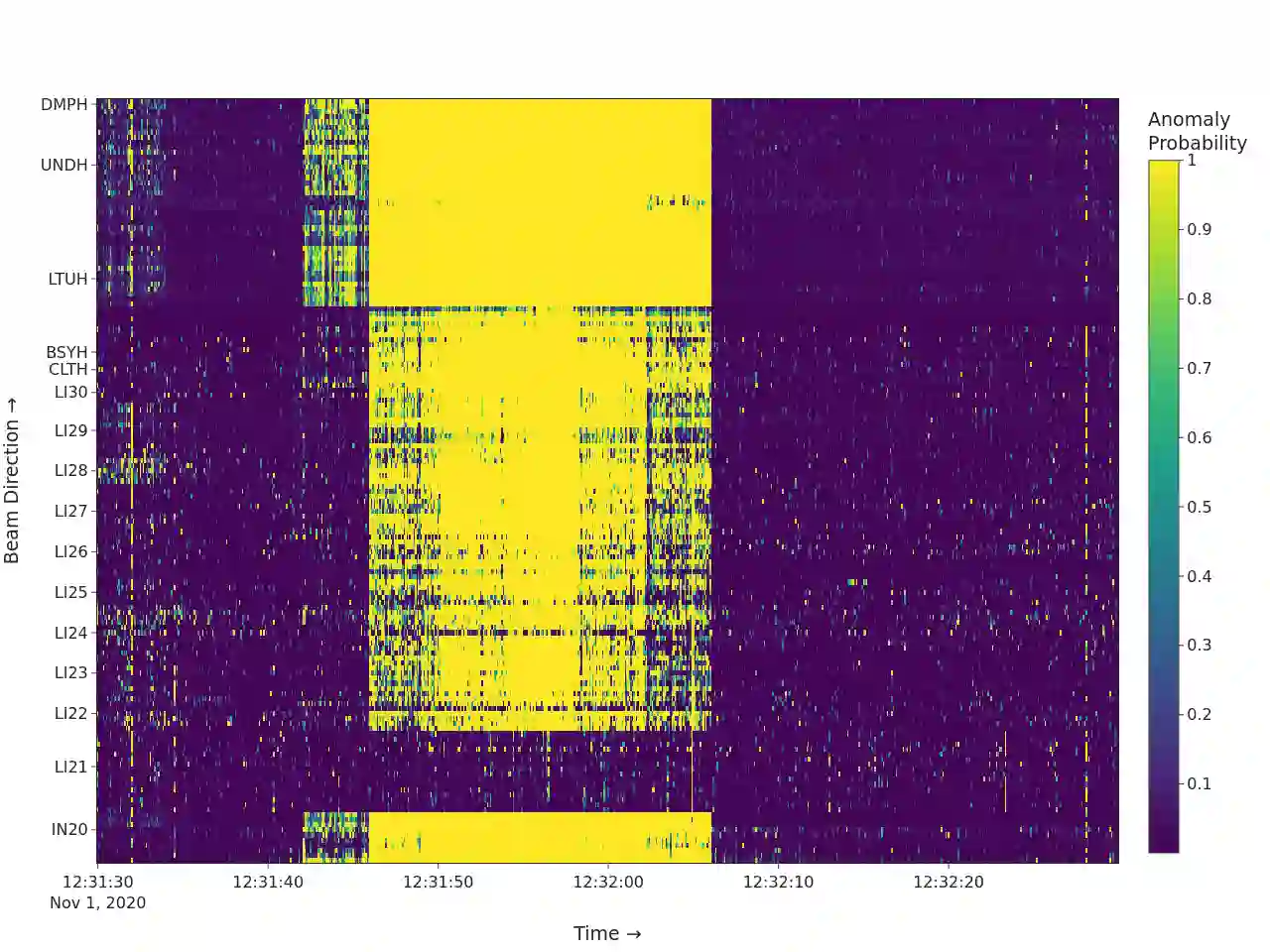
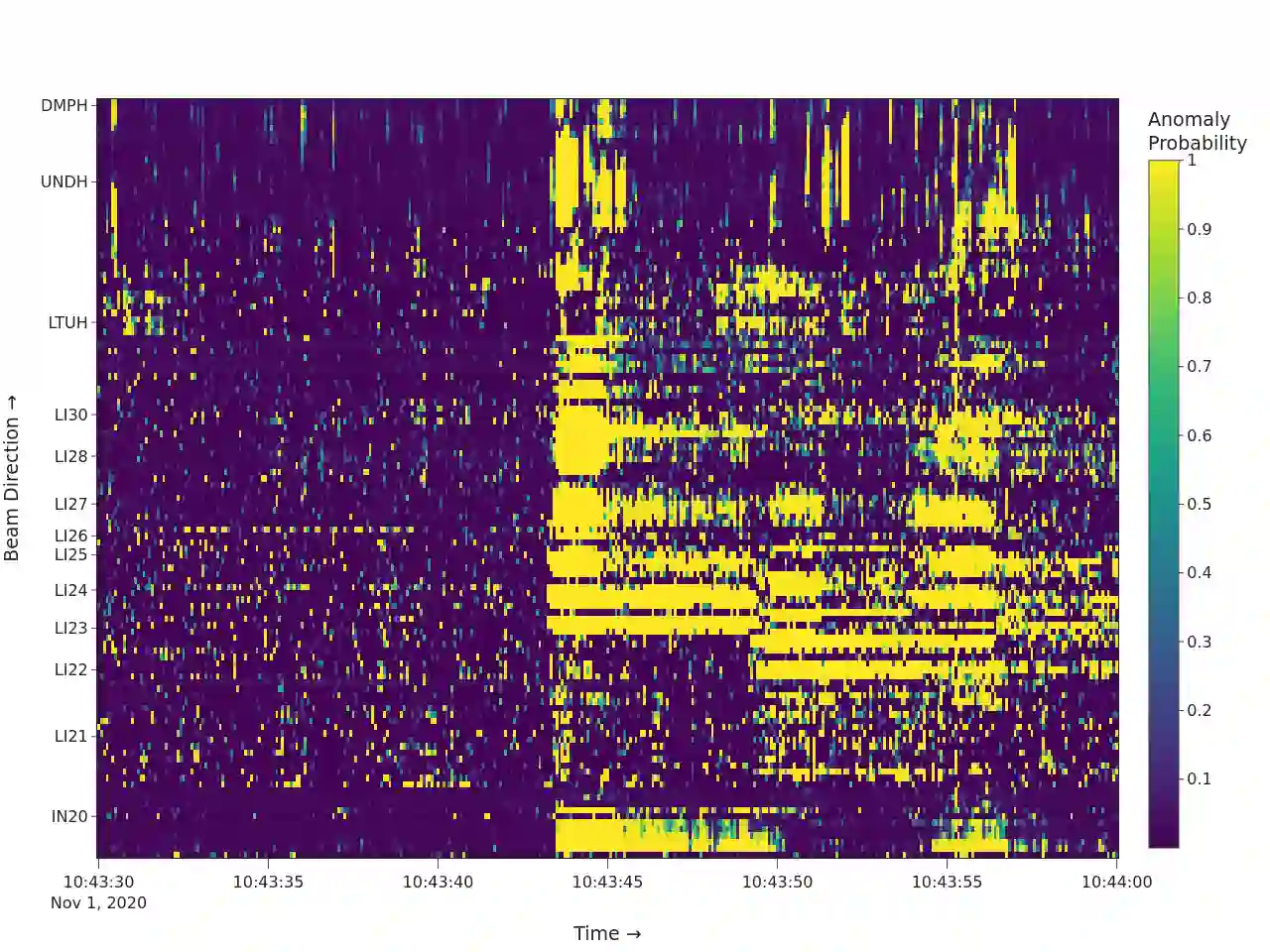
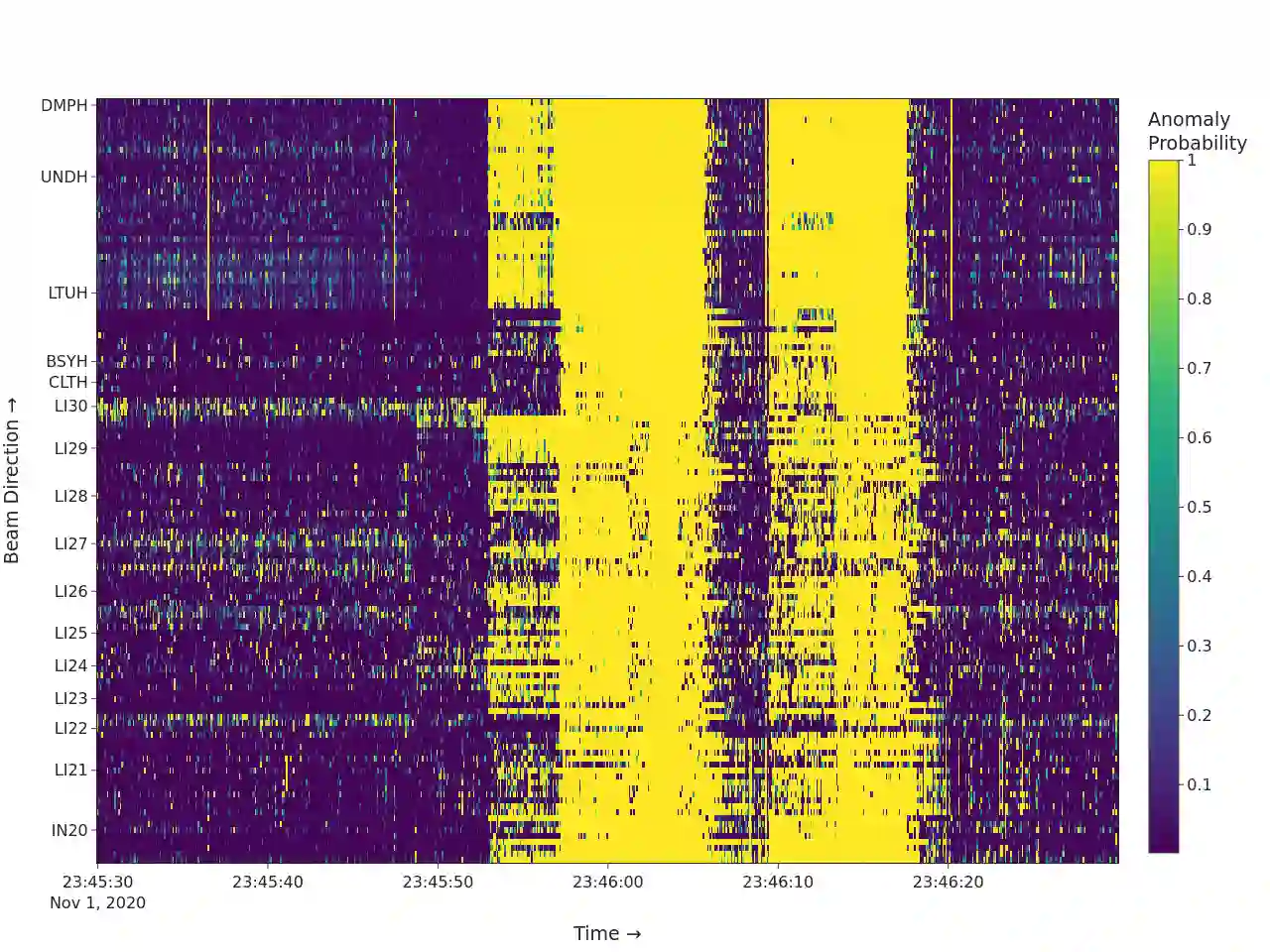
Significant advances in utilizing deep learning for anomaly detection have been made in recent years. However, these methods largely assume the existence of a normal training set (i.e., uncontaminated by anomalies) or even a completely labeled training set. In many complex engineering systems, such as particle accelerators, labels are sparse and expensive; in order to perform anomaly detection in these cases, we must drop these assumptions and utilize a completely unsupervised method. This paper introduces the Resilient Variational Autoencoder (ResVAE), a deep generative model specifically designed for anomaly detection. ResVAE exhibits resilience to anomalies present in the training data and provides feature-level anomaly attribution. During the training process, ResVAE learns the anomaly probability for each sample as well as each individual feature, utilizing these probabilities to effectively disregard anomalous examples in the training data. We apply our proposed method to detect anomalies in the accelerator status at the SLAC Linac Coherent Light Source (LCLS). By utilizing shot-to-shot data from the beam position monitoring system, we demonstrate the exceptional capability of ResVAE in identifying various types of anomalies that are visible in the accelerator.
翻译:近年来,利用深度学习进行异常检测取得了显著进展。然而,这些方法大多假设存在正常训练集(即未被异常污染)甚至完全标注的训练集。在粒子加速器等复杂工程系统中,标注数据稀疏且成本高昂;为在这些场景下实现异常检测,我们必须摒弃这些假设,采用完全无监督的方法。本文提出弹性变分自编码器(ResVAE),这是一种专为异常检测设计的深度生成模型。ResVAE对训练数据中的异常具有弹性,并能提供特征层面的异常归因。在训练过程中,ResVAE同时学习每个样本和每个特征的异常概率,利用这些概率有效忽略训练数据中的异常样本。我们将所提方法应用于SLAC直线加速器相干光源(LCLS)加速器状态的异常检测。通过利用束流位置监测系统的逐脉冲数据,我们证明了ResVAE在识别加速器中可见的各类异常方面的卓越能力。




相关内容



 微信扫码咨询专知VIP会员