

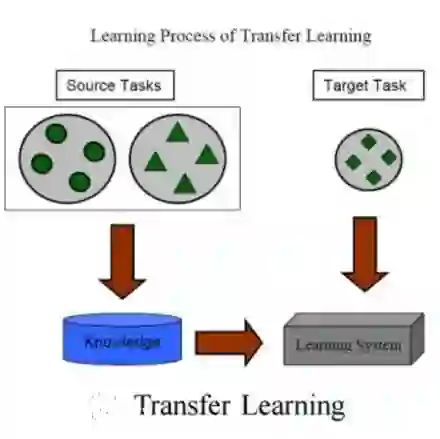
Transfer learning addresses the challenge of transfering knowledge from one domain to another. Traditional transfer learning focuses on adapting models trained on a source domain (with a lot of observations) to improve performance on a target domain (with few observations). In this work we consider the case of a model shift and we focus on the transfer learning applied to a causal forest namely HTERF. This causal forest aims to estimate the Conditional Average Treatment Effect (CATE). The approach considered is the offset method presented by Wang (2016) adapted to a causal context. This method relies on the use of intermediate models in order to estimate the offset between source and target distributions. Our main result is a bound on the CATE error of HTERF on target depending on the error of the intermediate models. Simulation studies show the good performances of this approach in different settings on simulations and on a real-world dataset.
翻译:迁移学习旨在解决将一个领域的知识迁移至另一领域的挑战。传统迁移学习主要关注调整在源域(拥有大量观测数据)上训练的模型,以提升在目标域(观测数据稀少)上的性能。本研究考虑模型漂移的情形,并聚焦于将迁移学习应用于名为HTERF的因果森林。该因果森林旨在估计条件平均处理效应(CATE)。所采用的方法是Wang(2016)提出的偏移法,并经过适配以适用于因果情境。该方法依赖于使用中间模型来估计源域与目标域之间的偏移量。我们主要的研究结果是给出了目标域上HTERF的CATE误差上界,该上界取决于中间模型的误差。仿真研究展示了该方法在不同模拟场景及真实世界数据集上的良好性能。




相关内容

 微信扫码咨询专知VIP会员